Belitsoft > Software development for UK companies or UK market

Software development for UK companies or UK market

Belitsoft, equipped with a dedicated team of skilled software engineers, offers bespoke nearshore software solutions for B2B and B2C companies operating in the United Kingdom market or serving UK customers.

Staff Augmentation / Team Extension Services

Belitsoft is the agency for product development team augmentation

You get vetted development services (Python, React, AWS, and more).
We provide additional developers or retained development teams to supplement your existing staff.
 Our engineers work during UK hours within the UK time zone to overlap with you for synchronous collaboration.

Who This Is For

  • UK-based companies or start-ups
  • Existing development teams that are under-resourced
  • Companies needing to scale quickly without permanent hires
  • Teams that value time zone alignment for meetings/collaboration
  • Companies with a specific tech stack (Python, React, AWS, and more) already in place/li>

Portfolio

Bot Attack Mitigation: All Websites Back Up and Running, Business Saved (2026)
The client’s websites were down almost all the time. The previous provider did a bad job. The client hired Belitsoft to take over the web application and make it stable. Belitsoft’s DevOps engineers and developers rescued the cloud server and the web application and got all the client’s web services back online. Today, this network of websites is running properly, and the client has stopped worrying and is comfortable sleeping at night.
Bespoke Conversation Intelligence Software with Speech Analytics for Call Center Quality Assurance (Automotive Industry)
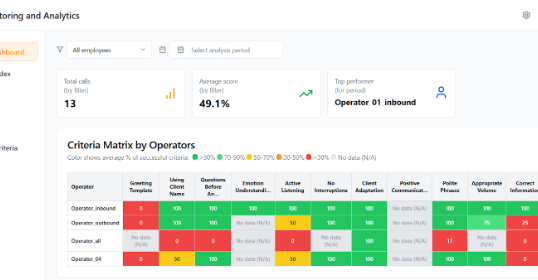
Bespoke Conversation Intelligence Software with Speech Analytics for Call Center
Belitsoft implemented a custom AI-powered conversation intelligence and speech analytics system to automatically analyze call center conversations for a major auto parts distributor with 8,000 employees, 500 branches, and over 400,000 calls monthly. In three months, the implementation delivered 75,000 euros in additional revenue and two staff positions were cut.
Custom Investment Management and Copy Trading Software with a CRM for a Broker Company
Custom Investment Management Software for a Broker Company
For our client, we developed a custom financial platform whose unique technical features were highly rated by analysts at Investing.co.uk, compared to other forex brokers.
Migration from .NET Framework to .NET Core and AngularJS to Angular for HealthTech Company
Belitsoft migrated EHR software to .NET for the US-based Healthcare Technology Company with 150+ employees.
Azure Cloud Migration for a Global Creative Technology Company
Azure Cloud Migration for a Creative Technology Company
Belitsoft migrated to Azure the IT infrastructure around one of the core business applications of the global creative technology company.
Custom Development Based on .NET For a Global Creative Technology Company
Custom Development Based on .NET for a Global Company
Based on modern and cost-effective .NET technologies, Belitsoft delivered a robust, scalable, and high-performance core business app as well as modernized the IT infrastructure supporting it.

Recommended posts

Belitsoft Blog for Entrepreneurs
.NET Development Nearshore
A strong nearshore .NET partner like Belitsoft can build new systems from the ground up, provide entire dedicated teams at scale, and modernize and rescue legacy projects. In all our cases, the clients achieved their goals faster and at lower cost than if they had relied only on local resources. Belitsoft’s two decades of experience in .NET development (the company was founded in 2004 and has focused on .NET since 2006) has equipped it with battle-tested processes for remote collaboration and a broad bench of Microsoft-certified talent.  Specify .NET Project Requirements Type of Project Project requirements are set before searching for developers. Since .NET supports many kinds of applications, the specific .NET skills and the project’s scope are identified at this stage. Web Development Building web applications or services with ASP.NET Core (for modern, cloud-ready web apps) or ASP.NET MVC. .NET web developers create everything from enterprise web portals to RESTful APIs. Mobile Development Developing mobile apps using C# and .NET (.NET MAUI for cross-platform iOS/Android). .NET’s unified platform allows sharing business logic across mobile and desktop. Backend and Cloud Services Building backend systems, microservices, and cloud integrations (using .NET for APIs, Azure Functions, etc.). .NET is often used for scalable server-side development, integrating with databases and cloud platforms. Full-Stack Solutions Combining .NET on the server side with front-end technologies (like React or Angular) to deliver end-to-end solutions. A full-stack .NET team can handle UI development along with the C#/.NET business logic and database work. Category of Project A project usually fits into one of three categories: a brand-new build, ongoing development, or modernization of an existing system.  New builds benefit from a nearshore team with experience in creating projects from scratch, architecture design, and rapid prototyping.  Ongoing development requires developers who can quickly understand existing codebase and follow established coding standards.  Modernizing a legacy .NET system requires migration expertise - moving from .NET Framework to .NET 6, 7, or 8 - and experience with refactoring older code. For example, Belitsoft migrated a mid-sized healthcare firm’s custom EHR from .NET Framework to .NET Core, which improved performance and enabled future enhancements.  Clearly defining the category of your project helps ensure you select developers with the right experience. Industry domain requirements Industry domain requirements specify the sector in which a .NET project will operate - finance, healthcare, e-learning, SaaS, logistics, or other fields.  Developers with prior experience in the same domain bring specialized knowledge - secure financial workflows, healthcare compliance (including HIPAA), or functionality for manufacturing and logistics. Many Eastern European .NET teams work across multiple domains.  For example, Belitsoft’s portfolio includes projects in banking, insurance, healthcare, manufacturing, and cybersecurity.  Teams with experience in a project’s domain reach productivity more quickly and can identify industry-specific challenges early. Look for Up-to-Date .NET Technical Skills Nearshore developers should be proficient in the latest .NET technologies and the full tech stack required for your project.  Microsoft’s .NET platform evolves quickly. The best nearshore developers stay current with recent .NET versions and related frameworks. Belitsoft’s .NET engineers, for example, stay aware of the latest Microsoft trends and use the modern, cross-platform .NET ecosystem to build web, mobile, desktop, cloud, and even AI-powered applications.  When evaluating candidates or vendors, confirm they have experience with .NET Core (the modern .NET), not just older .NET Framework, unless your project specifically needs legacy expertise. Beyond the core .NET language (C#) and framework, consider what other technologies and complementary skills are needed. Modern .NET projects often rely on a broad stack: cloud services, front-end frameworks, databases, and more.  Cloud Platforms Many .NET applications are deployed on cloud infrastructure. Check for experience with Microsoft Azure (or AWS/GCP if applicable). Skills like Azure DevOps, Azure Functions, containerization (Docker/Kubernetes), and cloud architecture are valuable when your project is cloud-based. A .NET team that has delivered Azure cloud solutions and understands CI/CD will add great value. Front-End Technologies If building a web UI or SPA, .NET developers also need skills in JavaScript frameworks like React, Angular, or Vue.js for the front-end. Full-stack .NET developers who can integrate an ASP.NET Core backend with a React or Angular frontend can accelerate development. This is important for delivering a modern user experience in web projects. Databases and ORMs Ensure the team is familiar with the databases you use - commonly Microsoft SQL Server in the .NET world, but also other SQL databases (MySQL, PostgreSQL) or NoSQL stores (MongoDB, Redis) as needed. Proficiency in ORMs like Entity Framework Core is a plus. Belitsoft’s teams, for example, work with SQL Server, MySQL, PostgreSQL and NoSQL like MongoDB or Azure Cosmos DB to suit different project needs. APIs and Integrations Most .NET projects require building or consuming APIs. Look for experience in designing RESTful APIs with ASP.NET Web API, and integrating third-party services (payment gateways, CRM systems, etc.). Knowledge of authentication protocols (OAuth, JWT) and API security is also important in enterprise projects. Other Microsoft Ecosystem Skills Depending on your project, specific Microsoft tech will be relevant - SharePoint, Office 365 integration, Power BI, or older frameworks. If these are needed, ensure the nearshore team has that know-how. During your evaluation, ask technical questions to verify these skills. Request code samples or a short technical assessment.  A strong nearshore .NET partner will be able to outline their approach to solving a sample problem (how to optimize a slow ASP.NET Core API, etc.) and reference relevant case studies where they used the required tech stack.  Eastern European development teams typically have years of experience across multiple programming languages and niches, and are proficient in areas like web development, mobile apps, and QA testing. This breadth means a nearshore .NET team can likely cover all aspects of your project’s technology needs. Why Eastern Europe for Nearshore .NET Development Eastern Europe is a top choice for nearshore .NET talent due to its combination of high-quality skills, large talent pool, cost-effectiveness, and geographic proximity. Unlike farshore outsourcing locations, Eastern Europe offers closer time zone alignment and cultural compatibility, which can be very important for agile collaboration and daily communication.  Advantages of hiring .NET developers in Eastern Europe Top-Tier Talent Pool Eastern Europe’s tech workforce is both deep and skilled. The region is home to hundreds of thousands of software developers with strong engineering education. Europe now has the largest tech talent pool in the world, surpassing regions like Latin America or India in sheer numbers.  Many Eastern European countries consistently rank among the world’s best in programming and math skills. For example, developers from one EU country ranked 3rd globally in coding challenge performance in recent years. This means you can find highly capable .NET engineers, including senior architects and niche experts, relatively easily through nearshore vendors in the region. Cost Savings without Quality Sacrifice Hiring in Eastern Europe is cost-efficient when compared to Western Europe or North America. Companies report saving on developer rates and associated employment costs on the order of 30% to 50% by nearshoring to Eastern Europe.  While rates are higher than in some Asian regions, the cost-to-quality ratio is extremely attractive. Fully loaded developer rates (including vendor management and overheads) remain significantly lower than domestic hires, and those savings multiply for larger teams or long-term projects. For example, by partnering with Belitsoft, one client was able to reduce their yearly development expenses by almost 45%, saving over $600,000 per year while maintaining high code quality. These savings come from lower wage rates, but also from avoiding expenses like recruitment fees, employment taxes, or office costs - since the developers are contracted through the vendor. Time Zone Alignment and Proximity If you are in Western Europe, Eastern European developers work on a very similar clock. Key tech hubs (Poland, etc.) are just 1-3 hours ahead of places like the UK, France, or Germany. This minimal time difference allows for full-day overlap in working hours, enabling real-time collaboration on daily stand-ups, pair programming, and quick issue resolution. Even for North American companies, Eastern Europe’s day overlaps at least half a day with the U.S. morning, facilitating communication.  English Proficiency and Cultural Fit Developers in Eastern Europe typically have strong English language skills and a work culture compatible with Western business practices. The IT industry in this region operates in English by default - English proficiency levels here rank within the global top 25 on EF’s English index.  Communication with your nearshore team will be in clear English, avoiding misunderstandings in requirements or technical discussions. Culturally, Eastern European engineers tend to have a proactive approach and will speak up with suggestions or questions (the region’s relatively low "power distance" encourages open dialogue). This means they won’t hesitate to flag unclear requirements or propose improvements early, which reduces defects and rework. The cultural alignment with Western Europe and North America makes integrating a nearshore team much smoother, as collaboration styles, business etiquette, and holidays have plenty of overlap. Strong Technical Education and Infrastructure Eastern Europe’s focus on STEM education produces a steady stream of well-trained developers. Many engineers hold university degrees in computer science or related fields. The region also has modern tech infrastructure - widespread broadband, reliable power.  Major cloud providers (Microsoft, Google, Amazon) have opened R&D centers or cloud regions in Eastern Europe, giving local developers cutting-edge exposure to cloud, AI, blockchain, and IoT technologies.  All of this results in nearshore .NET teams that are technically adept and able to leverage modern tools for your project (doing CI/CD with Azure DevOps on robust networks, etc). Furthermore, if your project involves data privacy or compliance (GDPR), nearshoring within Europe keeps data under EU laws - a bonus for regulated industries. In summary, choosing an Eastern European nearshore partner gives you high-caliber .NET talent, cost efficiency, and seamless collaboration. There is no need to fixate on one country in the region - countries like Poland etc., all offer excellent developers. What matters more is finding the right vendor or team within Eastern Europe that matches your specific needs, which we’ll address next. Engagement Models: Dedicated Teams vs. Full-Service Outsourcing When looking for nearshore .NET developers, you should decide on the engagement model that best fits your organization. Generally, there are two primary models (which some vendors can combine or switch between): staff augmentation (dedicated developers/teams) and project-based outsourcing (full-service development). Dedicated Team / Staff Augmentation In this model, you hire one or more dedicated .NET developers (or an entire team) through the nearshore vendor. These developers act as an extension of your in-house team. You manage their day-to-day work, set tasks, and integrate them into your processes (Agile sprints, stand-ups, etc.), while the vendor takes care of administrative overhead (HR, payroll, office space).  Dedicated team contracts give you a consistent group of engineers who work only on your project. This is ideal if you want to retain a high degree of control and have long-term work.  For example, a cybersecurity company engaged Belitsoft to provide 15+ .NET developers as a dedicated extension of their team, allowing the client to scale up development capacity quickly while Belitsoft handled hiring and HR.  Staff augmentation works well when you have internal project management and just need to add talent. It’s also flexible: vendors can often add or remove developers with only a few weeks’ notice as your needs change.  If you plan to hire multiple developers, ensure the vendor can provide a stable team (with minimal turnover) and possibly a team lead on their side to coordinate. Many companies start with a pilot team for 2–3 months and then scale up if it’s successful - a common approach in nearshoring is a 12-week trial sprint phase to make sure the dedicated team meets expectations before committing long-term. Full-Project Outsourcing (Development Agency) In this model, you hand off an entire project or a sizable portion of it to the nearshore development agency. The agency then provides end-to-end service - typically including project management, business analysis, UI/UX design, development, QA testing, and DevOps.  This is outsourcing the project rather than just people. It’s a good choice if you don’t have an internal development team or want the vendor to take full responsibility for delivering outcomes.  Belitsoft, for example, often acts as a full-service .NET development firm: in a collaboration with one global tech company with 17,000 employees, Belitsoft provided a full-cycle development team (PM, BA, designers, front-end & back-end .NET developers, QA engineers) to modernize the client’s legacy system. The vendor managed the entire SDLC using Agile, delivered features iteratively, and handled all quality control - freeing the client to focus on strategic decisions.  When evaluating this model, look for vendors with proven project management processes (Agile/Scrum expertise) and the ability to scale resources as needed for your project’s phases. Also ensure they offer transparency (regular reports, access to issue trackers, etc.) so you maintain visibility. Importantly, many nearshore providers (Belitsoft included) are flexible and can do hybrid arrangements. For example, start with a staff augmentation approach (embedding a few developers in your team), but later ask the vendor to take on a specific module as a fixed-scope project. Or vice versa: outsource initial development and then transition to a dedicated team for ongoing support. When discussing with potential partners, clarify if they accommodate both models. A vendor who can both augment staff and deliver turnkey projects gives you the most flexibility to adapt the collaboration over time. Consider also the level of involvement and support you need. If you have strong technical leadership in-house, lean towards augmented dedicated developers under your direction. If not, an outsourced project with the vendor’s solution architects and tech leads deliver better results. There’s no one-size-fits-all answer - the best nearshore .NET firms will work with you to choose the model that fits your goals and budget. Project Size, Budget, and Duration Considerations When planning a nearshore engagement, outline the expected project size, budget, and duration. These factors will influence which vendor or team is the "best fit" for you. Project Size & Budget Nearshore .NET development is suitable for projects ranging from small MVPs to large enterprise platforms, but different vendors specialize in different scales. Be upfront about your estimated budget range or project scope (in terms of person-months).  For example, if you have a smaller project, you prefer a vendor who works with startups or does fixed-price MVP developments. For a mid-sized project, a dedicated team of 3-5 developers over 6-12 months might be appropriate. Larger projects (multi-year) may be about building a team of 10+ developers, adding architects, and a longer commitment.  Eastern Europe has companies of varying sizes - some boutique teams and others with hundreds of engineers - so try to match a vendor whose sweet spot aligns with your project’s scale. Belitsoft, for example, is a mid-sized vendor (250+ engineers) capable of handling large-scale projects (we have delivered teams of 100 developers/testers for a single client), but also structured to assist smaller clients with just a few developers. Make sure to discuss the budget early. While nearshore rates are lower than Western locales, high-quality .NET developers still command a reasonable price. Typical fully-loaded rates for senior .NET developers in Eastern Europe might range $45 USD/hour (depending on country and expertise) - significantly cheaper than U.S./UK rates, but not bargain-basement. If a quote seems too good to be true, quality may suffer. A transparent vendor will explain how their pricing works (hourly rates or monthly rates per developer, management fees, etc.). Also ask about any minimum engagement size - some agencies might have a minimum project value or team size, whereas others can start small and scale up. Duration of Engagement Decide how long you anticipate needing the nearshore developers. Are you looking for a short-term contract (3-6 months) to get through a crunch or build an MVP? Or is this a long-term partnership (12+ months) where the external team will become integral to your product development? Nearshore engagements can accommodate both, but you may target different providers or contract types accordingly.  Short-term needs might even be fulfilled by independent contractors via the vendor, while long-term usually involves dedicated teams or continuous outsourcing agreements. Many companies choose an initial 6-12 month engagement and then extend if the results are good.  It’s common to embed specialists within your team for a defined period or to use a managed service on an ongoing basis. Belitsoft’s standard approach for new clients is often to start with a 2-3 month pilot (Time & Materials contract) to prove the value, then proceed into a longer engagement - for example, we conducted a 12-week fixed-scope pilot for one client to measure delivery speed before signing a multi-year team contract. Be realistic about ramp-up time: even with nearshore speed, a complex project might need a few weeks for knowledge transfer. If you have a tight deadline, mention it - the vendor will deploy extra developers to accelerate initial delivery. Conversely, if you expect to maintain the software for years, assess the vendor’s stability and retention practices - you want a partner who can keep the same developers with you long-term. Fortunately, Eastern European vendors often offer good retention - engineers in places like Poland tend to stay with projects for multiple years if the work is engaging, which is great for continuity. Lastly, consider flexibility for scaling team size over time. One big advantage of nearshore vendors is the ability to scale up or down quickly. If you need to double the team size later (or scale down after a phase), clarify how the vendor handles that. Most will accommodate increases with relatively short lead times by tapping into their talent bench or local network. For example, when one client suddenly needed to accelerate, Belitsoft was able to add several .NET developers within a couple of weeks to meet the new timelines, whereas hiring that fast internally would be nearly impossible. This elasticity is a key benefit to leverage. Communication and Collaboration Priorities Smooth communication is at the heart of successful nearshore development. When selecting a .NET nearshore team, pay attention to factors like language skills, time overlap (we covered timezone fit earlier), and the vendor’s collaboration practices. English Proficiency As noted, ensure the developers and managers you’ll work with are fluent in English (or your preferred business language). Most Eastern European developers speak at least upper-intermediate English, but communication styles can vary.  During initial calls, gauge how clearly they express ideas and whether they understand your questions without needing repeated clarification.  Belitsoft, for example, highlights English skills as a hiring priority - our Eastern European teams collaborate daily with U.S. and UK clients with no language barriers.  Clear English and a shared technical vocabulary (familiarity with Agile terms in English, etc.) prevent costly misunderstandings. Overlap and Availability Even with a close time zone, confirm the working hours and overlap.  If you’re in the US, will the .NET developers have at least a few hours of overlap in your morning? Many nearshore teams adjust schedules slightly to accommodate key meetings with overseas clients.  The one-hour difference within Europe is ideal – teams in Eastern Europe can easily join calls throughout the Western European workday.  Also ask about on-call or emergency support if your project demands it (for example, if you run a SaaS product that might need urgent fixes off-hours). Some nearshore vendors offer 24/7 support rotations, but that might incur extra cost or need a larger team. Cultural and Work Style Alignment Successful collaboration also depends on work culture fit. Eastern Europe has a professional culture that values direct communication and problem-solving. Developers there are generally comfortable raising concerns or providing input when something can be improved (thanks to a culture that doesn’t strictly defer to authority).  This is beneficial for agile development - you want a team that will question unclear requirements and suggest better solutions rather than silently building the wrong thing.  In your vetting process, look for signs of this proactive attitude.  For example, did the vendor ask insightful questions about your project in early discussions? Do their engineers offer opinions on architecture or do they wait to be told what to do? The latter might indicate a less engaged team.  You can also request a trial day or pair-programming session with a developer to see how they collaborate.  Cultural alignment goes both ways: ensure your organization is prepared to integrate remote team members (use tools like Slack, Teams, Jira, and hold regular video stand-ups so the nearshore devs feel included and informed). Communication Tools and Practices A good nearshore partner will have established practices for remote communication. Ask what tools they use (Jira or Azure DevOps for task tracking, Slack/Teams for chat, Zoom for meetings). Transparency is key - you should have access to progress tracking, and there should be agreed meeting cadences (daily stand-ups, weekly demos, etc.).  For example, Belitsoft follows standard Scrum ceremonies with many clients: daily stand-ups via video, bi-weekly sprint reviews, and a shared Jira board where clients can see tasks and updates in real time. This level of integration keeps everyone on the same page.  Clarify if the vendor provides status reports or if you’re expected to manage tasks directly. In dedicated team setups, often the client’s project manager will handle day-to-day management, whereas in full outsourcing, the vendor’s PM might provide weekly progress reports.By prioritizing these communication factors, you set the stage for a productive working relationship. Уou want a nearshore .NET team that feels like an extension of your own team, not a black box. Strong English skills, overlapping work hours, and a compatible work culture will make distance virtually a non-issue. Vendor Track Record and References Finding the "best" nearshore .NET developers isn’t just about technical skills or cost - it’s also about choosing a reliable vendor with a proven track record. You should thoroughly evaluate each potential partner’s experience and reputation.  Check Case Studies and Client References Reputable development firms will have case studies or success stories for similar projects. Ask for concrete case studies and contactable references - this is one of the strongest indicators of a capable partner. Look for projects that resemble yours in some aspects: like a case where the vendor built a financial trading platform that handled high traffic, or modernized an enterprise system under tight deadlines.  If a vendor can describe how they delivered measurable results in an environment similar to yours (say, migrating a legacy system to Azure cloud, or scaling an e-commerce app), it shows they understand challenges of scale, performance, and security that you might also face. Request client references to speak with - a brief call or email with one of their previous or existing clients can confirm the vendor’s strengths (and any weaknesses). Review Industry Expertise If your project has domain-specific needs (banking regulations, healthcare data standards, etc.), inquire about the vendor’s experience in that industry.  Many Eastern European companies cover a broad range, but some specialize. For example, a vendor might highlight case studies in FinTech or MedTech, indicating familiarity with things like PCI compliance or HL7/FHIR standards for health data. Belitsoft, as an example, has dedicated pages and case studies for industries like healthcare, where we modernized legacy EHR systems and integrated healthcare analytics. This background can be invaluable – developers who know your industry can anticipate user needs and compliance requirements better.  However, even if a vendor hasn’t worked in your exact field, a track record of quickly learning new domains (demonstrated by variety in their portfolio) is a good sign. Assess Team Size and Expertise Depth Ensure the vendor has enough depth to support your needs. A company with only a handful of developers might struggle if you suddenly need to scale up, or if one person leaves. On the other hand, a very large outsourcing firm might not give enough attention to a smaller project.  Belitsoft’s approach, for example, is to maintain dedicated teams for each client and we have over 250 developers, so backup talent is available if needed (bench resources), but each client team remains focused.  Check if the vendor has senior .NET architects on staff - complex projects may require high-level design decisions (like microservices vs monolith, or how to migrate to the cloud). Ask about their talent mix: juniors vs. seniors, any Microsoft Certified developers, etc. A strong vendor will proudly share their developers’ certifications or achievements (like MCP, Azure Developer certificates, etc., which demonstrate formal expertise). Quality Assurance and Process Part of a vendor’s track record is how they ensure quality. Inquire about their testing practices (do they write unit/integration tests? use QA engineers for manual and automated testing?).  A reliable nearshore team should include QA by default or be open to integrating with your QA.  Also ask about methodologies - do they use Agile/Scrum? How do they handle changing requirements? Belitsoft, for example, often adopts an Agile approach with frequent demos so the client can see progress and provide feedback continuously. The vendor’s ability to adjust to your process (or provide a solid one of their own) matters for a successful outcome. Security and IP Protection Given that you’ll be sharing your code and business ideas, the vendor’s policies on IP and security are important.  Reputable companies in Eastern Europe operate under strict NDAs and often have certifications like ISO 27001 for information security. Check if they comply with GDPR (if relevant) and how they protect source code (using secure repositories, VPN access if needed, etc.).  Eastern Europe, especially EU members, adhere to strong data protection laws, and vendors commonly meet standards required by enterprise clients.  For peace of mind, you can also look at whether the vendor has partnerships or recognitions (for example, Belitsoft is a member of the Forbes Technology Council and holds a 5-star rating on Gartner’s platform, which attests to our credibility in the market). As a final step in vetting, conduct technical interviews with the specific .NET developers or tech leads who will be assigned to your project. Many Eastern European engineers will impress you with both their technical answers and their understanding of business context (since they often work with international clients already). By combining all these checks - case studies, references, interviews, and industry fit - you’ll gain confidence in selecting a partner that can truly deliver.
Nearshore Software Engineering
Cost Savings and Economic Benefits Wage Differences Wage gaps are the main source of savings. A software developer in Eastern Europe earns 30% less than, for example, in Germany, where UK companies outsource when they do not want to pay UK National Insurance, pension contributions, holiday pay, office costs and recruiter fees. When a company hires through vendors in Eastern Europe, it avoids those extras and any redundancy payouts because the engineers arrive under a services contract, not as employees. Fully loaded nearshore day rates sit at around GBP 33. Even after adding a 10-30% vendor margin for management, quality checks and bench cover, the cost per story point stays lower than onshore options. Teams normally reach break-even within several sprints. Eliminated UK Overheads Nearshore contracts strip out several UK overheads. Recruiter commissions - usually 15-30% of a first-year salary - do not apply because the engineers arrive through a services agreement. The same arrangement removes redundancy liability; the UK statutory cap per employee is irrelevant when staff can be released by the vendor on short notice. Day to day costs are lower as well: less rework, lighter project management effort offsets the 10-30% rate premium versus Asian offshore teams. As a result, cost per story point drops below offshore benchmarks after several sprints. Talent Pool and Workforce Capacity Eastern Europe supplies a large technology workforce. The region employs software engineers across service firms, as well as other ICT specialists who cover product management, quality assurance, data engineering and user experience design. Universities add new STEM and ICT graduates each year. Poland contributes the most, has capacity, and continues to produce well-trained engineers who can work for international clients. Rapid Deployment Bench capacity converts regional scale into fast starts. Vendors keep pools of screened engineers who can join a project in several days. A direct UK hire usually takes about 40 days from approval to accepted offer. Eastern Europe supplies full time equivalents with little delay. When price is the main concern, it can provide the same skills as in the UK or Germany at lower day rates. Most vendors run a two week shadow or pair programming phase. External staff learn the codebase and working rules while in-house leads keep architectural control. This setup cuts the time to full productivity by at least three sprints. Delivery Performance and Collaboration Some studies that measured output of distributed teams show that squads in Eastern Europe can deliver more story points per developer each week than comparable teams in India and cut overall time to market. Time Zone Advantage One reason is time zone fit. Warsaw is one hour ahead of London, so daily stand-ups, pair programming sessions, code reviews and urgent fixes all occur within a shared working day. Language and Cultural Compatibility English language ability also matters. This hub ranks within the global top 25 on the EF English Proficiency Index, so projects stay in English and a common agile vocabulary prevents misinterpretation. The region's lower power distance culture encourages engineers to question unclear specifications early, which reduces defects. Technical Skills and Infrastructure Eastern Europe scores well on coding tests. In the latest HackerRank problem solving league, Poland ranks third - higher than most Western European countries. About 70% of Polish engineers hold a university degree. Large cloud providers run research centres in the region, so engineers gain current experience with cloud, AI, blockchain and IoT. Infrastructure is strong: fifth generation mobile coverage exceeds 90%, fibre networks are dense, and power reliability matches Western European levels. These factors support high-bandwidth collaboration and fast continuous integration cycles, leading to first time right code, shorter defect fix periods and fewer rework tasks each sprint. Compliance and Regulatory Alignment Eastern Europe meets UK compliance needs. EU and EEA countries apply GDPR, and the UK still holds an adequacy ruling, so personal data can move between the two areas without extra legal paperwork. Most vendors carry ISO 27001 and SOC 2 Type 2 certificates. Keeping processing inside the EEA avoids sovereign cloud debates and cuts legal work for public sector or highly regulated clients that demand strict data residency. Multi country delivery setups - mirrored cloud regions, distributed code repositories and standby offices - match the operational resilience rules. Risk Management and Operational Resilience Nearshore delivery disperses risk. If a site is hit by a geopolitical event, natural disaster or utility failure, the vendor can redirect work to another office within hours. Source code is stored in redundant repositories located in different EU or EEA states, and continuous integration systems replicate data between independent data centres. Role-based access controls keep production data within adequacy zones even if one country's risk profile worsens. Any disruption is usually limited to a single sprint, so product owners can adjust priorities without rewriting their funding plans. Poland as Key Market Poland supplies the largest labour pool and the broadest technology stack. Pay is rising faster than in neighbouring markets, yet it still sits well below UK rates. It is suitable for firms that want to host proprietary product labs on site. Eastern Europe provides the lowest day rates and offers deep AI/ML and 24 × 7 DevOps coverage. It also stands out for code quality, cloud security skills, and focus on cyber security. Contract Structure and Implementation Standard Contract Framework A standard contract starts with a 12 week, fixed scope pilot. The pilot measures cost per story point and delivery speed. Each delivery squad includes senior architects who run code reviews and design checks. A "sprint 0" phase sets branch rules, CI pipelines, escalation paths and a shared holiday calendar. Contracts tie rate changes to each vendor's local consumer price index, not to sterling exchange rates. They include an exit clause that lets the client end the engagement on short notice. The service level section sets clear targets for defect escape, sprint goal hit rate and voluntary turnover, with the last kept below 15%. The master agreement transfers all intellectual property rights to the client and requires the vendor to comply with GDPR, ISO 27001 and SOC 2 Type 2. Due Diligence Requirements Before signing, the buyer's procurement team reviews audited accounts or an independent credit score, checks for at least five years of trading history, and obtains two FTSE 250 level customer references to satisfy internal risk controls. Implementation Best Practices Early Friction Solutions Early frictions have standard fixes. Agree an escalation matrix and working agreement in sprint 0 to remove the 10–15% velocity dip caused by slow decisions in the first month. Run a two week Slack "shadow" period so nearshore engineers gain domain context before writing code. Use a shared holiday calendar and keep a 10% capacity buffer to cover national breaks on both sides. Control production data access with role-based masking, activity logs and quarterly reviews. Hold a joint tooling sprint to align repository structure, test coverage targets and infrastructure as code rules before the first feature commit. Strategic Benefits Beyond Cost Savings Disciplined use of nearshore staffing produces savings that go beyond wage differences. Filling posts in several days, instead of waiting three to five sprints for an internal hire, brings new features to market sooner and accelerates revenue. Senior UK engineers can focus on architecture and innovation rather than routine coding, improving morale and giving the product a technical edge. Full day time zone overlap and strong English skills cut escalations, shorten project status meetings and reduce management overhead. Operational Flexibility Staff augmentation contracts turn fixed payroll into a variable operating cost. Contractors can be released with 28 days' notice, avoiding redundancy payouts and brand damage when demand falls. The same agreements can add the required number of full time equivalents in under one quarter when funding returns. This flexibility removes the stop-start delays that occur when internal hiring cannot keep pace with agile funding cycles. How Belitsoft Can Help Belitsoft is the nearshore custom software development company that provides end-to-end engineering and managed teams with high-retention, English-fluent developers, giving UK enterprises a faster, more economical path to high-quality software. Scale Faster, Spend Smarter Our nearshore centres, just one hour ahead of London, deliver approximately 30% cost savings over Western European rates while preserving quality and seniority. Full Stack Talent on Demand Cloud-native back end, React or Angular front end, data engineering, QA automation and DevOps - staffed by senior Eastern European developers with the lowest possible annual attrition rate.
Nearshore Software Development Trends in 2025 for UK Enterprises
Cost-Cutting Through Nearshore Outsourcing Facing persistent inflation and recessionary pressures, chief information officers have made cost control their top priority for 2025. Many information technology leaders expect to tighten budgets and reassess their global sourcing strategies this financial year. UK companies are no exception. Most of them intend to expand outsourcing, adding billions of pounds to total expenditure. The primary drivers are lower operating costs and acute talent shortages. Nearshore software development — partnering with teams in neighbouring, lower-cost countries — has become a cornerstone of these efforts. By augmenting in-house staff with nearshore developers, UK enterprises typically cut labour costs by thirty to fifty per cent compared to domestic hiring.  In Eastern Europe, savings average about forty per cent per year and can reach seventy per cent per employee, thanks to significantly lower salary levels without a corresponding drop in quality. For UK organisations under pressure to do more with less, nearshoring delivers a practical, scalable way to contain costs while closing critical skills gaps. Enterprise sourcing priorities UK companies turn to nearshore team augmentation to trim fixed headcount costs while securing the specialised talent needed for digital initiatives.  The trend is replacing permanent hires with flexible outsourced staff to weather economic uncertainty. Despite the technology talent shortage, the recessionary climate is expected to push more companies to cut or freeze permanent information technology positions in favour of outsourcing.  Staff augmentation allows UK enterprises to scale teams up or down on demand, avoiding long-term salary commitments. This agility is especially valuable when chief information officers are under pressure to rapidly reprioritise technology projects. Many information technology leaders expecting a recession have delayed or halted discretionary projects, and augmentation offers a way to restart those projects quickly when needed by engaging external developers.  Preferred Nearshore Regions for UK Enterprises When UK companies outsource software development, they increasingly favour nearshore regions that combine lower costs with cultural and time zone proximity. Rather than the traditional offshore destinations such as India (which are geographically distant and often culturally distinct), UK enterprises are gravitating towards Central and Eastern Europe as the nearshoring hub of choice. India has gradually lost ground in information technology outsourcing, while nearshoring to Eastern Europe is on the rise. Eastern Europe stands out as the top nearshore region for UK firms in 2025. There are several reasons for its popularity. Geographic and time zone proximity Eastern European hubs sit just one hour ahead of the UK, allowing real-time collaboration, overlap in working hours and cost-effective on site visits. In contrast, far-flung locations in Asia or Latin America introduce wide time gaps and coordination risk. Nearshore therefore offers UK firms the benefits of outsourcing with minimal disruption to daily workflows. Large talent pool and high-calibre skills The region hosts roughly one point three million software developers and thousands of information technology companies. Poland provides especially deep benches - Poland alone counts hundreds of thousands of engineers. Multiple Eastern European countries rank in the global top ten for developer expertise, thanks to strong computer science programmes and a longstanding emphasis on mathematics and engineering. UK organisations gain access to world-class talent that matches Western Europe for technical quality. Compelling cost advantages Lower wage levels and living costs create a thirty to fifty per cent labour arbitrage versus UK rates. Typical developer fees in Poland run about forty per cent below those of equivalent UK contractors. With the fully loaded cost of a UK engineer frequently exceeding one hundred pounds per hour, nearshore teams deliver annual savings per developer. Cultural compatibility and English fluency Eastern European teams share Western business norms - direct communication, pragmatic problem solving and agile ways of working - making collaboration smooth. High English proficiency further reduces friction, enabling nearshore developers to integrate almost seamlessly with UK in-house staff. Ease of doing business and regulatory alignment Many Eastern European countries are European Union members, so their legal frameworks, data protection regimes and procurement standards are familiar to UK firms. General Data Protection Regulation alignment, straightforward contracting and strong intellectual property protections lower onboarding barriers compared with distant jurisdictions. For chief information officers pursuing cost efficiency, skills access and delivery agility in 2025, nearshore augmentation in Eastern Europe offers a balanced, low-risk strategy that preserves quality while delivering measurable savings and scale. Characteristics UK Enterprises Seek in Augmentation Vendors Choosing the right augmentation partner is critical. The goal is to find a vendor that not only meets technical needs at a good price, but can also delight senior stakeholders (chief information officers, chief technology officers) and satisfy rigorous procurement standards. UK enterprises therefore evaluate potential software development partners on a mix of hard criteria (proven capabilities, security, compliance) and soft factors (culture, communication, enthusiasm).  A chief information officer’s reputation is on the line when bringing in an external team, so they favour vendors who will make them look good by delivering excellence.  UK companies in 2025 seek augmentation vendors with the following characteristics. Proven track record and quality focus Enterprises shortlist vendors that can demonstrate successful deliveries of comparable scale and domain. Chief information officers routinely interview several past clients to validate quality and reliability, aware that inadequate vetting is the root cause of many outsourcing failures. Procurement teams therefore favour suppliers with detailed case studies, strong testimonials and recognised industry awards. Formal credentials for quality management or maturity ratings add confidence that the partner’s processes and output will meet corporate standards. Financial and operational stability Especially for larger enterprises, the vendor’s business stability and governance are important. No chief information officer wants a critical partner to go bankrupt or collapse mid project.  Thus, procurement will often evaluate the vendor’s financials. For long-term contracts, clients may request financial statements or proof of financial health. Large vendors are typically asked to carry sufficient insurance and may need to have certain certifications in the UK context.  Operational maturity (having defined escalation paths, service level agreements and an account management structure) is also valued.  Senior clients expect the vendor to have robust processes in place, not an ad hoc operation. Meeting these requirements ticks the boxes for corporate procurement and reduces risk for the chief information officer sponsor. Domain expertise and skills match UK enterprises shortlist vendors that can match their domain and technical stack. A bank, for example, will favour a partner with financial technology credentials and engineers certified in cloud, cyber security or data analytics.  Selection teams examine portfolios, case studies and certifications to confirm those skills.  Providers able to supply niche expertise - artificial intelligence, machine learning, blockchain - and scale engagement models from staff augmentation to full project teams gain an edge.  The objective is to extend in-house capabilities with seasoned specialists, not general coders. Balanced team composition UK buyers favour partners that field blended teams: senior architects who set direction and mentor, and mid-level developers who add energy and cost-efficient capacity. Procurement therefore chooses suppliers that can sustain the right ratio of experience to enthusiasm over the life of the engagement. Cultural fit and communication skills Any outsourcing relationship requires tight collaboration, so cultural alignment is a key vendor trait. UK firms look for teams that can integrate seamlessly with their work culture, whether that means understanding agile ceremonies, having a similar approach to deadlines or being able to communicate openly.  Eastern European vendors often win points here. Their developers typically have a Western work ethos, strong teamwork skills and excellent English proficiency.  High English fluency is essential for most UK engagements. Developers must be able to participate in technical discussions and draft documentation in English. Time zone alignment, or at least overlap, also falls under fit - a nearshore partner who works roughly the same hours allows for real-time meetings and faster feedback loops, which chief information officers and project managers greatly prefer.  Procurement questionnaires frequently include items about language capabilities, time overlap and cultural training to gauge this fit.  Additionally, communication style matters. UK clients often appreciate the direct communication and problem-solving attitude seen in many Eastern European and nearshore teams. Developers in these regions are often proactive in offering best practices to improve product quality, rather than coding without question. Such proactive communication can delight chief information officers, as it demonstrates the vendor’s team is engaged and thinking about the client’s best interests.  Conversely, vendors that seem overly hierarchical, inflexible or poor at knowledge sharing tend to be avoided. UK enterprises seek a cultural fit where the augmented team feels like an extension of their own, sharing similar values, work discipline and collaboration norms. Energy, enthusiasm and proactive attitude Beyond hard skills, chief information officers often talk about the attitude of the vendor team. Senior stakeholders are delighted when they see external developers who are passionate about the work and go the extra mile. Enterprises therefore favour vendors who can instil energy and enthusiasm in their teams.  This might manifest as developers who actively propose innovative solutions (not just doing exactly what is asked), who stay curious about the business context and who demonstrate a genuine eagerness to achieve results. An outsourcing relationship is most successful when the vendor’s staff exhibit ownership of outcomes - treating the project as more than just a pay cheque.  Eastern European teams are often praised for their dedication, self-motivation and pride in their craft, which often exceeds the commitment seen in some other outsourcing destinations. Motivation issues can plague low-cost offshore teams paid minimal wages, whereas nearshore developers tend to be more invested in the work. Vendors that cultivate a start-up-like enthusiasm or a can-do, problem-solving culture in their workforce are highly sought after.  Such an atmosphere often correlates with younger, dynamic companies or teams where developers are continuously learning new skills.  From the client’s perspective, an enthusiastic augmented team is more likely to innovate and deliver value-added insights, not just code to specification, and this delights chief information officers who see their outsourcing engagement driving business progress. Security, compliance and process rigour UK procurement demands evidence of security, compliance and mature processes. Vendors must hold current security certifications, apply secure development practices, and sign non-disclosure agreements and data-processing agreements. General Data Protection Regulation adherence is non-negotiable when personal data is handled. Buyers also expect disciplined project governance, plus supplier risk checks on sanctions status, financial health and, for critical contracts, on site audits.  Chief information officers often interview proposed engineers, review CVs and run coding tests. Established suppliers accommodate these steps and emerge with enterprise-ready status - proof they can pass scrutiny and protect the client’s interests. In summary, the ideal augmentation vendor for a UK enterprise in 2025 is one that combines hard credentials with a spark of passion: a firm with a proven, professional track record and compliance pedigree, and a team that is culturally aligned, motivated and eager to contribute. Such vendors not only deliver on paper but also build a trusted relationship, effectively becoming an extension of the enterprise’s own team.  This is what ultimately delights senior chief information officers: when an outsourcing partner consistently meets key performance indicators, proactively solves problems and makes the chief information officer’s organisation more successful without constant oversight.  As many chief information officers remark, they avoid investing in developing in-house information technology services that third-party vendors can do better. The underlying expectation is that the vendor will indeed do it better, faster or cheaper, justifying the chief information officer’s decision. The characteristics above are what give chief information officers that confidence in an augmentation partner. Industry and Size Variations in Augmentation Preferences While the core trends apply broadly, there are nuances by industry and company size in how UK enterprises approach team augmentation and outsourcing. Enterprise size Larger organisations tend to outsource and augment more extensively and systematically than smaller ones. Outsourcing adoption rises with company size. Micro firms still handle most work in house, but nearly all large enterprises delegate at least some functions to third-party providers. Large enterprises often have vendor management offices and procurement teams dedicated to optimising outsourcing contracts.  In 2025, growth in outsourcing is expected across all company sizes, but especially amongst mid-market firms. Small and mid-sized enterprises have historically outsourced less, often due to cost or fear of losing control, but the ongoing technology talent crunch and need for rapid digital deployment have pushed even start-ups and scale-ups to seek augmentation.  Small and mid-sized enterprises may rely on outsourcing to fill expertise gaps they cannot hire for internally. Start-ups bring in external developers to release a minimum viable product quickly, bypassing the cost and delay of permanent hires, while large enterprises conduct formal procurements - complete with security reviews, audits and site visits - and favour established partners that can scale. Smaller firms favour boutique partners or freelancers for their speed and flexibility, but they are also learning to vet suppliers carefully because a failed project can be ruinous.  Enterprise clients can enforce stringent service levels through formal contracts, while small and mid-sized enterprises often rely on faster, relationship-based selection of augmentation partners. Industry sectors All industries in the UK are leveraging technology outsourcing to some extent, but technology, financial services and the public sector are amongst the heaviest users of team augmentation. More than sixty per cent of technology and financial services firms already outsource back-office work, and both sectors are still expanding their use of third-party partners in 2025.  Technology start-ups embed global talent from day one, while banks and insurers have long shifted information technology development and support offshore to lower costs. Financial services buyers impose particularly strict vendor checks, demanding registration in approved qualification schemes and adherence to information security and payments data standards. They might also prefer nearshore locations for data sovereignty and oversight reasons. Many banks and financial technology companies have found Eastern European talent particularly useful for development of trading systems, mobile banking applications and so on, given the strong pool of financial technology-savvy developers in key cities.  The public sector likewise relies heavily on information technology outsourcing, channelling work through multi-year framework agreements with pre-approved suppliers.  Lately, even public agencies have shown interest in more agile staff augmentation, not just large contracts. However, public sector projects demand high transparency and value for money, and vendors must go through procurement frameworks and meet accessibility, security and compliance rules.  Eastern European vendors that have UK entities or partnerships have started to tap into this market by qualifying on such frameworks, offering the public sector an alternative to the big consulting firms at a lower cost. Retail and e-commerce These firms ramped up digital initiatives and often use augmentation to accelerate development. They value partners with experience in customer-facing technologies and who can be responsive during peak seasons. Manufacturing and logistics Industry 4.0 and Internet of Things projects have prompted more collaboration with external software teams, and they might prefer vendors with knowledge of industrial systems and those who can integrate software with hardware. Healthcare and life sciences These sectors are cautiously increasing outsourcing and need vendors who understand healthcare regulations and can ensure patient data protection. Cultural alignment is key here due to user-centric design needs and regulations. Telecommunications and media Many telecommunications companies have used Indian information technology services for years, but are now adding Eastern European augmentation for software-defined networking development, where proximity helps coordination. Cost and talent drive outsourcing everywhere, but risk tolerance varies by sector. A bank’s chief information officer may require on-site inspections and thorough background checks, whereas a technology start-up often relies on code tests and portfolio reviews. Geography follows suit. UK buyers typically look to Eastern Europe, and within the region Poland attracts companies in niches where they have earned strong reputations. Procurement and Chief Information Officer Attitudes Chief information officer opinions on outsourcing span a spectrum shaped by recent outcomes and corporate strategy.  Transformation-minded leaders treat augmentation as an explicit extension of their own capacity. A chief information officer at a major NHS trust, for example, executed a cloud-first shift with external partners at a fraction of in-house cost. Other public sector leaders have pulled some functions back inside to regain agility, yet still tap vendors for niche skills. The prevailing pattern is balance. Keep strategic leadership internal and delegate work that outside specialists can do faster or cheaper. By 2025, most organisations run a hybrid model - a compact in-house group of product owners and architects collaborating daily with a nearshore development squad - combining control with scale and savings.  Relationship quality is now central. Deals are iterative and consultative rather than transactional. Vendors that offer thought leadership and challenge ideas constructively win favour, especially in fast-moving fields. How Belitsoft Can Help Belitsoft is the nearshore partner UK organisations trust when they need to save 30 to 50 per cent on development spend, overcome hiring bottlenecks, and remain fully compliant, all while working within the same business hours. From enterprise cloud modernisation to start-up MVPs, our Eastern European engineers become an extension of your team within days and deliver production-grade software at London quality.


Senior Software Developer in the UK is a Top 5 In-Demand Role
In May 2025, UK's job matching platform reported that the UK labor market recorded 858,465 advertised vacancies, 0.49 percent more than in May 2024. This result marked a third straight month in which the year-on-year count of vacancies rose. Average advertised salary increased for the twelfth consecutive month, reaching £42,403 — 0.3 percent higher than in April and 9.38 percent higher than a year earlier. The rise in the statutory National Living Wage by 6.7 percent in April contributed to this pay growth. Entry-level demand moved in the opposite direction. Graduate postings declined by 4.2 percent during May and finished 28.4 percent below their level of May 2024, the lowest reading since July 2020. The broader set of entry-level jobs — which includes apprenticeships, internships, and other junior roles — was 32 percent smaller than in November 2022. Such roles now represent 25 percent of all adverts, two years earlier they made up almost 29 percent. Logistics and warehouse listings rose 9.77 percent in May, creative and design increased 6 percent, hospitality and catering 5.61 percent, and teaching 1.63 percent. Healthcare and nursing vacancies fell 10.21 percent, administration 9.22 percent, maintenance 7.95 percent, domestic help and cleaning 5.72 percent. The average time to fill a vacancy shortened from 39.5 days earlier in 2025 to 35.8 days in May, yet the ratio of jobseekers to vacancies rose from 1.98 to 2.02.  The northeast recorded 3.32 jobseekers per vacancy, the southwest 1.32.  Jobseeker-per-vacancy ratios increased in ten of the UK’s twelve regions. Northern Ireland recorded the fastest annual advertised salary growth at 12.63 percent, lifting the regional average to £40,726. London remained the highest-paying region at £48,680, followed by eastern England at £41,013. The list of most in-demand occupations placed healthcare support workers first for a sixth month, ahead of social care workers and sales assistants, software developers re-entered the top five. The overall outlook is one of cautious optimism but automation may alter hiring patterns for early-career roles. Many link the fall in entry-level hiring to the rapid spread of generative AI tools after November 2022. They say chatbots now handle basic customer support, AI programs draft routine legal documents and review discovery files, and models perform simple data analysis once assigned to junior staff. Automated systems also write standard account management emails. Because these tasks no longer need trainees, firms hire fewer graduates. AI raises the output of experienced workers more than that of newcomers, which could widen pay and career gaps. Others cite different reasons. They note higher borrowing costs after the Bank of England lifted its base rate to 5.25 percent, the end of the post-pandemic hiring surge, and recent increases in National Insurance and other taxes. Several point out that large technology companies are adding junior staff offshore, so some entry-level work may be shifting overseas, not vanishing.  Apprenticeships in skilled trades are down about 30 percent, and vacancies in healthcare, maintenance, and cleaning have also fallen—areas that depend little on language model technology. This suggests that broader economic forces are also at play. Wages are still rising faster than consumer inflation. Specialists, however, warn that the advantage could fade if price growth slows while pay growth continues. Some analysts believe the higher National Insurance charge is already limiting pay deals, but others see little effect so far. Finally, views diverge on whether AI is compressing pay bands: some expect flatter scales and lower inequality, others expect little change. Experiences with AI in software work differ widely. A few senior engineers say language model tools let them turn out routine code, quick prototypes, and data processing scripts two to four times faster. Others count only a 10–20 percent boost once the extra bug fixing is included. Most commenters note that the tools deliver value only when an experienced person guides them step by step. Very large codebases still lie beyond current model limits. When development does speed up, project managers often add more features to the schedule, so total workloads stay high. Users also list several drawbacks. The models can give confident but wrong answers, skip edge cases unless prompted with care, and insert subtle bugs that need thorough checks.  Because of these issues, many remind that a simple link between wider AI use and the fall in entry-level hiring is unproven. Economists say proper causal studies - ones that separate the effects of technology, interest rates, taxes, and other factors - are needed before drawing conclusions. Observed employer behavior aligns with several of these themes. Companies are running informal hiring freezes to preserve cash, posting exploratory vacancies to gauge conditions, and relying on smaller teams equipped with advanced tools to cover broader scopes. Recruiters report mismatches between job descriptions and candidate skills, including requirements for several years of experience with recent technologies. Applicants continue to receive outreach for roles unrelated to their stated competencies.

Our Clients' Feedback

Any software development, programming, or design needs we have had, Belitsoft company has always been able to handle this for us

We have been working for over 10 years and they have become our long-term technology partner. Any software development, programming, or design needs we have had, Belitsoft company has always been able to handle this for us.

We are very happy with Belitsoft

Belitsoft has been the driving force behind several of our software development projects within the last few years. This company demonstrates high professionalism in their work approach. They have continuously proved to be ready to go the extra mile. We are very happy with Belitsoft, and in a position to strongly recommend them for software development and support as a most reliable and fully transparent partner focused on long term business relationships.

We can recommend Belitsoft and are looking forward to start a follow-up project

It was a great pleasure working with Belitsoft. Software Development Company. New requirements and adjustments were implemented fast and precisely. We can recommend Belitsoft and are looking forward to start a follow-up project.

We are definitely looking at Belitsoft as a long-term partner

They use their knowledge and skills to program the product, and then completed a series of quality assurance tests. We were working in an agile way with them. Belitsoft performed very well throughout our project. We are definitely looking at Belitsoft as a long-term partner.

I highly recommend Belitsoft for website design and development

I highly recommend Belitsoft for website design and development. We were up against a tight deadline to launch the project. The work was delivered on time and within budget! I will continue working with Belitsoft as a valued partner for our web development!

We would recommend them to anyone who is in need of custom programming work

We have worked with Belitsoft team over the past few years on projects involving much customized programming work. They are knowledgeable and are able to complete tasks on schedule, meeting our technical requirements. We would recommend them to anyone who is in need of custom programming work.

Belitsoft seems to know what they're doing, which I appreciate

Belitsoft company is able to make changes instantly. One of our internal engineers has commented about how clean their code is. Belitsoft seems to know what they're doing, which I appreciate.

We continue today to augment our existing staff with great developers from Belitsoft

Belitsoft company has been able to provide senior developers with the skills to support back end, native mobile and web applications. We continue today to augment our existing staff with great developers from Belitsoft.

We highly recommend that you use this company if you want the same benefits

Belitsoft company delivered dedicated development team for our products and technical specialists for our clients time to time custom development needs. We highly recommend that you use this company if you want the same benefits.

They were able to convert it into a multi-platform software solution

We approached BelITsoft with a concept, and they were able to convert it into a multi-platform software solution. Their team members are skilled, agile and attached to their work, all of which paid dividends as our software grew in complexity.

Belitsoft guarantees first-class service through efficient management, great expertise, and a systematic approach to business

Having worked with Belitsoft as a service provider, I must say that I'm very pleased with the company's policy. Belitsoft guarantees first-class service through efficient management, great expertise, and a systematic approach to business. I would strongly recommend Belitsoft's services to anyone wanting to get the right IT products in the right place at the right time.

If you are looking for a true partnership Belitsoft company might be the best choice for you

If you are looking for a true partnership Belitsoft company might be the best choice for you. They have proven to be most reliable, polite and professional. The team managed to adapt to changing requirements and to provide me with best solutions. I strongly recommend Belisoft.

I expected and demanded a lot of you at Belitsoft company, but you exceeded my expectations

I expected and demanded a lot of you at Belitsoft company, but you exceeded my expectations. You acted pro-actively, challenged me at the right moments. Thanks!

Let's Talk Business
Do you have a software development project to implement? We have people to work on it. We will be glad to answer all your questions as well as estimate any project of yours. Use the form below to describe the project and we will get in touch with you within 1 business day.
Contact form
We will process your personal data as described in the privacy notice
This site is protected by reCAPTCHA and the Google Privacy Policy and Terms of Service apply
Contact us

USA +1 (917) 410-57-57
700 N Fairfax St Ste 614, Alexandria, VA, 22314 - 2040, United States

UK +44 (20) 3318-18-53
26/28 Hammersmith Grove, London W6 7HA

Poland +48 222 922 436
Warsaw, Poland, st. Elektoralna 13/103

Email us

[email protected]