SAAS blog

Blogposts by tag SAAS
List of Successful SaaS Companies in USA in 2026
EdTech companies with a SaaS revenue model Udemy is headquartered in San Francisco, California (600 Harrison Street, 3rd Floor, San Francisco, CA 94107, USA), and operates hubs across the United States, Australia, India, Ireland, Mexico and Turkey. Udemy is a platform that has multi-language courses on technical, business, and soft skills. It serves over 84 million learners with more than 270,000 courses made by around 85,000 instructors worldwide. Anyone can host a course on its website or mobile app, keeping 97% of the revenue from their own links and 37% from general sales on the Udemy marketplace. Udemy made US$789.8 million in total revenue in 2025. While total revenue was flat from the year before, subscription revenue grew 8% to US$566 million. Gross margins improved to 66%, and the company became profitable in FY2025 with a US$3.8 million net income. Enterprise segment accounted for 66% of total Udemy revenue in FY 2025. In contrast, the Consumer segment's revenue was $265.8 million, down 9% from the prior year. Udemy says that the decline was expected because it is pivoting from one-time course purchases to recurring subscriptions. Originally trading on the Nasdaq (UDMY) after an October 2021 IPO that raised US$421 million, Udemy is now being acquired by Coursera in a US$2.5 billion all-stock deal. The combined company will operate as Coursera (NYSE: COUR), with Coursera catching about 59% ownership and Udemy shareholders taking 41%. Udemy recently previewed Altus, an AI tool that identifies missing employee skills and tracks training results. It also integrated its course catalog into ChatGPT, so users can watch videos, ask questions, and enroll in the chat window. To help learners earn tech certificates, the company launched the "Learn AI with Google" subscription alongside an AWS certification program. Udemy is linking its courses to workplace search tools so that employees get immediate training suggestions when they need a new skill. Fundraising companies with a SaaS revenue model Donorbox (1520 Belle View Blvd #4106, Alexandria, VA 22307, United States) serves about 100,000 nonprofit organizations and processed over $3 billion in donations by early 2025. The platform added the most recent $1 billion between late 2023 and early 2025. Donorbox has supported over 250,000 fundraising campaigns in 96 countries. In late 2025, Donorbox launched OmniGive, a donation form that allows nonprofits to accept more than 22 payment methods. Apple Pay, Google Pay, and PayPal now account for 20% of all donations through Donorbox forms. Donations increased 30% year over year in 2025. Despite an 11% drop in fundraising amounts in April 2025, total donations continued to grow. Customers can embed donation widgets on their websites. Donorbox offers its services on a subscription basis. There is a free tier at $0 per month with a 2.95% platform fee, and paid plans start at about $150 per month with a reduced 1.75% platform fee. Workforce Management companies with a SaaS revenue model Hubstaff (11650 Olio Road, Suite #1000-193, Fishers, Indiana 46037) is an established software company that makes tens of millions of dollars a year ($32.9M in 2024, $18.9M in 2025). Over 95,000 businesses, as of 2025, in more than 100 countries use their tools. The company has a fully remote team of over 90 employees spread across 30 countries. Instead of just tracking time, Hubstaff offers a broader set of tools to help managers understand how their remote and hybrid teams work. The software includes time tracking with screenshots, activity and idle-time monitoring, app and website tracking, AI summaries of how people work, and built-in tools for automated timesheets, invoices, and payroll. Businesses pay a monthly or yearly fee for each user, and paid plans require at least two users. If you add a user to a yearly plan, you only pay for the time left in the year, but monthly plans charge the full amount even if you add someone halfway through the month. There is a free plan for single freelancers that offers basic time tracking with limited reports and screenshots. For $7 a month per user, the Starter plan gives small teams basic time and activity tracking, limited screenshots, and customer support within two days. The Grow plan costs $9 a month per user and adds detailed reports, project budgets, expense tracking, break management, and one-day customer support. The Team plan costs $12 a month per user and is built for larger groups. It includes unlimited screenshots, unlimited software connections, "Insights" reports, payroll processing, work scheduling, and paid time off tools. The Enterprise plan costs $25 a month per user, which you pay upfront for the whole year. It adds a Silent App that tracks in the background, HIPAA and SOC-2 Type II compliance, Single Sign-On, and one-on-one help to get your account set up. Other companies with SaaS revenue model Basecamp (ex 37signals) SaaS company (Chicago, IL 60607, USA) offers a project management web app like JIRA. Basecamp application was firstly launched by the company in 2004. Forbes says Basecamp’s revenue was $25,000,000 in May 2017. Olark SaaS company (Ann Arbor, MI 48104, USA) offers a live chat software for your website to answer your customers’ questions in real-time. Founded in 2009, Olark has today 12,000 paying customers (2017).  Chargify SaaS company (San Antonio, TX 78205, USA) offers an app that dictates to your SaaS-based website’s payment processor which customer needs to be billed and when (it also includes additional tools to manage the entire subscription lifecycle). Chargify launched its business in 2009 and today (2017) it has more than 1,700,000 live paying subscriptions. Zapier SaaS company (Sunnyvale, CA 94086, USA) offers a web app that can create connections to automatically push data from one app to another (it works with more than 700 apps), using triggers and actions. You even can build SaaS prototypes using Zapier. Zapier was founded in October 2011, today it is on a $20 million annualized run rate (2017). Buffer SaaS company (San Francisco, CA 94107, USA) offers a web / mobile software application, designed to manage accounts in social networks. Buffer was launched in late 2010, and today it has more than $10,760,000 annual recurring revenue (2016). Groove SaaS company (Newport, RI 02840, USA) offers a  is a web-based social customer support platform that helps companies manage customer support across all types of channels – email, web, livechat, mobile, Twitter, Facebook and more. Founded in 2011, GrooveHQ earns today more than $5,000,000 year in recurring revenue (2016). ConvertKit SaaS company (Boise, ID 83714, USA) offers a web-based application that guides bloggers step-by-step through the process of building their email list, automating their communication, and, ultimately, selling products to that list. It then provides detailed analytics about who’s buying, what lead sources are performing best. Founded in 2013, ConvertKit makes today $480,000 month in recurring revenue (2017). Sendgrid SaaS company (Denver, CO 80202, USA) offers a cloud-based email app for anyone that needs to send email, whether it's transactional email or marketing emails and campaigns. Founded in 2009, Sendgrid has now $100 million in annual revenue (2017).  Drift (Boston, MA 02116, USA) is a SaaS-based messaging app for sales and customer success teams. Total Funding Amount: $47,000,000. RapidMiner (Boston, MA 02108, USA) is a SaaS platform for a predictive analysis. It extracts the needed data and displays results in a way that users can easily determine trends and future outcomes. The total funding amount is $36,000,000 since launch. Perfecto Mobile (Burlington, MA 01803, USA) is a SAAS product that offers suites targeting at functional, automation and performance testing respectively. The total funding amount is $84,900,000 since launch. THE FURTHER READING The way to get profitable SaaS startup idea; SaaS Technology Stack; Use MVP-first approach for SaaS startup development; Manage a remote SaaS development team effectively; SaaS website design inspiration;
SaaS Development Framework: The Top 7 List
SaaS Development Framework
SaaS Boilerplate vs SaaS Framework To build a SaaS application, you need to use a backend framework and a frontend framework at a minimum (or sometimes a full-stack framework), along with various integrations. Most often, this involves custom code. If rapid prototyping is needed, startup founders can choose a SaaS boilerplate pre-packaged with features like user login, multi-organization support, billing, admin tools, and marketing pages. However, ready-to-use SaaS boilerplates are not always one-size-fits-all and may lack scalability in terms of architecture. An important consideration is that to choose the right SaaS boilerplate, you first need to decide on the framework it is built upon. Top SaaS Development Frameworks and Technologies This post will talk about programming frameworks like Vue.js, Laravel, Angular, and others commonly used for SaaS application development. Though not exclusively for SaaS, these frameworks offer a collection of pre-built tools, libraries, and functionalities that streamline the creation of Software-as-a-Service (SaaS) applications. Using frameworks allows SaaS developers to sidestep technical tasks like server management, security, and scalability and focus on business logic and features. Benefits of Using SaaS Frameworks Enhanced Code Quality. SaaS frameworks bring a host of tools and functionalities that refine the code quality, contributing to an improved SaaS development process. Increased Productivity. SaaS frameworks come equipped with best practices and conventions, guiding developers towards generating top-quality code. This minimizes the chances of errors and boosts the maintainability of the codebase. They also offer a range of automated tools and utilities to facilitate repetitive tasks, like testing and deployment. Accelerated Market Entry. SaaS development frameworks come with pre-configured modules and libraries. This allows developers to reuse code, saving time and effort in building features from the ground up. How to Choose the Best SaaS Framework? When choosing a software development framework, consider factors like cost-effectiveness, flexible pricing models, personalization, and automation. You should also analyze its integration capabilities and ensure it aligns with your needs. So, what should you look for to find a suitable SaaS development framework? Programming Language. Choosing a framework compatible with the programming language your team excels in is crucial. After all, the success of your application largely depends on your developers' skills. For instance, opting for a framework that uses an unfamiliar language could slow down your team and require hiring additional developers, thus increasing expenses. Security and Customer Support SaaS frameworks offer various features to safeguard data and ensure customer satisfaction. These may include data encryption, two-factor authentication, role-based access control, regular audits, penetration testing, and compliance with industry standards and regulations. On the support side, frameworks for SaaS development may offer multiple channels of customer support, such as email, phone, or live chat, as well as self-help resources like knowledge bases or community forums. They may also provide service level agreements (SLAs) that guarantee uptime and response times, along with continuous monitoring and alerts for potential issues. "Security executives tend to focus on four key issues when confronting SaaS capabilities: encryption and key management, identity and access management (IAM), security monitoring, and incident response," - The McKinsey Research Agency Scalability and Flexibility When developing your SaaS application, choose a flexible framework that accommodates updates and changes, keeping up with industry standards and business evolution. Remember, the chosen framework will probably be in use for five to ten years. Considering the framework's scalability—both vertical and horizontal—is a significant factor. A flexible framework supports consistent updates and seamlessly integrates additional tools as your business grows, ensuring your software stays current and can adjust to industry shifts. Business Requirements When picking the best framework for your business, focus on your specific goals rather than simply opting for a popular one. Look for frameworks for SaaS development with comprehensive libraries and databases that align with your project's needs—these features can significantly influence your technology stack selection. SaaS Application Development Cost In the process of choosing a SaaS development framework, you must consider your budget. Always operate within your company's financial constraints. Don't just consider the cost of a platform, but also the functionality it provides. This balanced approach can help businesses save money while still achieving high-quality results. Top SaaS Development Frameworks React Meta created React, a front-end JavaScript library, to improve UI/UX for web and mobile SaaS applications. Developers typically use React to build large, scalable web applications. React simplifies web page manipulation with its Virtual DOM, enhancing overall interface interactions. It primarily aims at providing scalability and flexibility. With its ability to deliver an exceptional user experience, React has secured a place in popular social media platforms like Instagram and Facebook, as well as video streaming services, including Netflix. React Features: Allows for easy code maintenance due to many reusable parts Enhances overall speed and efficiency of displaying visual content with quicker processing Facilitates the creation of search engine-optimized user interfaces Provides a set of helpful tools. For instance, a React-based framework Next.js features out-of-the-box Server-Side Rendering (SSR) "Building a Netflix TV UI experience that can run on the variety of devices we support is a fun challenge. In 2015, we embarked on a wholesale rewrite and modernization of our TV UI architecture. We decided to use React because its one-way data flow and declarative approach to UI development make it easier to reason about our app," - The Netflix Tech Blog Vue.js Vue.js is a versatile web development framework that enables developers to create large-scale applications using JavaScript. It's earned popularity for its possibility to integrate into web apps as well as its simplicity and accessibility for web developers. From team collaboration apps and trading platforms to the renowned cloud-based typing assistant Grammarly, Vue.js has been the building block for many robust applications. Vue.js Features: Enables reusing various components to build templates for web applications Integrates directly into the app without requiring additional external code Allows users to store each component of a web application in a separate file Enhances code maintenance and readability Angular Angular, a free framework created by Google for front-end software development, empowers developers to build large-scale SaaS applications. It comes with built-in tools for a highly secure framework and enables two-way data binding, saving time and streamlining the web development process. Alongside CSS and HTML, Angular employs Typescript, a programming language designed to maintain consistent code. Angular boasts an array of powerful tools for SaaS application development, including HTML, CSS, Typescript, Karma, Mocha, and Visual Studio. These resources heighten the efficiency of the web development process and simplify program compilation. Angular is often the go-to choice for companies looking to handle high loads seamlessly and securely, all while delivering an attractive user interface. Its widespread appeal spans various industries, with notable users including JetBlue Airways in the travel sector, job search platforms such as Upwork, and digital wallets. Angular Features: Simplifies programming with a complete MVC structure and two-way data binding Offers a clear and organized coding structure for easy bug detection and error correction Allows developers to create reusable, easily accessible codes Node.js Node.js is an excellent framework for developing network applications or systems that demand speed and scalability. It's useful for processing and consuming real-time data in multi-user scenarios. Node.js employs the "Single Threaded Event Loop" architecture, allowing it to handle numerous clients simultaneously. This approach enables faster task completion while using fewer threads and conserving memory. Node.js Features: Offers rapid scalability Contains built-in clustering Ranks among the fastest solutions due to its non-blocking input-output procedures Facilitates easy integration into full-stack development using JavaScript Provides architectural flexibility, allowing changes in one node without disrupting the entire system Supports cross-platform development Laravel Laravel, a free and open-source framework built with PHP, has been employed in creating of over 140,000 websites and 98,260 domains. Adhering to the MVC structure, it boasts a wide array of templates and web applications crafted with PHP. As a reliable and advanced framework, Laravel is an ideal choice for startups and new businesses. It streamlines data access and manipulation for developers through object-relational mapping (ORM) and offers a vast library of pre-built functionalities and cutting-edge tools to expedite the SaaS development process. Common applications of Laravel include financial and billing portals, loan marketplaces, and sports collaboration platforms. Laravel Features: Offers simple pre-designed structures for creating layouts with dynamic content seeding Enhances control entry and authorization logic across various resources Automates repetitive tasks using the command-line tool, Artisan Connects to existing sessions and caches using Redis Includes libraries written with object-oriented programming techniques Symfony Symfony, a SaaS development framework employed by nearly 600,000 developers across 100 countries, provides a robust architecture for crafting SaaS applications. This popular framework comes with a comprehensive suite of features, including templates, ORM, multiple libraries, data security, and unified modules. Its clean code, structured layout, and adherence to best programming practices distinguish it as a preferred choice for efficient SaaS development. You can seamlessly integrate Symfony with an independent library and PHP Unit. Plus, it's the go-to component source for many open-source SaaS projects like Drupal, phpBB, and Composer. From powering eCommerce platforms and media services to facilitating travel industry operations and Content Management Systems, Symfony's versatility shines in a variety of use cases. Symfony Features: Ensures better protection against cross-site request forgery attacks Facilitates navigation between website pages without errors or complications Makes debugging easier thanks to an extendable and adjustable toolbar Provides PHP components that can be used multiple times and separately Comes with pre-installed packages that add more features to the framework Django Django, a high-level Python web framework, empowers developers to swiftly build robust SaaS products. With a track record of over 80,000 websites to its name, Django excels in creating complex, data-driven websites and the front-end development of top-notch web and Android apps. Its practical, SaaS-enabled product design expedites development, saving valuable time. From Content Management Systems to event management platforms and web browsers, Django's versatility and efficiency make it a preferred choice across various industries. Django Features: Facilitates the creation of pre-built, user-friendly interfaces for task management Offers robust authentication protocols through the REST framework Utilizes HTML output for effortless API documentation Provides comprehensive app testing for enhanced accuracy Promotes simpler data retrieval with an object-oriented database With the right framework, you can create scalable, reliable, and cost-effective software that meets your customers' needs and drives your business growth. Let professionals help you select the best framework to create a lucrative product. Frequently Asked Questions
Find Software Engineers for your SaaS Startup
Real Business Cases of SaaS Web Development for Startups Business Case 1: Custom SaaS Training Software for eLearning Startup The US startup came to Belitsoft with a mission to train employees effectively by replacing costly and ineffective traditional eLearning methods with a personalized interactive web platform. The startup founder decided to develop an LMS from scratch due to previous unexciting and limited learning experience with a standard platform. Belitsoft’s dedicated developers offered сustom web application development services to create a unique interactive platform for the startup from scratch.  The development process included a discovery phase (to get a clear vision and scope of the project), content creation (by digitizing a hard copy), UX/UI design (to create an engaging conversational user interface), choosing a suitable tech stack, development, and software testing. All in all, the project's remote dedicated development team involved 8 dedicated programmers, designers, and testers in various stages, and allowed launching the MVP in 8 months.  Inspired by the capabilities of a new training platform, the startup founder is considering further software evolution with the help of Belitsoft (mobile version, Artificial Intelligence, etc). CASE STUDY: Custom SaaS Training Software for eLearning Startup Business Case 2: Custom SaaS EHR Development for a HealthTech Startup Our Client, a US-based company, decided to create a software product to automate manual tasks and boost the effectiveness of healthcare professionals. Due to the lack of in-house developers, the Client opted for software development outsourcing to get the necessary skills quickly and much cheaper than in the USA.  Belitsoft got the task to develop the MVP for a future EHR system from scratch. The Client didn’t choose off-the-shelf platforms because their customization would be expensive and difficult to maintain in the long run. To translate business needs into detailed technical requirements correctly, Belisoft started by assigning an experienced Business Analyst with proven expertise and deep domain-specific knowledge in the healthcare industry.  The development team chose the modern microservices architecture approach to develop a highly scalable healthcare software product with powerful functionality. Considering the specifics of the Healthcare domain, we applied the HIPAA-compliant server architecture proposed by Belitsoft to the Client to ensure the app compliance with HIPAA requirements. As a result of cooperation, a SaaS EHR platform with a simple-to-use UI was developed. It allows busy healthcare professionals to enable the accurate and efficient collection, systematization, and multi-faceted use of relevant clinical data. CASE STUDY: Custom SaaS EHR Development for a HealthTech Startup Business Case 3: Custom SaaS Marketplace Development for an Agritech Startup Our Client, the US-based startup, decided to enter the AgriTech market with a unique and helpful idea of connecting farmers and laborers through a marketplace app. The startup founder came to Belitsoft by reference from another business owner who used to work with our company and who recommended us as a team that takes responsibility and ownership over their work and does the job right, meeting the set-out deadlines and budget. The initial Client’s request focused on the idea and the functionality they expected. However, the startup team didn’t specify any technical requirements. For this reason, Belitsoft suggested full-cycle development services, including UX/UI design, business and technical consulting, and software testing. After agreeing on the details, our specialists started by mapping the idea to estimate the project cost. The next crucial step was to attract investors - and our designers created mock-ups for the project for this purpose. As a result, the startup managed to fundraise enough to proceed. Developing an MVP was the first milestone that would allow the business to release the app and start monetizing it in a short term. Then, we planned the second phase - further development after the app launch to enhance functionality. The MVP development and a series of extra features took 6 months. Thanks to a well-thought choice of tech stack (Laravel and React) with the availability of ready-to-use code, our software development team saved approximately 80-120 hours for the startup and lowered its development expenses. As a result, the Client received both web and mobile versions of the app for iOS and Android. After launching the marketplace app, the startup experienced 113% user growth. Now, it has got nearly 2,000 active users and the number is growing. CASE STUDY: Custom SaaS Marketplace Development for an AgriTech Startup  Business Case 4: Custom Chatbot and SAAS Web Platform for Marketing Automation Startup Our Client is the EU founder and CEO of a startup promoting a new approach to lead generation for businesses.  The business owner needed engineering resources with the skillset that would let him develop a human-like chatbot to convert website visitors to leads and a database app for storing these leads. He found Belitsoft via Google and chose us out of several companies due to “the most professional impression”, according to the founder’s words. The Client needed full-cycle development services. So at first, our business analyst gathered requirements to outline the technical details, cost, and scope of the project.  After that, the development started. For creating an intelligent chatbot that would naturally imitate a human consultant and provide personalized assistance, our developers “taught” the chatbot to determine the semantics of the page and discussion to answer with personalized and context-aware messages.  Belitsoft’s development team also used NLP (Natural language processing) techniques to make the chatbot act naturally. For that, they created predefined semantic categories with 3000 most used keywords, applied a word tokenization algorithm to parse a text into keywords, included a syntactic analyzer to remove stop-words and bring words to base forms, and many more. To effectively gather and manage all the incoming leads, the chatbot was accompanied by a SaaS web platform that serves as a database for businesses. Consequently, the startup founder got a chatbot that is simple to use and highly efficient in lead generation. Together with a chatbot came a database that prevented businesses from losing potential customers.  Both solutions made a powerful combination for lead generation for businesses. CASE STUDY: Custom Chatbot and SaaS Web Platform for Marketing Automation Startup Business Case 5: PoC of Cloud-Based Virtual Fuel Cards for a Logistics Startup The Client, a European startup in the logistics and transportation industry, partnered with Belitsoft to develop a cloud-based Virtual Fuel Cards (VFC) system for European truck carriers. As the startup didn’t have in-house resources to fulfill an idea, they searched for a reliable partner with the domain expertise to outsource not only the development process, but also business analysis, UX/UI design, and QA. The business founders lacked technical understanding of how it would work, so our team started with a discovery phase to check the idea against reality (the analysis of the target audience, creation of mockups, and outlining of the app functionality).  When at the discovery stage some serious technical issue was detected, we suggested making a PoC (Proof of Concept) to verify how the software product would function in a real-world environment. Proof of Concept revealed that the business idea wasn’t viable due to fuel cards' technical specifics. Even though the Client didn’t proceed with the product development, thanks to our analytical efforts it cost the startup only $2400 and 3 weeks to test their idea and avoid the risk of losing up to $200k of the planned project budget. CASE STUDY: PoC of Cloud-Based Virtual Fuel Cards for a Logistics Startup Deliver functional and awesome-looking SaaS app that users will pay for. Use the expertise of Belitsoft’s team in the full software development cycle: from PoC and prototyping to custom development and testing. Just tell our business development manager what help you need, and a pool of 400+ technical specialists will be at your disposal.
Custom ERP for Automotive Repair Industry
The Challenges of Standard Auto Repair Workflows Typically, automobile repair shops use a combination of a legacy ERP or CRM with .xls files, paper notes, and local folders for media files as well as different 3rd-party software to manage the core workflows. Such workflows are manual, time-consuming, and prone to human errors. Accepting a car for repair. A manager takes photos of the damage and saves them in a local folder. Then, they create a new order and manually estimate the repair cost. Then, the manager schedules the repair on a paper or in a CSV table and agrees this schedule with a responsible technician in person. Ordering lacking parts. The manager creates an email to a vendor where they manually indicate all the details (amount, estimated cost, and due date). After receiving the ordered parts, the manager manually notifies the vendor and confirms the final cost. Tracking employees' working hours. When a technician receives an order, they manually enter the start and completion time, lunch breaks, etc. For that, a technician has to write down these data on paper, then bring it to a manager. Calculating the costs of technicians' work, parts, and final repair expenses. A technician or manager goes to the accounting department to manually pass the information about the completed type of work and the number of hours spent on it. A manager also manually brings or emails the details about ordered parts to an accountant. The accountant enters the received data into accounting software by hand. Notifying customers about a current repair status. A customer has to call or email to find out the information about the repair process. Otherwise, a customer knows nothing about the repairing status until a manager calls and asks to pick up the car. Reporting to an automobile repair shop owner. The owner enters the accounting software to get data about cash flows. Then they enter the CRM to get information about customers, employees' efficiency, services, etc. How Custom ERP Automates Key Auto Repair Workflows Implementing a custom or on-demand auto repair software helps resolve a series of challenges typical of auto repair services, decrease costs, and improve customer service by automating every step of the workflow. 1. Advanced reporting tools to give business owners full visibility and control over a single or multiple auto repair shops In order to know strengths and bottlenecks of the business, an auto repair owner needs detailed and simple-to-use reporting to see the full picture. For that, an ERP needs an advanced reporting tool, that may include: financial reports (how much the company has earned from each order or during a certain period) for evaluating the business's financial health and earnings potential; business reports about dealing with 3rd party suppliers for analyzing the profitability of cooperating with each vendor; reports about cost-effectiveness of labor for calculating the auto repair shop's profit, etc. An example of a report illustrating the weekly number of orders and earnings, the parts and labor margins, a sales trend, and other KPIs. 2. Accepting a car for repair and scheduling work to save managers' time While creating an order in the ERP, a manager needs to take photos of a damage, estimate the repair cost, calculate the number of hours for repairing and types of work. All of this can be facilitated and automated by a custom ERP used in a combination with a mobile app. A manager takes photos of a damage using a mobile app. Photos get uploaded to a media storage, such as Dropbox, Google Drive, OneDrive, etc. Then, the media files are synchronized with a corresponding order. A manager estimates the cost of repair directly through the ERP thanks to integrations with collision estimating software (CCC, Audatex, AdjustRite, Mitchell) and with paint-scale systems (PPG Paint Scales, Akzo Nobel, or BASF) estimating the amount of paint needed. A manager plans repairing with the help of a scheduler, where they can see which time slots for each type of work are available. 3. Procurement management to save the time of auto repair shop's managers and accountants To order a lacking part, a manager selects a necessary integrated service (Partstech, Carfax, TireConnect, etc) and gets a list of required parts with pricing. The cost of repairing is calculated automatically based on a vendor's price list. A vendor receives an automated message with all the order details. 4. Tracking technician's working hours to monitor efficiency of work and calculate repair cost A technician selects a type of work to do and starts the countdown. When they need to make a break, or their shift ends, a technician marks the end time of the work through the mobile phone. The ERP contains a detailed timesheet, which facilitates further payroll. 5. Calculating the costs of technicians' work, parts, and final repair expenses to exclude human risks and save accountants' time Thanks to the integration of the ERP with the accounting software, an accountant automatically gets data about: technicians' working hours for calculating a salary; cost of parts and other materials, types of works, and repairing time for calculating a final repair cost; payments from customers (the paid sum, the number and dates of payments, the amount to be paid, etc.). The ERP for repair and maintenance gets all the transactions automatically thanks to the integration with such accounting software as QuickBooks, Sage One, Xero, or others. 6. Notifying customers about a current repair status to improve customer service When accepting a car for repairing, a manager agrees with a customer a preferable means of communication – SMS or email. Thus, a customer receives auto notifications about the repair status changes without involving a manager. An example of how customers can view the actual information. Create All-in-One ERP by Outsourcing ERP Development However, most ready-made car repair database software systems don't cover all the repair workflows. So, to get all the mentioned features, creating a multifunctional custom ERP is the best option. In case you don't want to risk employing a big team internally, choose a good technology partner to rely on who could get up to speed quickly and scale the team up and down as the project progresses. By outsourcing automotive repair software development to Belitsoft, the company with an extended pool of specialists, you get the following benefits: Quick start of the MVP development. Involving an experienced developer into the project from our talent pool without wasting time on hiring allows launching the MVP, get the first customers and start earning in a few months; On-demand scaling of the team up and down based on the current development needs. Not keeping extra developers in the team allows saving budget. At the same time, you quickly receive the necessary workforce on demand from our 300+ developers. Get the business-oriented and highly scalable ERP with unique functionality by partnering with Belitsoft's developers with expertise in the repair industry.
The Complete SaaS Development Guide
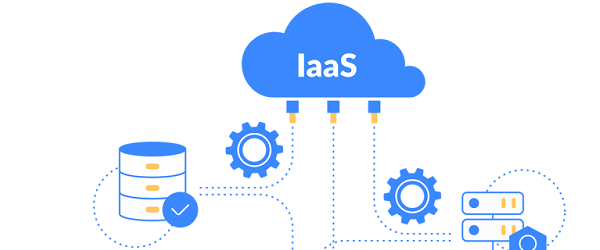
SaaS Market Trends 2026 In 2026, the SaaS market has surpassed $400 billion and continues to grow. The market has divided into traditional SaaS, AI-enabled SaaS and native-AI SaaS, and the money goes to the agentic segment: $10.9 billion in 2026, with a projection of $57 billion by 2031.  The market replaces the per-seat model with usage-based, outcome-based and hybrid models: your customer pays you for the consumption and for the results, and it doesn't matter how many people log in. Industry-specific SaaS, where you may need custom SaaS development for financial services or SaaS application development using .NET, grows by 18-32% a year and already accounts for about 35% of total SaaS revenue. SaaS platforms handle more sensitive data and more AI-generated code, and this is why your customers now check security, governance and compliance before the purchase (AI code governance is the main security investment of 2026). During this check, you must show how your measures actually work: the documentation, the test records and the monitoring. What This Means for the Plan of Your Project At the stage of discovery and UX design: you now describe the workflows of your product as work for agents the architecture now includes the metering of the consumption and the results your customer pays for the security measures must be ready for the customer's check before the purchase (the documentation, the test records and the monitoring). The core parts of SaaS developers' responsibilities remain the same: the discovery, UX design, scalable architecture, performance optimization, and scaling. What is Software-as-a-Service? SaaS applications deliver services to users over the web, and the user does not have to install the software on their devices. Such applications typically run in public clouds, but the owner can also host them privately or on local servers. By 2026, the SaaS market has divided into three tiers: traditional SaaS, AI-enabled SaaS and native-AI SaaS. Traditional SaaS gives the user remote access to a tool, and the user does the work using this tool themselves. AI-enabled SaaS adds an AI assistant that helps the user do this work. And in native AI SaaS, built-in agents execute entire multi-step workflows on the user's behalf. SaaS products increasingly sell the result of the work, and not only the access to the features. SaaS vs Traditional Software Business Model As a system, SaaS app can be built with the help of broad-ranging technical approaches and methods. However, SaaS is a business model first, and technology second. That’s why we need to compare the SaaS business model with the traditional software business model. Allow a team of experienced SaaS developers analyze your current solution and modernize it, or provide SaaS development services from scratch that allows you to easily operate, update, and maintain your application. Traditional Software Business Management and Operation: Hard To Grow Fast The traditional model of software packaging and delivery means that each customer gets from a provider a software product and has to install it in its own independent environment following strict requirements to the operating system, the database system, and so on, according to the purchased software version.  Individual environments may lead to the necessity of software customization to fit the environment's requirements, otherwise, the software will not work. As a business owner, you have to dedicate resources to manage, update, and support these customizations. Thus, the traditional software business model could lead to additional operational costs for each new customer, while cost optimization options are limited by default.  The one-off customization business model is suited for companies whose growth and the number of clients are moderate. In this case, the requested provision of unique features to every environment can be considered as a sales tool.    Whereas a business begins to grow exponentially and new clients are added fast, then the rising incremental expenses associated with the increasing number of dedicated teams start to erode the business margins.   The traditional software business model also slows down a company's development pace and does not allow for keeping up with the market. The attempt to implement new features into customers’ systems may hit limits, both objective and subjective, blocking sources of potential income for software business owners.   Facing such complexity dedicated teams have to spend more time on feature analysis, thus, delaying their delivery to the customer. The focus shifts from delivering to verification. The new feature testing takes most of the operational processes. Dedicated teams now are more focused on overhead operations and technical aspects of testing, leaving less time for delivering new functions, which were conceived to take the company forward.  By accepting this slow pace and more cautious approach the development cycle increases drastically, constituting large gaps between the stages in which the solution is visualized, built, and supplied to a customer. Together these factors can push back competitive efforts and lag behind the market.  SaaS Business Management and Operation: Easy To Grow Fast   Saas is a service-centered model whose main advantage is the fast release of new features.  With the SaaS model, the focus is shifted to how customers are onboarded to your service, how fast they appreciate its value and how rapidly you provide the features that meet customers’ needs.  SaaS providers' goal is to deliver new features often and fast. With the SaaS model, it is possible to release new features when needed as opposed to the traditional model which is expected to present new releases periodically, and the development cycle is scheduled for two years in advance. SaaS companies can respond quickly to market changes almost in real-time.  The main idea behind the SaaS model is that a SaaS provider (or a customer) has a single SaaS environment (standard multitenant architecture) and every customer is considered to be a tenant (renter) of this environment. Either a company with a large staff or a single user can be a tenant in the SaaS model.  A SaaS provider operates, upgrades, and maintains this environment. Thus, tenants do not need to have their own on-premise hosting solution. On the contrary, they are being hosted, managed, and billed in the shared SaaS environment.  The SaaS environment also offers a wide range of shared services. These are accessible to all tenants. The onboarding services, the identity management services, as well as metrics and billing management, are available to every SaaS provider’s customers.  The essence of Saas is to enable a universal set of services every tenant can use. Whereas all customers are using the same version of a software product, new features can be deployed at the same time during the single, common-for-all-tenants processes.  This makes it possible to monitor and coordinate all tenants using a unified management scheme thereby forming a shared experience. It also allows the add new customers to the SaaS environment without the additional operational overhead costs.  With the SaaS model, you can easily add either 100 or 1000 new tenants and you  can consider each new wave of customers as a “growing point” in your business not a headache.  A concept of a shared experience is a great opportunity to boost growth, speed up agility, and enhance production efficiency, which is the core of the SaaS business model.   Types of SaaS Applications Common SaaS app includes customer relationship management (CRM), which helps businesses in managing customer interactions and enhancing satisfaction. Other popular types of SaaS development platform are enterprise resource planning (ERP) for overseeing business processes and data analytics tools for making informed decisions based on analyzed data. Billing, HR, eCommerce, project management, learning management systems (LMS), electronic health records (EHR), customer service apps, document management, fleet management, collaboration and productivity solutions, and IT service management (ITSM) are some other examples of SaaS applications available to businesses. The flexibility and scalability of these solutions have made them an attractive option for businesses of all sizes looking to streamline their operations and improve efficiency. SaaS Application Architecture Multi-tenant. This design allows multiple customers to share the same infrastructure while keeping their data separate and secure. Users can access the same application without accessing each other's data. Single-tenant. In this scenario, each customer maintains a unique instance of the software, enhancing security through data isolation. Horizontal SaaS model. These applications serve a broad spectrum of businesses across different industries. Think of them as universal tools - like project management software ClickUp or a video conferencing tool Zoom - relevant to any business field. Vertical SaaS model. These are custom-built applications targeting a specific industry. Imagine a specialized Electronic Health Records system for healthcare providers, or a tailored retail inventory management system for e-commerce companies. Benefits of SaaS Application Development Benefits of SaaS Development for Users Anytime, anywhere access from any device with a stable internet connection. Seamless updates providing the latest software version without user intervention. Effortless scalability to upgrade or downgrade plans as needed. Enhanced reliability, as the app remains online even if a server experiences downtime. Benefits of SaaS Development for Business Flexibility for easy system modifications as requirements change. Steady revenue streams with monthly or annual subscriptions. Optimal performance, eliminating communication lags or bottlenecks. No software installation, maintenance, or updates required for users. Minimal hardware expenses. Robust security with standard protocols, including SSL and TLS encryption. Prompt feature enhancements and bug fixes. Straightforward scaling to accommodate growing demands. What is SaaS Application Development? SaaS application development involves building software to provide services to clients over the web. SaaS development and management encompass activities such as creating product documentation, UI/UX design, SaaS architecture design, SaaS software development, quality assurance and control, deployment to the server or the cloud, and application maintenance. SaaS Solutions vs Web Application A web application refers to “technical means of access to software”, it often describes any app accessed through a web browser. SaaS applications, on the other hand, are not about “technical means of access to software”, but about “paying for access to the software”. SaaS apps can be web applications, desktop, or mobile ones, however, SaaS web applications are the most common. To illustrate, Amazon.com is a regular web application, while Amazon Prime is a simple SaaS web application with its primary feature being access to video content. The Full Scale of SaaS Application Development Services To develop a successful SaaS app, you’ll go through multiple stages of the SaaS development process, from ideation to deployment and everything in between. Belitsoft SaaS development team sets up the entire workflow, including all or most of the following services, depending on the project’s specifics. Consulting. With agile methodology, advanced design skills, and innovative strategy, we collaborate to address real-life business challenges by devising solutions for long-standing problems or developing fresh ideas for today's evolving marketplace. SaaS UX/UI design. Our UX team adopts a user-centered approach, creating detailed personas, mapping user journeys, and developing wireframes and storyboards for an optimal experience. We also offer UX audits to improve existing SaaS products. Our UI designers concentrate on visual identity analysis and concept creation, providing clickable prototypes, comprehensive UI kits, animations, and developer specifications. SaaS architecture design. Belitsoft develops scalable multi-tenant architectures that effectively handle peak loads and maintain 99.98% uptime. Performance optimization. Our team ensures app dependability and consistency, providing positive user experiences regardless of network conditions. SaaS evolution. We integrate sought after features like video streaming, VoIP, chatbots, AR/VR, AI, and analytics to modernize the app, differentiate your SaaS product from competitors and enhance user experience. Cloud migration. We help migrate SaaS apps to alternative cloud providers or transform on-premises applications into cloud-adapted SaaS solutions. API development. Our services include API development and integration to expand the SaaS solution capabilities and streamline workflows, delivering a robust, user-friendly experience. Software testing and QA. Following global standards, we employ manual and automated testing best practices to ensure comprehensive coverage and data accuracy. Ongoing maintenance & support. We offer continuous support, timely updates, upgrades, data security, and efficient issue resolution for seamless operation of your SaaS platform or app. Looking for skilled SaaS developers with years of experience and a proven track record to help with your project? Provide more details to our specialist for a free consultation. SaaS Development Process We recommend following these steps to create an exceptional SaaS product. SaaS project discovery and planning During the discovery phase of the SaaS development services, you need to carefully research the current market, define your customer base, and describe the needs of your users and how best to serve them. Formulate your project's goals and objectives based on this research. Competitor analysis is another crucial aspect of this process. Reviewing existing apps, identifying their weaknesses, and improving them is a valuable practice. Document your findings and use them to draft a set of features for your application. Besides, collect the functional specifications, using various techniques and tools such as user interviews, structured and thorough discovery sessions, and analytics systems. Functional requirements may comprise details of screens, forms, responses, user interactions, workflows, and reports and dashboards. Payment Model Planning Decide on your payment model as part of the planning process. Offer the following options to your users: Freemium pricing. Provide limited features and encourage users to transition to a premium plan with the full package of features. Per-feature pricing. Offer several sets of features at different price rates. Usage-based pricing. Charge customers based on the amount of services they use. Per active user pricing. Base charges on the number of users accessing the package of services. Flat-rate pricing. Give users access to the full package of features for one price paid monthly or annually. As a result of the planning and discovery phase, create a project requirements specification. This document should describe the application's features, technical details (architecture and components), use case scenarios, and the scope of work. Here is a general example of requirements specification. Selecting a SaaS Hosting Provider Determine a cloud deployment model: Public cloud: Multiple users share computing infrastructure and resources on public cloud platforms, leading to cost reduction. Some industries may have regulatory requirements that prohibit the use of public cloud platforms. Private cloud: Offering exclusive control over the computing infrastructure and resources, a private cloud deployment provides a similar level of security as on-premises IT infrastructure. Private cloud platforms are more expensive compared to public cloud platforms that share computing resources among multiple tenants. Hybrid cloud: Combining the use of public and private clouds, the hybrid cloud model allows you to run security-sensitive workloads on a private cloud while other workloads run on a public cloud. This approach helps you meet regulatory requirements and also saves on development costs. After choosing a cloud deployment model, decide on the ideal type of cloud platform: IaaS (Infrastructure-as-a-Service): With an Elastic Compute Cloud (EC2) service provided by a managed cloud services provider (MCSP), you can entrust cloud infrastructure management to the provider while you tackle the rest of your tasks. PaaS (Platform-as-a-Service): In this model, the MCSP handles the cloud infrastructure, operating system, middleware, runtime environment, and other cloud services, allowing you to focus solely on developing web applications. A good example of this is AWS Elastic Beanstalk. MBaaS (Mobile-Backend-as-a-Service): An MBaaS platform takes care of your mobile app's backend. With this platform, there's no need to worry about overseeing the cloud infrastructure or persistent storage. The cloud provider handles it for you. AWS Amplify is an example of an MBaaS platform. Finally, choose from the best cloud providers: Amazon Web Services (AWS) delivers reliable performance, robust data protection, and a secure network. You pay only for the services you use based on your specific needs, eliminating extra costs or fees when services are no longer needed. However, AWS plans do not include customer support assistance, which requires an additional fee. Google Cloud provides a wide range of computing, storage, and application development services for your SaaS product. It ensures dependable performance in any location and offers powerful analytical tools, as well as scalability. Like AWS, Google Cloud follows a pay-as-you-go pricing model, but its customer support service can be expensive. Microsoft Azure offers top security, reliability, and scalability for your SaaS solution. It easily integrates with commonly used Microsoft tools in many organizations. Azure adopts a pay-as-you-go pricing model, similar to AWS and Google Cloud, but charges extra for live support. Choosing SaaS Development Technology Stack Teams commonly select their project's tech stack based on their preferences and experience. Let's explore the most widely used SaaS solution development methodologies and technologies. For SaaS front-ends, developers typically choose JavaScript/TypeScript-based frameworks and libraries, such as Angular, React, Vue.js For native mobile front-ends, you have native languages like Swift, Objective-C, Kotlin, and Java Mobile. You can also choose cross-platform JavaScript frameworks: React Native, Xamarin and Flutter. For back-end SaaS development, there are also several routes you can take: JavaScript-based: Node.js PHP-based: Symfony, Laravel C# .NET Java Python-based Django For database management, developers can select from popular options like MySQL, PostgreSQL, and MongoDB. Partnering with an experienced SaaS development team can help you make well-informed decisions when choosing the right tools for your SaaS software development, which is a defining step in building your app. UX/UI Design UX design involves creating a blueprint for the platform that concentrates on the user's experience. UI design focuses on the look and feel of the platform. It's important to understand that every icon, button, or form in the design of a platform adds to its overall feature set. Essentially, creating a visual representation of a button is much quicker and less expensive than actually developing it. This is because behind each button, there might be a complex set of logical connections to various entities, calculations, and integrations. Software Development and Testing The development stage is where your app is finally put together. Business, design, and architecture all come into place to create the framework for developers to transform your concept into a SaaS application. Typically, the initial phase in SaaS solutions development involves creating the minimum viable product (MVP). This includes constructing the first version of your product to test the idea, receive feedback, and evaluate the business monetization approach. This is also an opportunity to save money if the SaaS concept doesn't pan out. Developing an MVP can help minimize costs as well. Front-end developers implement the UX experience forged in the design stage while back-end engineers provide the logic and functionality behind the user interface. Development includes quality assurance and testing at every stage. SaaS developers perform initial unit testing while QA engineers take over after they complete each feature. Product launch, maintenance, and further development The key feature of a SaaS solution is that development does not stop after the product is first launched. Your application will constantly evolve, reflecting user feedback and requests. You will add new features and deliver fixes to keep your customer base. Continuous Deployment From this perspective, a well-configured continuous deployment process is an integral part of both SaaS and traditional software development. Experienced DevOps engineers manage the continuous integration and deployment (CI/CD) pipeline and automating workflows to ensure successful delivery every time you roll out new features. Having a good support team is also very important. It's a great practice to keep track of customer reviews in app stores or other SaaS platforms where your app is showcased. Not only does this help eradicate user experience issues, but it also provides you with ideas for further product development. Challenges in SaaS Development Life Cycle The SaaS development life cycle isn't always smooth sailing and comes with its own trials and tribulations. Here are a few challenges we've seen companies face time and again. Providing 100% uptime during new releases To retain your customers, you'll continuously update your SaaS application. It must always be available to users, and new releases should not break the system or disrupt its operations. A zero-downtime deployment strategy ensures 100% availability of your app to users. This approach typically involves using the previous version of the software as a backup environment. In this way, if any issues arise after releasing the new update, the traffic can be redirected to the old version. Managing SaaS subscriptions You can use a third-party solution like Stripe (which is also a financial SaaS app) to handle your recurring payments, but this will incur a monthly fee. Stripe provides an easy-to-integrate billing system for websites and mobile apps, allowing you to customize pricing models and create the necessary logic. Alternatively, you could build a custom subscription management system. Despite initial development costs, this one-time investment allows for a tailor-made solution for your specific SaaS offerings. For businesses with an iOS Mobile app, remember that the Apple Store requires use of its own payment system, which takes approximately a 30% commission on transactions. One way to avoid this is to handle payments exclusively through the web app, while the iOS app is used to access paid services. This strategy highlights the importance of thoughtful planning in your payment architecture. Complex third-party service APIs Some features are just not worth building from scratch as they are available in other apps. There is no need to reinvent the wheel. Many third-party solutions offer their functionality through APIs, such as payments, analytics, streaming, etc. Some APIs are more challenging to integrate than others. Sometimes it can be as easy as adding a few lines of code or just a link to the third-party service. However, in other cases, developers may have to examine documentation or even build their own API to integrate with the service. Ensure your quality assurance team is ready, so they can create manual and automated test suites to check for integration issues. Meeting the needs of the customers Developing a SaaS product that fulfills all customer expectations is a significant challenge. Moreover, these expectations may evolve over time, requiring continuous adaptation to meet their needs. To tackle this challenge, it's important to adopt a customer-focused approach right from the start. Conduct thorough research into your customers' needs and listen to their expectations. Take special care in conceptualizing your product before beginning the actual programming process. By doing so, you can incorporate your users' requirements into a solution that will fully meet their needs and satisfy them. Hiring a development team with a service-oriented mindset This means that every member of the team understands the project's specific needs, goals, and scalability potential. When hiring, it's best to look for individuals with experience in SaaS application development who are passionate about using technology to solve problems and create outstanding software-as-a-service solutions. Choosing the right technology Selecting the right technology plays a significant role in the scalability of SaaS applications. Consulting with a SaaS app development vendor helps you pinpoint the most effective tech stack for your project, laying the foundation for a scalable solution. SaaS Management Proactive monitoring and management of all SaaS applications within a company's technology portfolio is crucial for addressing common challenges and bottlenecks. Why do businesses need SaaS management? Effective SaaS management can help resolve issues, such as: Wasted spending on overlapping SaaS, excess licenses, and overpriced vendors Increased time for service and user lifecycle management Managing many renewals Failed SaaS implementations Unmanaged SaaS platform or apps, also known as Shadow IT SaaS management goals and benefits for business: Controlling SaaS application expenses Managing SaaS licensing Planning SaaS platform renewal Handling SaaS vendors and contracts Ensuring visibility into all SaaS purchases Preventing and reduce shadow IT Securing a SaaS platform or app Maintaining an updated SaaS inventory Enhancing IT collaboration across the organization How to implement SaaS management? Step 1. Discover. The process of discovering apps relies on three factors: visibility, collaboration, and recommendations: Visibility: Knowing what software your business already has. Collaboration: Finding easy ways to access that software. Recommendations: Identifying the best SaaS solutions for companies like yours. Step 2. Purchase. The SaaS management journey's purchasing process involves three major aspects: authorization, payment, and spend control: Authorization: How can I get approval for the new software? Payment: How can I make payments compliantly? Spend control and reduction: How can I manage the expenses associated with this application as my business expands? Step 3. Manage. Consider this stage across five dimensions: Automation: How can we automate administration tasks, such as invoicing, bookkeeping, and reconciliation? Onboarding: How can we simplify bringing new employees on board or managing those who leave or change positions as the company grows? Budget and Spend Management: How do we manage the ever-changing targets of budgets and spending associated with SaaS platforms or applications? Usage Tracking: How do we track which apps are used within the company? Compliance: How can we simplify managing compliance and risks associated with SaaS subscriptions? Step 4. Cancel. The last stage of the SaaS management journey revolves around visibility, savings, and cancellations: Visibility: View who is utilizing which software. Savings: Identify the 30% of wasted software in your company and cancel it. Cancellations: Simplify and standardize cancellations. SaaS Development Methodologies Choosing the right methodology impacts the entire project's success, budget, timeline, and user satisfaction. The three most effective SaaS development methodologies are Waterfall, Agile, and Lean. Waterfall What is it? This is a strict, linear approach with sequential stages such as requirements gathering, design, implementation, verification, and maintenance. Each stage has specific goals and must be completed before moving on to the next with no overlap or cycling back. Ideal for: Projects with a well-defined scope. Situations requiring strict budget control. Less Suitable When: Rigidity and reliance on initial requirements make changes during SaaS development costly and challenging. Delayed testing stage increases risks and can lead to project failure. The product is delivered all at once with user feedback only collected at the very end, which may result in failure to meet user needs and substantial rework. Agile What is it? Agile methodology uses a flexible, iterative approach with development divided into small, incremental stages or Sprints. Each Sprint involves planning, designing, developing, and testing a new functionality. The team builds, validates, and gets client approval for each functionality before moving onto the next one. This approach allows for continuous feedback and adjustments throughout the project. Ideal for: Projects with shifting requirements. Businesses venturing into new markets. Less Suitable When: Scope predictability is low, which could potentially lead to scope creep, resulting in a larger or more complex project than initially intended. Certain projects may not fit the agile model and may perform better with a structured approach like Waterfall, especially those with well-defined requirements and less probability of undergoing significant changes. Lean What is it? This method aims for continuous improvement by reducing waste and enhancing workflow, focusing on delivering customer value. Ideal for: Projects managed by small teams. Projects with tight budget constraints. Less Suitable When: A project requires long-term strategic planning and Lean's focus on short-term efficiency gains might overshadow this. Overemphasis on cost reduction might compromise product quality. What is the SaaS Development Cost? The costs of SaaS application development can vary based on the project's complexity, the variety of features, its integrations with other services, the chosen technologies, and dependencies on legacy systems. The project's price tag also heavily depends on the type of team you plan to assemble. The typical SaaS product development process involves the following stages, which may overlap or occur simultaneously: Validation and Planning: Establish the feasibility and scope of your project. MVP Creation: Develop a minimal viable product to test your concept. UI/UX Design: Create an intuitive and appealing user interface and experience. Front-End Development: Build the parts of the application that users interact with. Back-End Development: Develop the server-side infrastructure that supports your application. Each staffing option—hiring an in-house team, working with freelancers, or outsourcing to a software development team—carries its own benefits and drawbacks. In-house teams are efficient yet costly With an in-house team, you have the luxury of being in full control of the project life cycle. The SaaS developers are completely involved and dedicated to your project, so they know all of its intricacies. This control comes with drawbacks, though. With a fully equipped in-house team, you must pay their full salaries, taxes, and medical expenses. You also need to provide office space, hardware, software, and other supplies. Freelancers are affordable but may be hard to control Freelancers are beneficial in that they provide a targeted skillset. They also collect payment only for their services and have no overhead for management. However, they tend to be less focused and dedicated as they often have several projects in the works at the same time. This option is suitable when you are looking for specific expertise. At the same time, searching for freelance talent can be just as challenging as staffing an in-house team. You might also encounter difficulties managing a workforce of several freelancers. Dedicated SaaS development teams offer a middle ground Choosing a dedicated SaaS development team from a reputable outsourcing company provides an autonomous solution for your project, bundling necessary expertise from various specialists - business analysts, software engineers, cloud experts, and DevOps developers - under one roof. This approach is often more cost-effective than an in-house team as the outsourcing partner handles recruitment and management. Though more expensive than individual freelancers, it ensures higher quality control and mitigates risks, like faulty coding, that may come with freelancers. Ultimately, working with a dedicated development team offers the best cost-value ratio. Costs depend on the developer's locale Depending on your location, you might opt for hiring developers outside of your region to lower your expenses. This is because the average developer’s rates vary across different regions: North America or Canada: $100 - $200 per hour South America or Asia: $25 - $60 per hour Western Europe: $60 - $100 per hour Eastern Europe: $30 - $70 per hour Regions with competitive rates have consistently demonstrated the best cost-value ratio, as Eastern Europeans have prolific technical skills, a powerful drive for personal development, and high standards for the quality of their work. Team up with a Reliable SaaS Development Company Embarking on SaaS application development on your own is a challenging endeavor. An experienced SaaS development team can take the weight off your shoulders. They can provide an initial consultation, project discovery, and take over the technical side of development. However, even the brightest project ideas can falter if you choose the wrong partner for SaaS application development. We suggest a few tips on how to find a trustworthy team: Check their portfolio: Find projects that resonate with your idea and see how well the team handled them. By the complexity of projects in their catalog, you can determine if they can handle yours. Look into their expertise: familiarize yourself with the services they provide, the platforms they build for, and the technologies they use. A great team also has experience building for your industry. Make reference calls with past clients: nothing can give you a better idea of a company's capabilities than a conversation with a client who had a system of similar complexity to yours. This is especially important if you can speak with clients from your own region or country. The local connection can often provide a deeper understanding and level of comfort in your decision-making process. Read reviews from previous clients: reviews can tell you how well a team delivers on their promises, as well as how good they are at sticking to a certain budget and timeframe for a project. Advantages of Cooperating with a Reliable Vendor like Belitsoft Skilled SaaS software developers Access to a team of skilled programmers with extensive technical expertise and knowledge in SaaS platform or app development. Our team of developers is committed to delivering exceptional SaaS solutions based on top design, development, and management practices, using powerful web technologies. Security and Compliance We prioritize your application's security by following best practices like SSL and TLS encryption, risk management techniques, and thorough testing. We also integrate specific security protocols to meet industry compliance standards, such as HIPAA, GDPR, and PCI, depending on your project's industry. Up-to-date tech stack with tailored guidance We employ top coding practices to build robust applications and a versatile tech stack. Our efficiency ensures we stay within set timelines and budgets. If you're unsure about the right tech stack, we provide guidance post the Discovery phase to align with your project's unique requirements. Cost-efficiency We make informed decisions about the technology stack and allow for flexibility to adjust the scope of work within your specified budget. Our dedicated team of developers works together to minimize investment while ensuring that the development process is carefully planned to avoid unnecessary functionality and project overhead. Quick time to market We tailor our custom development services to your business specifics. By following Agile methodologies and using Continuous Integration/Continuous Deployment (CI/CD) and DevOps, we release new product versions every 2-3 weeks, ensuring timely delivery without sacrificing quality. Let Belitsoft help your business benefit from the advantages that SaaS development methodologies offer. Let's talk in more detail.
SaaS Deployment Architecture
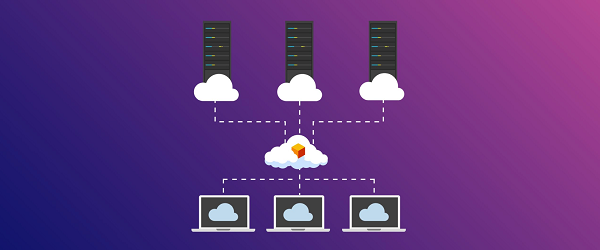
Advise with a professional SaaS developer Choosing the deployment architecture for your SaaS solution is not straightforward as you have to consider a variety of business aspects. Your tiered pricing model, customers' usage patterns, and consumption rates must all be factored into the application's architecture model. Advising with an experienced SaaS development company, you can be sure you've chosen the right path. PARTNER WITH US TO SUCCESSFULLY DEPLOY YOUR SAAS Selecting a tenancy model isn't just a technical decision, it's also a commercial one.  The tenant is a purchased instance of your SaaS application or, in other words, a group of cloud resources (such as database space and many more) that each of your customers can use within the quota. You may want to use multitenancy deployment architecture to allow cloud resources, that your SaaS app consumes, to be shared between all your customers. Below are the benefits and risks of different types of deployment architecture. Multi-Tenancy in SaaS Application Architecture Multitenancy in SaaS for you as a SaaS owner means that you buy resources from your cloud provider to host your software and then allow your customers to share these resources. For example, potentially millions of tenants could be stored in a single database (resource costs for a single database are quite low). In a fully multitenant deployment architecture, all components are shared. Benefits of Fully Multitenant Deployment Architecture Low cost to operate even if you need to deploy more resources globally. You may want to use this type of architecture to decrease your cloud costs when your business scales and you onboard more and more customers.  Cost maintenance is simpler since you only have to update one set of resources.  Do not have to migrate data between two separate deployments and just need to update tenant identifiers and keys, if a user or tenant needs to move their data to another tenant. Risks of Fully Multitenant Deployment Architecture High risk of data leaks between tenants. Separate data for each tenant carefully. Cloud cost changing affect your entire customer base. Be careful.  Hitting a resource quota limit affects your entire customer base. Consider deploying multiple instances of your resources (for example, multiple storage accounts). Noisy Neighbor problem. Be concerned about the effects that single large tenants can have on other tenants while performing a heavy query or operation.  Non-linear cost increase of scaling to keep up with the demand, especially when you have only a single, shared database. Automated Single-Tenant Deployment Architecture In an automated single-tenant deployment model, each tenant has a dedicated set of infrastructure. Benefits of Automated Single-Tenant Deployment Architecture Low risk of data leakage. Data for each tenant is isolated which is important to customers with high regulatory compliance.  Absence of Noisy Neighbor problem. Tenants don’t affect each other's system performance.  Low risk of system-wide outage due to updates and changes. Ones can be rolled out progressively across tenants. Risks of Automated Single-Tenant Deployment Architecture Low-cost efficiency. Think about the provision and use a dedicated subscription, per tenant.  Time-consuming ongoing maintenance. Consider automating these processes, as well as other cross-deployment operations, like reporting and analytics across your whole SaaS solution.  Mixed-Tenancy Deployment Architecture Some of your customers may want to use more cloud resources your SaaS provides than others, and it’s not correct to cover their spending with the help of others. It's more thoughtful to issue invoices to each subgroup depending on consumed resources.  SaaS philosophy is to provide the same pool of features and a shared environment. However, some of your clients will want customizations and will be ready to pay for them. Pay well. But these customizations are only be needed by them. Or they will prohibit your other customers to get access to these customizations.   In a vertically partitioned mixed-tenancy deployment architecture there are shared deployments for some tenants and single-tenant deployments for others. Benefits of Vertically Partitioned Mixed-Tenancy Deployment Architecture  Cloud cost benefits because you can deploy cheaper shared resources for trial customers and provide a higher rate for customers who require higher performance or data isolation. Risks of Vertically Partitioned Mixed-Tenancy Deployment Architecture  More spending on the codebase because the code needs to be designed to support both multitenant and single-tenant deployments, support migrating customers from a multitenant deployment to a single-tenant one, and help you understand which of your tenants are on which deployments to communicate information about system issues or upgrades to the relevant customers. In a horizontally partitioned mixed-tenancy deployment architecture, some components of the infrastructure are shared, while others are within single-tenant deployments  (like individual databases). Benefits of Horizontally Partitioned Mixed-Tenancy Deployment Architecture Absence of Noisy Neighbor problem. If you've found that some of your tenants send a large number of requests to your SaaS solution and your shared database is overloaded that negatively affects other tenants, you may provide them with separate databases.
Multi-Tenant SaaS Identity and Access Control Management
When thinking about solutions to manage, authenticate, and authorize their users, SaaS owners with the help of SaaS developers have to make architecture design choices. The right design depends on what customers of SaaS platforms need. Using a centralized identity provider and implementing role-based access control seems today the most common, however not exclusive, scenario for identity and access control management. Centralization The approach to implementing the identification and access control by the code in multiple sections within the application is insecure and considered legacy because the app developers can make accidental changes to it. A possible security breach is cross-tenant data access. The modern approach focuses on offloading the authentification/authorization logic to a separate centralized system from the application code. It increases the security of a SaaS application and makes it less vulnerable to attacks or exploitations. Additionally, centralization helps escape the need to write repetitive code each time. Role-Based Access Control Role-based access control is an authorization system that determines access to resources based on a user’s role. It’s a simple access control model to implement because it aligns well with easily recognizable business logic. In such a design, administration permissions can be provided to any level of the group hierarchy. visual-guard.com Example of the Role-Based Access Control for a Hospitality SaaS Solution to protect cloud tenants’ privacy and improve the efficiency of cloud management. This model works well with large-scale users and can cope with the surge of user numbers within limited cloud resources. Example of SaaS Identity and Access Control Management using Azure Active Directory  The Challenge of Multi-Tenant SaaS Identity and Access Control Management and its Solution Let's say you're writing an enterprise multi-tenant cloud-based SaaS application.  The application has two users alice@contoso and bob@fabricam which belong to different organizations. When Alice signs in, the application has to know that Alice employee is part of Contoso Customer and should have access to Contoso Customer data but shouldn't have access to Fabrikam Customer data.  Moreover, each SaaS customer should have the ability to assign the roles like "Admin" or "Standard User" themselves without asking the help from you as the SaaS provider The properly configured processes of verifying the identity of users (Authentication) and controlling their access to resources and actions (Authorization) are solutions to the above-described challenge.  microsoft.com After implementing Azure AD, the flow looks like this: Authentication. Alice from Contoso uses the browser to navigate to the SaaS application and press the "Log in" button. She's redirected to a sign-in screen where she enters her corporate credentials (for example, username and password). She's logged into the app. Authorization. The multi-tenant SaaS application knows that Alice is an admin user for this application and can use the resources that belong to Contoso. However, she can't view Fabrikam's resources, because she's an admin only within her tenant. Architecture for Tenant Authentication Let's say such a multitenant SaaS application consists of a web front-end and a web API backend implemented using ASP.NET Core, which has built-in middleware for the OpenID Connect protocol.  microsoft.com microsoft.com The SaaS web application:  uses the OpenID Connect protocol to authenticate users with Azure Active Directory; calls Azure AD to get OAuth 2 access tokens for the Web API;  cache them in Azure Cache for Redis to enable multiple instances to share the same token (if necessary). What happens when the user signs in, at a high level: The tenant’s user clicks the "sign in" button in the multi-tenant SaaS app. This action is handled by an MVC controller. The MVC controller returns an action to verify their identity. The middleware creates a 302 response, which redirects the user to the Azure AD sign-in page. The user authenticates with Azure AD. Azure AD sends an ID token to the application. The middleware validates the ID token and authenticates the user inside the SaaS application. The middleware redirects the user back to the SaaS application. When the user first signs in, the Cookie Authentication middleware writes the user claims to a session cookie, which gets deleted once the user closes the browser (it’s convenient for banking applications, for example, and can be reconfigured to persistent cookies). After that, HTTP requests are authenticated by reading the cookie. Example of SaaS Identity and Access Control Management using Auth0 and Amazon API Gateway  Basic multi-tenant setup with Auth0 and Amazon API Gateway. aws.amazon.com Auth0 is a third-party cloud identity and access control management provider. Auth0 Organizations is their solution for SaaS owners to manage customers and partners in their B2B SaaS applications. It allows to manage the business customer’s identity, including single sign-on, role-based access control, user management workflows, and even co-branding login flows. Create Tenants To setup multi-tenant identity and access control management for your SaaS platform, you need to:  Create Auth0 tenants using your Auth0 account. Map all your tenants 1:1 with Auth0 tenants. Auth0 provides Database Connections to authenticate users with their emails/usernames and passwords* (users’ profiles). These credentials can be stored in the Auth0 user store or in your own database. You can have your Auth0 Application read that information after the user logs in. This approach allows users, regardless of which tenant to which they belong to, to log in using in a uniform configuration. Create two Auth0 Applications. The first one is used to allow users to authenticate to the SaaS application. The second one is used to onboard new tenants and invite tenant users. *Different authentication methods can be used within the same tenant: some users authorize through an enterprise identity provider and others by email/password; a separate database connection and stricter security rules may be utilized for the root user within each tenant, while standard tenant users are stored in separate connections.  Onboard New Tenants Using a Registration Form A SaaS registration service (AWS Lambda in this design) orchestrates calls:  Tenant microservice creates a new tenant entry in your backend database. User microservice will be invoked to invite the user to the tenant’s Auth0 Organization. The Auth0 Login Flow Control Access to Resources and Actions Based on the Permissions of the User Assign specific permissions to individual users or create roles with a set of permissions that can be granted to a group of users in an Auth0 organization.  When an application requests an access token for a specific action, it specifies the required scopes. If the user has the appropriate privileges, Auth0 returns an access token with the requested scopes.  Belitsoft SaaS development company specializes in creating multi-tenant applications with custom authentication and authorization modules to protect sensitive information and properly control user access. If you want the best solution for managing tenants and data in your SaaS application, look no further. Contact us today to learn more about how we can help you build a secure and scalable SaaS application. LET'S TALK ABOUT YOUR SAAS PROJECT
Saas Website Design Inspiration: TOP-20 Header and Footer Design
1. SAAS COMPANY INVISION InVision is a web-based prototyping tool for web & app designers. It has raised a total of $134.1M in funding since launch. Header Footer 2. SAAS COMPANY SENDGRID Sendgrid is a cloud-based email app which works both for transactional email and marketing email campaigns.  It has raised a total of $80.36M in funding since launch. Header Footer 3. SAAS COMPANY LEVER Lever is a recruiting platform for human resource specialists. It has raised a total of $72.8M in funding since launch. Header Footer 4. SAAS COMPANY PERISCOPE DATA Periscope Data is a data analysis platform for data scientists. It has raised a total of $34.5M in funding since launch. Header Footer 5. SAAS COMPANY BENCH Bench is a bookkeeping app for small businesses. It has raised a total of $32.85M in funding since launch. Header Footer 6. SAAS COMPANY PIPEDRIVE Pipedrive is a CRM for sales pros. It has raised a total of $31.7M in funding since launch. Header Footer 7. SAAS COMPANY FOND Fond is a suite of employee engagement apps for companies strengthening their employer brands. It has raised a total of $25.85M in funding since launch. Header Footer 8. SAAS COMPANY LEADGENIUS LeadGenius is a lead generation app for enterprise marketing and sales leaders. It has raised a total of $20M in funding since launch. Header Footer 9. SAAS COMPANY RECURLY Recurly is a subscription billing management app for companies. It has raised a total of $19.6M in funding since launch. Header Footer 10. SAAS COMPANY INDINERO inDinero provides accounting software for small business owners. It has raised a total of $9.92M in funding since launch. Header Footer 11. SAAS COMPANY MARVEL Marvel is a is a prototyping and collaboration tool for software designers. It has raised a total of $7.98M in funding since launch. Header Footer 12. SAAS COMPANY PROVEN Proven is a hiring tool and job board app for hiring managers. It has raised a total of $4.79M in funding since launch. Header Footer 13. SAAS COMPANY ADESPRESSO AdEspresso is an app for creating, analyzing and optimizing Facebook Ads for businesses and marketers. It has raised a total of $3.2M in funding since launch and was acquired by Hootsuite. Header Footer 14. SAAS COMPANY UNBOUNCE Unbounce is a landing page builder app for marketers. It grew to over 15.6 million USD in annual recurring revenue (2016). Header Footer 15. SAAS COMPANY BUFFER Buffer is a social media scheduling app for marketers, businesses, and corporations. Today it has more than $1M/month in recurring revenue (2016). Header Footer 16. SAAS COMPANY ZAPIER Zapier is a web automation app for busy people who know their time is better spent selling, marketing, or coding.  Now, it has close to $7M in annual revenue (2016). Header Footer 17. SAAS COMPANY GROOVE Groove is a web-based help desk software for small businesses.  Today, it's recurring revenue is more than $5M / year (2016). Header Footer 18. SAAS COMPANY HUBSTAFF Hubstaff is a web-based time tracking application for remote teams. Today, it has $2,4M ARR. Header Footer 19. SAAS COMPANY CHARGIFY Chargify is a recurring billing app for SaaS companies. Today, it has $1.7M live paying subscriptions. Header Footer 20. SAAS COMPANY OLARK Olark is a live chat software for sales, marketing, and customer support on your website. Today, this app is used by 12 000 paying customers worldwide. Header Footer The professionally designed website is an excellent way to promote your brand online. Belitsoft provides full-cycle SaaS development services: from gathering requirements to web design and product development. Our SaaS web designers are always trying to stay ahead of the game. Hire us to get the web design that will sell your SaaS product.
SaaS Migration
SaaS Migration
Business First Mindset before Migration to SaaS One of the key concepts here is having a business mindset first and a technical approach second. The move to SaaS begins with business strategy and goals. Do not let the technical aspects pressure you to rush with your SaaS migration process.  Your business needs have a definite influence on the path and the top priorities for your SaaS project migration.  When crafting your strategy, focus on the questions that unleash the most about what your future product will look like:  How can SaaS help us grow our business? Which segments are we targeting? What is the size and profile of these segments? What tiers will we need to support? What service experience are we targeting? What is our pricing and packaging strategy? Anyone who had previous experience with SaaS migration knows that most of the time answers to these questions influence the answers to technical questions such as: How do we isolate tenant data? How do we connect users to tenants? How do we avoid noisy neighbor conditions? How do we do A/B testing? How do we do based on tenant load? Which billing provider should we use? Introduce True SaaS Experience: Shared Services for Identity, Onboarding, Metrics, and Billing Management The key concept embraced by all SaaS solutions is having shared services surrounding your application. These services are used by SaaS business owners for identity, onboarding, metrics, and billing management. From the migration point of view, these services play a titular role.  You’ll need services to manage and monitor your SaaS solution centrally.  The general goal is to get your application running in a SaaS model with basic functionality. It allows you to improve the customers' experience instantly with ongoing updates based on incoming feedback. That’s why implementing these services should be at the forefront of your migration path. It allows you to present a true SaaS experience to your customers no matter what SaaS deployment architecture you choose.  You can make further modifications to your app and its architecture at a later stage. How much you modernize your application will vary based on the nature of your legacy environment, market needs, cost considerations, and so on.  Support your SaaS migration process Your team can handle the business aspects of your SaaS migration, but understanding the technical side may be challenging. Once you have planned a sound business strategy, the next step is to address the technical challenges. This involves assessing and adjusting your application and data for the new cloud environment. Integrating data migration testing into this phase is about identifying and resolving any data compatibility or performance issues before they impact your SaaS operation. Seek professional support from SaaS development company who have expertise in setting up the necessary shared services environment for your customers and ensuring a smooth and secure transition of your data to the cloud. STREAMLINE YOUR SAAS MIGRATION WITH A RELIABLE PARTNER
Top Software Developers Shared How They Came Up With Profitable SaaS Ideas
#1 THE STORY OF CHRIS NAGELE: "It was just a big pain and I didn’t want to do it" Chris was 19 years old when he started working as a software developer. He was doing PHP development and building brochure (Flash) websites for Philadelphia’s local bars and clubs. In 2000, he founded Wildbit as a web design shop. On October 2007, he launched a startup, Beanstalk (a private code hosting SaaS platform for developers that now allows writing, reviewing and deploying of code). According to Chris’ wife Natalie, today Wildbit is a multi-million dollar company that has more than 100 000 clients (companies) of this and some of their other products. From where did the idea for Beanstalk startup come to Chris? He needed to deal with his own pain. It just came out of a need of our own. We were managing our own subversion repositories in-house (SPN repositories). When a new person joined the team or needed to access our code in order to work with us, I would have to go into config files and the server and do all this stuff. It was just a big pain and I didn’t want to do it. I said, “There has to be a better way, some easy way to save, click, add user, and manage your repository.” But there wasn’t. And we asked a few friends and said, “Would you ever put your source code on somebody else’s server?” And they’re like, “No, you’re crazy.” We did it anyway and, you know, Beanstalk became like our big product.  #2 THE STORY OF JOEL GASCOIGNE: "This became quite cumbersome, and so my idea was born" Joel Gascoigne was working full-time as a freelance web developer. During that time, he had several projects that he considered as startups, but all of them were not very successful. In October 2010 he launched his new startup, Buffer (a SaaS platform that now automatically updates your several social media accounts and allows scheduling posts for the specific time). Today Buffer has more than $1,000,000/month in recurring revenue (2017). Joel Gascoigne had a hobby and needed a tool for himself to get more out of it. “The idea for Buffer came to me after I had been using Twitter for about 1.5 years. I had started to share links to blog posts and quotes I found inspiring, and I found that my followers seemed to really like these types of tweets. I would often get retweets or end up having a great conversation around the blog post or quote. That's when I decided I wanted to share this kind of content more frequently, because the conversations being triggered were allowing me to be in touch with some super smart and interesting people.” Then Joel decided to find an app for himself.  But the current solutions lacked crucial built-in features or required a lot of manual operations – hence, he needed a custom software development. “So, with my goal of sharing more blog posts and quotes, I started to do it manually. I quickly realized that it would be far more efficient to schedule these tweets for the future, so I started to use a few available Twitter clients to do this. The key pain I ran into here was that I would have to choose the exact date and time for the tweet, and in reality all I wanted to do was to tweet "five times per day." I just wanted the tweets to be spread out so I didn't share them all at the same time when I did my daily reading. For awhile, I used a notepad and kept track of when I had scheduled tweets, so that I could try and tweet five times per day. This became quite cumbersome, and so my idea was born: I wanted to make scheduling tweets 'x times a day' as easy as tweeting regularly.” #3 THE STORY OF BRYAN HELMIG: "It was boring work" Bryan Helmig was doing a lot of freelancing for small businesses in Columbia, Missouri. He and his friends were helping companies integrate their many business services with one another. In October 2011, they launched a startup Zapier (a SaaS platform that enables easy data integration between 750+apps). Zapier does not disclose its financial data, but it may have close to $7 million in annual revenue (2016). Bryan Helmig had many boring repetitive tasks during his job as a software developer. “Wade Foster (co-founder of Zapier): “We’d set up Wordpress sites, create forms and little lead gen things for them, and we’d often get asked to do a lot of API grunt work. A customer would ask, “can you get our PayPal sales into Quick Books for us, or get our leads coming from this Wordpress site into our CRM or mailing list for us?” So we’d write a little API code, set it up and it would work fine. The customers liked it and they’d pay us our rates. It was boring work but it paid the bills”. There was an absence of solutions to make his job less boring. So Bryan decided to create one. “Bryan came to Wade Foster and said, “I think we can build a tool that productizes this API work we’re doing so that the end user can set this up themselves and wouldn’t need to approach persons like us.” So we teamed up with Mike and for the first year of Zapier it was this side project we were doing on top of our day jobs. Mike was actually still in school at the time. We just worked as often as we could to get the app launched and off the ground, trying to get people using it and to a place where we could finally go full-time on it. “ #4 THE STORY OF DANNY WEN: "We started looking at problems that we were having" In 2000, Danny Wen got his degree in computer science from the Cornell University (Ithaca, New York). In 2003, he started a two-person agency to provide web design and web development services. In 2006, they launched a startup, Harvest (a SaaS platform for developers that now allows tracking time, invoice clients, collect payments, and send estimates). According to Danny Wen, today, it is a multi-million dollar company with 40 000+ customers, and 51 employees (2017). Danny Wen discovered that it was not very interesting to track time and send invoices to their customers manually or with the help of not very convenient tools, so he decided to find a more appropriate solution. We started looking at problems that we were having as a consulting company. As our business grew, we looked for tools to help us scale. We searched for a way to easily track time and invoice for our services. We started to think about how we could make that process better. As an agency, we’ve been using Excel for timesheets for our clients, and we thought, it would be so much easier if this was on the web. We wanted a better way to put timesheets on the Web as well as actually track time while you work on the Web.  At that moment there were no matching apps. So he decided to create one for himself. We wanted a service that innovated with technology. We couldn’t find one… So we decided to invest our own time, energy and money into creating it. What we’re doing is taking a look at time tracking, time recording and online reporting for small businesses and reinventing all those things. We looked around and didn’t see anything like what we had in mind, so we decided: “okay, clearly we’re capable of taking a product from idea to launch, why don’t we do it for this?” We were building the product for ourselves.  #5 THE STORY OF MATT HARRIS: "It was painful. They didn’t want to be working on it" Matt Harris was the “typical nerd who started programming when he was ten or eleven”. He and his friend were working on different startup projects as contract developers. In late November 2012,  they launched a startup, Sendwithus (a SaaS platform that now allows marketers to test different variations of so-called transactional emails without having to involve a developer). Sendwithus does not disclose its financial data, but it raised $2.3M in 2014. Today it powers more than 10M emails each day, and process over 100M API requests between its customers and their Email Service Provider (ESP). Matt Harris had many boring repetitive tasks during his job as a software developer. The process started feeling "Groundhog Day"-like. “We really focused on transactional email, like welcome emails after web site sign ups, Facebook or LinkedIn message alert emails. When people build apps, those emails end up being stuck in source code. It was painful having to edit all of those files. We build some one-off products, to let marketing people manage their email templates without bugging us. We ended up building tools to off-load the work we didn’t want to do.” The market was untapped and there was no viable solution and no real technology in place.  “Brad Van Vugt (co-founder of Sendwithus) said, “this is stupid, we just kept building the same thing over and over again, so that’s when we kind of took our heads out of the sand. We started looking at the market. We were lucky to have friends working at Dropbox and Amazon who were happy to talk about how they handle transactional email (not well), which got us thinking that not only do startups need this, but there are really big companies who have the same problem. Amazon had a team working on this problem, and they didn’t want to be working on it. None of the companies we talked to were happy with their current system” #6 THE STORY OF NATHAN BARRY: "It was just too frustrating to use that interface and to go through that" Nathan Barry sometimes describes himself as a self-taught IOS app developer. At one moment he became obsessed with the world of audience building and book publishing. During that time, he wrote 3 books, 2 courses, and built an email list of 37,000 subscribers. In October 2014 he made the decision to walk away from the book and training business and focus full-time on his startup ConvertKit (a SaaS platform that now helps professional bloggers to grow their email lists and sell courses). Today ConvertKit makes $480,000/month in recurring revenue (2017). Nathan Barry had realized that email marketing is, probably, the best way to sell his books and courses. “I had no audience really, when I started writing the App design handbook.  But I just started writing a blog post, getting people to sign up for my email list, and all this helped, when I launched, as I had 800 people on the list, and did $12,000 in the first day. I learned that email was so amazing and so powerful.” Then Nathan decided to find an app for himself.  But the current solutions were hard to use or were lacking crucial built-in features; hence, he needed a custom solution. “Email courses, or follow-up email sequence are really powerful for getting people to come back and buy, but you should automate that. If you give away a sample chapter on your sales page [and get subscribers], you should remind them over time to come back and purchase. But it was such a pain to set that up in MailChimp. The autoresponder follow-up sequence would make me a bunch of money, but I didn’t set it because it was just too frustrating to use that interface and to go through that. You had to create a bunch of different lists, and it was also a pain. I also wanted to know about the conversion rates for my forms - I had to either use an outside plug-in, or go calculate it with Google analytics. And I thought “okay, there are always best practices, what if I built a tool that had all of them built in by default? After trying to find a painful problem to solve, I decided to solve one of my own: email marketing. That journey led me to create ConvertKit, my dream email marketing application. No more hacking together a system using other off the shelf providers — I built ConvertKit to follow the best practices I use, built in by default”. #7 THE STORY OF BEN CONGLETON: "We suffered through software that didn’t really meet our needs" In 2006, Ben Congleton got his Master's Degree in Computer Science and Applications. In 2009, with initial funding by seed accelerator Y Combinator, Ben and his friends built Olark (a SaaS live chat). They made their first million in sales in 2010. Today, this app is used by 12000 paying customers worldwide. The initial idea of the software that should solve their own pane was born 10 years before Olark was launched. “In the late 90s, I co-founded a web hosting company with some friends. We used instant messaging clients to talk to each other, and wanted a way to connect instantly with our customers too. We looked around for solutions and finally found live chat software that was built for call centers, but not for really small teams like us. The software was clunky, but it was so valuable that we committed to using it. Live chat became essential to the growth of our business. It allowed us to connect with our customers, explain our value proposition, and make the sale. Live chat was really valuable, but we suffered through software that didn’t really meet our needs. At that time, almost all chat platforms were built for giant call centers. We ended up paying a lot of money for a solution that didn’t really fit our needs. Ten years later, we realized that there was an enormous opportunity to build a beautiful, easy-to-use product that felt and operated more like the chat we were using to talk to our friends online, like GTalk. Our hope was that by making live chat easier to use, we could unlock the value of talking directly to your customers for every business that sold online. Then, Olark was born.” #8 THE STORY OF CHRIS KELLER: "There has got to be a better way for this" Chris Keller has a degree in Computer Science from Virginia Tech (2003). In 2007 he launched his app FollowUp (an email reminder SaaS), but he didn't get the first paying client until 2011. FollowUp was acquired by Argon Technologies in 2014. Now Chris Keller is an investor. Chris Keller built this app to solve a problem he had. “I was reaching out to people that I met at conferences. So every time I emailed them, I go to my calendar and put, like, “Email Bob, if he hasn’t replied”. Then the Google Calendar reminder comes in, and I’m like, “Who the hell is Bob? And where is that email?” So, I was like, “There has got to be a better way for this.” So one day, I was like, “You know, I really wish I could put the reminder on the email when I send it, and it brings back the email to me. And so, I started thinking about, how can I do this? And I thought, well, if you could somehow use the BCC field, only I can see it, they can’t, and you can indicate when in the form of an email address. And so that was literally when it was born, and I built the first version in a week after I thought of it. I built it as a service that anyone could use, but I was the only one using it.” As a primary user, he knew exactly how to improve the product. “I kept tweaking follow-up for my own needs. The fact is that when I used my own product, I knew where the deficiencies were just in terms of my own use of Gmail. I’d be like, "Oh I wish it would do this!". And I’d add it in. And they’re all just little tweaks in my spare time. And I feel with my email product being the number one user, I was able to do a lot of good development that actually made sense for the product. When FollowUp got out to more of the general public, I certainly got more feedback than from just my own usage”. #9 THE STORY OF BRANDON PEARCE: "I used to get frustrated" Brandon Pearce received his B.S. in Computer Science in 2005. In 2004, he launched his startup Music Teacher's Helper (today, it is a 6-figure SaaS that helps music teachers manage their private music teaching studios). In 2009, Brandon sold almost everything he owned and began traveling the world with his wife and two daughters (now three), while continuing to run his business. How did Brandon come up with the idea for his startup? “When I was teaching private piano lessons, I used to get frustrated trying to keep track of when all my students’ lessons were and how much they owed me. So I wrote a little program to keep track of their schedules and payments. Students could login to see when their next lesson was and how much they owed. It saved me lots of time and headache. Soon, other teachers saw what I was doing and wanted it for themselves, so I decided to make it available to others. I listened carefully to feedback from my customers and improved the program a LOT over the next few years, adding everything from automatic invoicing, to on-line payments. Now it does pretty much everything except teach the student, and teachers love it!” #10 THE STORY OF BRIAN WONG: “TAKE ADVANTAGE OF AN OPPORTUNITY WHEN IT IS PUT IN FRONT OF YOU” Brian Wong was 19 when turned his idea into a $20M/year business. His company Kiip (pronounced “keep”) offers a SaaS rewards platform for virtual achievements. Kiip started with $300K hand by True Ventures, and today they have received $32M in total funding 8 rounds. In 2009 Brian graduated from the University of British Columbia. Five months after being hired by Digg, Brian was laid off and had to go back to Vancouver since his visa expired. While thinking about the next move, Brian remembered how he was flying on a plane where passengers all were playing mobile games. He noticed that advertising was being shoved at these experiences in a very unnatural way. So the main question was how to make banner ads and interstitials more attractive to the consumer. Within a week, Brian generated ideas for what he thought was a better alternative: having brands offer rewards (e.g. products, gift cards, etc.) inside mobile games. In the following weeks, he showed his idea and asked for feedback from anyone who would listen including baristas at Starbucks or cab drivers. However, Kiip was just an idea, and Brian needed a sustainable livelihood. While he was looking for a job in business development, he shared the Kiip idea with job hunters and many of them advised him to build the company; a few of them introduced him to VC’s, one of which was True Ventures. "So I basically just showed them the idea, and said ‘tell me how it works.’ And they’re like, ‘well, we give you a term sheet and we give you money and you build a company and then we own a piece of your company.’ I had no idea what vesting meant, or cliffs, or anything like that. I had the textbook version of it that I learned in college, but I didn’t know what it meant in the startup context." Having partnered with game developers who would host the rewards weren’t the main problem since Kiip could attract them if there was money. The primary challenge here was to find brand partners who say yes to offer rewards to gamers. So Kiip had to be creative. "At the start, we falsely funded one side of the platform. We bought gift cards from these brands, even though they weren’t our clients, and we’d use those as rewards. It actually worked out really well, because then we could go to Nike and say, ‘hey, look how many people liked your reward, even though you didn’t actually spend money it?’." That “game plan” helped Kiip find some key early partners. However, a big brand or two didn’t make the business, so Brian had to develop his tactic correctly. “Nothing is ever as amazing as it seems, and nothing is ever as terrible as it seems. So you’ll do a deal that you think is going to be life-changing and that deal ends up giving you 10 grand, and you’ll try to do a deal and you’ll lose it and think ‘oh my god we just lost this really important deal my life is over’ and then nothing bad happens. That’s usually how life works. [...] You can never expect to do anything right the first time. Be willing to fail, and know what all of the possible outcomes are. This is so important as a founder: whenever you do anything important, lay all the possible scenarios out in front of you, from best to worst, so that you don’t get surprised when something happens. The number one key to ensuring that you don’t react irrationally is to not let yourself be surprised.” #11 THE STORY OF NEIL PATEL: “I JUST WANTED TO BE RICH” Neil Patel is the co-founder of brian wongCrazy Egg (web analytics tool), KISSmetrics (customer engagement automation platform), and Neil Patel Digital (marketing consulting firm). Well, what are the lessons Neil learned from building three successful businesses? Neil started his first business, Advice Monkey, an online job board, at the age of fifteen. His motivation was simple: to be rich. However, the idea failed to succeed, giving him the first painful business lesson. “It made me realize that money isn’t everything. If you’re just working for money, you’re going to get burned out very quickly. You have to find something you’re passionate about that solves real problems for people. Advice Monkey didn’t work out and it didn’t work out because I created it for the wrong reasons. I wasn’t passionate about it.” Crazy Egg was Neil’s next venture, which has comprised 100.000 users for 5 years since its establishment in 2006. But, Neil and Hiten Shah, his co-founder, agreed that the company could grow faster if they keep a free plan. “We used to have a free plan at Crazy Egg and decided to stop making it available for new customers. It was a short-term great decision for increasing revenue but I believe it was not the best decision for the long-term. If I’m starting a new SaaS business today, I would highly consider having a free plan that you invest resources in and plan on keeping forever.” Neil and Hiten’s second SaaS business, KISSmetrics, was one of the groundbreaking SaaS companies who has made money on content marketing. Another lesson Neil learned was that he should write content to help his paying customers solve the problems they had. “When we first started off, we would just write content that would generate traffic, as opposed to content that specifically benefits a potentially paying customer. It was a mistake. We would teach people how to optimize your blog or optimize in search engines, but our paying customers aren’t bloggers. Our paying customers are typically SaaS business and Ecommerce sites.” Nearly every successful business will agree it’s challenging to stand out amongst the competitors that are mushrooming at breakneck speed. To stay on top, Neil advice to execute faster and go for distribution. “A lot of companies, especially early on, look to optimize for revenue. Although revenue looks good, the company that’s going to win in any SaaS vertical, especially early on, is the one that has the most distribution. So if you have the biggest, largest user base out there, eventually you can figure out how to upsell, monetize and reduce churn. Don’t worry too much about revenue, focus on distribution.” THE BOTTOM LINE ‘Do what you can, with what you have, where you are.’ Theodore Roosevelt Where do startup ideas spring from? What are the best ways to brainstorm ideas for a startup? How do entrepreneurs come up with new startup ideas? What are good startup ideas for 2017? «The way to get startup ideas is not to try to think of startup ideas. It's to look for problems, preferably problems you have yourself. The very best startup ideas tend to have [the one crucial thing] in common: they're something the founders themselves want» (Paul Graham, a co-founder at Y Combinator - one of the top startup accelerators in the USA). «You don't make an innovative and ground-breaking product by asking people what they need, you do it by identifying the problems that people want solved and creating an elegant, approachable solution» (Cliff Gilley, Product Leader & Agile Evangelist at Product Management Consortium (Seattle, Washington). But every idea needs a validation. Take a look at founders of these startups, which later became multimillion-dollar SaaS companies – they used a "minimum viable product" (MVP) approach to validate their ideas. Other articles you might be interested in: List of 20+ Successful EdTech Companies Located in San Francisco Top Online Education SaaS Companies from New York 7 Reasons to Launch an EdTech Startup
How to Hire a SaaS Developer [Full Guide]
Full Guide on How to Hire a SaaS Developer
Why Companies Hire SaaS Developers Businesses hire SaaS app developers at very different moments: when they are creating a SaaS app from scratch, transforming their product into SaaS, or modernizing their existing platform that has outgrown its initial architecture. Their in-house team cannot get to the feature backlog, or a key developer has just left. In 2026, one more reason has been added to this list: AI tools allowed owners to build a working prototype, and now they must scale both the application and the team of engineers that supports and evolves this software. To turn this prototype into a product that takes payments, stores customer data and withstands growth, you need classic SaaS application development (multi-tenant architecture, subscription billing and security) from experienced SaaS developers. In this guide, the SaaS development company Belitsoft explains the SaaS software developers hiring process: which engagement model fits your situation, what SaaS application development and outsourcing cost in 2026, where to find top SaaS platform developers, and how to check them. What is SaaS? SaaS application development is the creation of software apps that are hosted in the cloud, and the users work with them over the internet. Your customer pays by subscription or for consumption, and some businesses combine these two models into a hybrid. The SaaS model means that your clients pays for the product month after month. This is why your SaaS product must onboard a new user fast, and after onboarding the product must work as expected so that they continue making payments. Your SaaS also stores the data of your customers, so you must protect this data. A SaaS software programmer knows how to build a multi-tenant architecture: many customers work in one application, and every customer sees only their own data. This SaaS engineer also understands how subscription billing works and how to protect the application in the cloud. A generalist programmer builds the applications where these tasks do not appear, and this is why the expertise of such a programmer is not enough for a SaaS product with complex requirements for billing, compliance or tenant isolation. For such a product you need to hire SaaS developers who have already built such systems. In 2026, the global SaaS market is estimated at about $375.6 billion, with a projection of about $1.48 trillion by 2034. According to recent private SaaS benchmarks, the median net revenue retention is about 101-102%, and the best enterprise SaaS companies exceed 120%. This retention depends on engineering. The customer cancels the subscription when the application stops working for a long time. A leak of customer data also stops the payments. The customer also leaves when the application responds slowly, or there is a broken integration with other systems. The demand for experienced SaaS developers remains high. The quality of the developer you hire affects the reliability of your product and the speed of your delivery. Your customer sees this reliability and this speed in everyday work with your product, and this is why the SaaS developer also determines whether this customer stays with you. Are you creating an AI-native SaaS startup, expanding an AI-built prototype into a full-fledged SaaS product, or looking for SaaS developers to support your existing platform, extend it with AI features, and scale it? We have the right engineering talent for you. Let's talk! What is a SaaS developer? A SaaS developer (an individual developer or a SaaS development company) designs, builds and maintains SaaS applications: the customers use this software over the internet and pay for it through subscription-based, usage-based or hybrid pricing. The toolkit of a SaaS developer includes web technologies such as JavaScript, TypeScript and Python, tools such as React and Node.js, and the cloud platforms where the product operates: AWS, Azure and Google Cloud. A SaaS developer differs from a generalist web developer in their experience with the technical requirements of subscription software, not in the programming language they use. They design the tenant architecture (multi-tenant, single-tenant or hybrid) so that the environments and the data of the customers stay isolated. A SaaS developer integrates subscription or usage-based billing. They manage the tenant-aware database architecture and the access controls. And a SaaS developer designs APIs and integrations, so that the product can connect to the tools that the customers already use. In 2026, one more competency has been added to this list: working with AI coding tools. The developer directs and validates AI-generated code and does not write every line by hand. And if your SaaS product uses AI, the developer can also build AI features into the product itself. Required Skills for a SaaS Developer 1. Expertise in JavaScript and TypeScript for front-end development  JavaScript remains the main language for dynamic and scalable web applications, and most front-end SaaS development jobs require proficiency in this language. In 2026, teams add TypeScript on top of JavaScript, because a codebase that must work for years is easier to change when the types are declared, and this is why TypeScript appears in the requirements of these jobs as well. For a front-end SaaS role you check the strong command of React and its ecosystem, including Next.js, or of a comparable framework such as Vue or Angular. This command is what makes the developer productive in your codebase from the first weeks of the work.    2. Proficiency in software programming  Academic qualifications are valuable in SaaS development, and the experience of building real products has the same weight when you assess a candidate for this role. When you hire dedicated SaaS developers, you look for the depth in the part of the stack that the role requires. This developer also needs enough knowledge of the front end, the back end and the database to work with the rest of your product, because a change in a SaaS application usually touches all these parts at once. Modern SaaS back ends use TypeScript and Node.js, Python, Go, Java, C# or PHP. C++ appears in the components where the performance is critical, and this language also appears in the parts of the product that were built long ago. A senior SaaS programmer solves problems in all the phases of product development that the role touches, and this programmer also goes beyond their primary language when the work requires it. 3. Command of cloud platforms SaaS usually operates in cloud infrastructure, and this is why your prospective SaaS software developers must know at least one platform relevant to your product: Azure AWS, or Google Cloud. Depending on the role, this knowledge also covers containers, CI/CD pipelines and infrastructure as code. The experience of managing and maintaining production SaaS applications is highly beneficial. A developer with such experience already knows how to keep your product available for your customers while your team keeps delivering the updates. If your product works in the Microsoft ecosystem, this developer also needs SQL Server, PowerShell and the Office 365 or SharePoint APIs, and this knowledge of the Microsoft stack is an additional advantage for you.    4. Experience with tenant architecture and billing A generalist web developer often build the applications where tenant architecture and subscription billing do not appear, and this is why the experience with these two subjects separates a SaaS specialist from such a developer. Ask the candidate how they kept the data of one customer isolated from the data of another customer, what the architecture of that product was (multi-tenant, single-tenant or hybrid), and which subscription or usage-based billing systems they have integrated: Stripe, Chargebee or a custom solution. The tenant architecture is decided at the very beginning of the product. This is why a developer who has never worked with tenancy or billing learns both of these subjects on your product, and such a developer adds risk to your architecture and to your delivery schedule.  5. AI fluency  In 2026, many strong SaaS developers use AI coding tools every day, and these developers also know the tasks where the output of these tools cannot be trusted. Ask the candidate where AI accelerates their work, where they still write and review the code by hand, and how they validate the output that AI generates. An experienced developer answers with concrete cases: the generated code that looked correct and turned out to be wrong, the test that they wrote afterwards to catch this defect, and the security checks that they run over the code that AI produces. And if your roadmap includes AI features, this developer also needs hands-on experience of integration with LLM APIs.  6. Ability to work independently within a team  SaaS development is a complex and continuous process that requires teamwork, and this teamwork often happens in remote or distributed teams. This means that the questions, the decisions and the transfer of work go in writing, and this is why you also look at how the candidate writes. You need developers who move their part of the work forward without daily supervision and keep the pace of your delivery, and this requirement is the same for the developers in your office and for the remote developers.  7. Proficiency in software testing, debugging and problem solving  The work of a SaaS developer includes software testing during the development and maintenance. This testing covers functional, performance, compatibility, infrastructure, security, API integration and regression testing. Problems appear during the development, at the releases, in the maintenance phase and after the updates, this is why the problem-solving skills are so important. To assess these skills, add production-like cases to your screening process: the tenant isolation that stopped working, the billing webhook that stopped firing, the slow database queries, the deployment that did not go through. Such a case shows you how the developer looks for the cause of a real technical problem and which solution they propose in the end. Where to Hire SaaS Developers: 4 Models For startups, selecting the best engagement model for your SaaS platform can be a challenge. Here's a helpful guide. Type 1. In-house development team Hiring remote SaaS developers involves posting a job and screening candidates for your SaaS project. This approach gives full control over the development process and eases team communication. Additionally, the team can quickly address any urgent issues. Pros: In-house developers working in your office environment typically understand your project better. They uphold strict security protocols, reducing influence from third-party developers. You maintain full control over the source code for complete project ownership. Cons: Building an in-house team can be costly and challenging. You're responsible for taxes, salaries, medical expenses, and workspace overhead. The recruitment process is time-consuming and expensive. Even with sufficient funds, assembling a reputable team isn't guaranteed. Hidden costs in the hiring process can quickly accumulate. Type 2. Local development agency A local development agency consists of a SaaS development team operating within high-income countries, such as the UK and the US. Pros: Enhanced communication due to alignment in time zone and cultural context, fostering smoother exchange of ideas. Easier legal proceedings in case of contractual disputes, thanks to coinciding legal jurisdictions. Cons: Building a minimum viable product (MVP) for a basic SaaS platform could be extremely costly, possibly demanding a substantial budget. Type 3. Freelance developers Freelance full-stack developers often bring a wealth of experience in crafting Software-as-a-Service websites across various technology stacks. You can find these independent professionals on platforms like Upwork and Fiverr, as well as on social media sites. Pros: A freelancer with substantial SaaS experience can provide an insightful understanding of system intricacies. Cons: Freelancers may leave your project midway if they receive a more appealing offer, leaving you in a lurch. You have limited control over both the development process and the freelancer's work schedule. Before making any payment, ensure you have legal safeguards in place, like a non-disclosure agreement (NDA), to legally bind the freelancer to your project and protect confidential information. Type 4. Outsourced development agency Outsourcing to a software agency offers the combined benefits of different hiring models with minimized risk. These agencies provide dedicated development teams to businesses worldwide, making it possible to bring any tech idea to life, regardless of technical complexity or project size. Outsourcing SaaS development is a go-to option for solutions requiring advanced features like machine learning or blockchain technology. It's deemed the most efficient of the four discussed models, and is popular with SaaS startups in high-income countries like the UK, Germany, the US, and Canada. Pros: Offers the best cost-value ratio, reducing recruitment, infrastructure, salary, and other expenses. Provides access to a professional development team, including business analysts and project managers, all adhering to agile methodologies. Cons: Requires regular monitoring of the team's activities to ensure alignment with the founder's vision. This hands-on involvement, though, can also foster stronger collaboration between the team and the founder. Contact Belitsoft´s expert in building dedicated teams for SaaS development projects to discover more details. How to Hire a SaaS Developer Tips to Consider Before You Hire a Dedicated SaaS Developer After identifying a potential SaaS programmer, consider the following guidelines to streamline your hiring process: Determine the budget. Understanding the project scope and the work required can help you estimate the number of hours needed for completion, which will help you set an appropriate budget. Check references. At this step, focus on how effective project management, workflows, and communication was with previous clients to get an insight into their past work and level of expertise. Set a short deadline. Implementing a timely turnaround for interviewing will provide an efficient way to control the process and get results quickly. 3 Steps of the Hiring Process Connect with one of SaaS development experts to discuss your requirements. This specialist will help identify your goals, technical requirements, and team dynamics. Don't worry if you don't have everything perfectly outlined—just share as many details as you can about your project. Gain access to a carefully curated selection of candidates perfectly tailored to your distinct engineering needs. Each candidate has undergone rigorous screening to ensure their expertise aligns with your requirements. Explore their comprehensive profiles to identify the most suitable talents for further interviews. Kickstart your project promptly with seamless communication. With transparent project management and regular touchpoints via chat, video calls, and file sharing, you're always in the loop. Stay informed with real-time project progress tracking and watch as your vision comes to life. How to Screen the Vetted SaaS Developers for Hire Belitsoft, among other software development companies, acknowledges the crucial need to hire SaaS developers who can fulfill their business requirements. Therefore, we're implementing a thorough interview process that includes multiple rounds of evaluations to ensure satisfaction. Candidate screening. We're rigorously evaluating potential candidates, assessing their technical and soft skills, logical thinking abilities, and cultural fit through interviews. Test task. We're conducting comprehensive testing as part of our evaluation process for SaaS developers to gauge their SaaS skills and level of interest. Technical test. We're assessing developers' SaaS development knowledge and problem-solving abilities by posing open-ended questions and challenging problems. Our aim is to evaluate their technical skills and understand their thought processes. Additionally, we're conducting a background check to ensure a good fit. Feedback Provision. After evaluating the expertise of potential SaaS app developers for hire, we're providing them with clear feedback on both the test task and the technical test. What to Do After Hiring Once you've hired a SaaS developer it's vital to ensure the project progresses in line with the agreed scope and budget. Here are a few tips for successful project management and collaboration: Monitor progress. Regularly tracking the project's progress is crucial. Establish a project management board and maintain consistent communication with your developer. Ensure Clear Communication. Clearly communicating your expectations and requirements to your SaaS software developers is essential. Foster a two-way communication channel to ensure mutual understanding of expectations. Why Businesses Outsource SaaS Development Case 1: The Demand for Proficiency. Finding skilled IT talent for SaaS application development can pose a significant challenge for many companies. At Belitsoft, we can help ease this issue. Our team, with its extensive experience, adeptly handles the latest technologies and a wide range of tasks, including automation, security, and data management. Case 2: Overburdened Internal Teams. Sometimes, if a company's internal team is fully occupied, they may opt to hire remote SaaS developers. This could be due to handling multiple projects simultaneously or focusing on specific areas of a single project. By partnering with us, businesses can maintain peak efficiency without compromising work quality. Case 3: The Need for Speed. Outsourcing allows companies to quickly scale their development teams according to project needs, saving time and resources that would be spent on recruiting and training in-house developers. Additionally, outsourcing provides access to a diverse range of tools and technologies, facilitating faster development and more efficient project completion. Elevate your business by running it smarter, growing it faster, and scaling it easier with our expert Software-as-a-Service solutions. Our team will collaborate with you to create custom applications that meet your specific needs and elevate your customers' experience. Choosing a Reliable SaaS Development Partner Turning your innovative idea into a successful SaaS solution relies heavily on your choice of development team. Regardless of the brilliance of your concept, without the right expertise behind it, success can be elusive. Therefore, selecting a reliable SaaS development partner becomes a decision of paramount importance. Here are key considerations to guide you in choosing a trustworthy partner for your SaaS Project: Tip 1. Expertise Evaluate your potential team's experience in SaaS development and their understanding of its intricacies. Successful SaaS development requires more than software engineering skills; it necessitates a comprehensive understanding of the market and your business model. Tip 2. Project Portfolio Reviewing a team's previous projects can offer insights into their capabilities, particularly in SaaS development. Focus on their past cloud computing projects to confirm their relevant experience. Tip 3. Successful SaaS Projects Don't just review their portfolio, consider the success of their previous SaaS projects. If they have had failures, understand why and at which stage they occurred, and assess if these issues could impact your project. This will provide you with a clearer picture of the team's ability to build effective SaaS solutions. Why Choose Belitsoft as Your SaaS Development Partner Experienced SaaS software developers for hire Our team of seasoned SaaS app developers for hire offer part-time, full-time, and hourly services, crafting top-quality SaaS solutions tailored to your budget and timeline. They are committed to delivering exceptional results that best serve your business needs. Modern tech stacks Our experts utilize a wide range of advanced web technologies to build robust applications that adhere to the highest technology standards. The tech stack and tools are selected specifically for your project to enhance efficiency, reduce costs, and speed up delivery while ensuring quality. Security and Compliance We prioritize robust protective measures, implementing practices such as SSL and TLS encryption, risk management techniques, and rigorous testing to protect your application from threats. We also incorporate necessary compliance protocols specific to your industry, like HIPAA, GDPR, and PCI. In-depth SaaS expertise With extensive experience in top domains including eLearning, Healthcare, FinTech, Logistics and Transportation, we swiftly translate your unique SaaS ideas into reality, creating products that stand out in your niche and satisfy your users. Cost-efficiency Our approach is budget-friendly. We assemble a dedicated team of SaaS developers to work on your project, carefully planning the development process to avoid superfluous features and overhead costs. Quick time to market Regardless of the project's technical complexity, we align the development process with your timeline. Leveraging our vast experience and proven techniques, we expedite product releases without compromising quality. Our Agile methodologies and DevOps practices allow for new versions every 2-3 weeks. Ready to turn your SaaS idea into a competitive solution with a strong brand identity? Our business analysts and SaaS developers are here to help! Contact us now to get started. How much will my SaaS app cost to make? The cost of building a SaaS application is determined by various factors unique to each project and business: Required features: The specific functions your app needs to perform. Project's scope: Whether you need a simple tool for one department or a company-wide platform. Complexity: Advanced features or external integrations can boost the time and cost. Type of developer: Freelancers might charge less but could risk quality. Agencies offer end-to-end services like discovery, design, QA, maintenance, and support. For instance, an average U.S. SaaS developer may charge around $60/hr. So, if your project takes four months, that's roughly 600 hours or an approximate total of $36k. Remember, these costs can vary greatly based on the factors above. So it's essential to balance cost, quality, and expertise to find the right solution for your project. GET A FREE QUOTE Frequently Asked Questions
What is IaaS (Infrastructure-as-a-Service)?
When to use IaaS? Companies that face the following challenges are the prime candidates for IaaS adoption: Your current infrastructure doesn’t support your fast business growth. You can't upgrade your on-premise infrastructure as often as needed. You buy costly infrastructure but never use it at its full capacity. Your infrastructure constraints limit your apps' performance. Your on-premise storage resources are constantly overwhelmed. Unpredictable user traffic spikes constantly lead your apps to crash. Your on-premise applications have slow response times. Advantages of IaaS IaaS allows us to eliminate infrastructure management burdens, increases operational agility, and offers greater scalability for our apps.  Reduced capital expenditures With an on-premise setup, the company manages its own data centers. They must acquire servers, storage, and development software and set up their own networking. Besides that, data centers must invest in physical spaces with special power and cooling systems. They need IT experts to purchase, manage, and upgrade all the equipment and licenses. Procurement processes can take months.  IaaS is more economical because resources are provided on demand. You only pay for the computing, storage, and networking services you have consumed. IaaS maintenance expenses are much more predictable and easily budgeted. Each resource is offered as a separate service which you can add to your system as needed. IaaS providers offer price calculators and cost management tools to make administering your expenses a seamless process. The main disadvantage of IaaS here is that you still have to purchase, install, configure, and manage operating systems, middleware, and applications. Increasing Application Availability  Businesses often need to scale their application up or down according to changing demands. For instance, eCommerce companies experience seasonal traffic spikes, especially during the holidays. IaaS servers allow them to overcome these challenges with infrastructure provided on a pay-as-you-go basis. With cloud computing services offering almost unlimited resources, companies can easily meet all their business, legal, and compliance needs. IaaS providers have advanced content delivery networks with data centers distributed across the globe. You can choose to scale your application in areas that are closer to the customer. This way you increase performance while reducing network latency. Ultimately, you can create a setup that reaches all your customers geographically. With traditional on-premise infrastructure, it's a hard task to achieve. Improving disaster recovery, reliability, and business continuity With IaaS, there's no need for heavy infrastructure maintenance and troubleshooting hardware issues. Cloud service providers ensure %99.9 availability of their servers with service-level agreements (SLAs). Workloads can be spread between multiple servers and data centers, so even if one of your components fails, another one will take over. IaaS servers are equipped with fault-tolerance mechanisms that establish high reliability for your solutions. You can easily set up data back-ups and sync them automatically. With these tools in place, you can save costs and forge robust business continuity processes. Innovate and bring new app features to users faster Upgrading your current solution or launching a new product is much easier with IaaS as you can instantly create a dedicated environment for development, testing, and delivery. Infrastructure can be ready in minutes or hours, rather than in days or weeks, so you can be more focused on business innovation. IaaS Use Cases Initially, companies used IaaS mostly for temporary purposes. Today we see startups, enterprises, and state organizations use IaaS for the development and hosting of customer-facing web apps, data warehousing, and analytics solutions, as well as for data storage, backup, and recovery tasks. IaaS supports internal applications such as ERP, supply chain, or finance.  There are different scenarios when you would apply IaaS infrastructure. The Least Expensive Method of  Migrating to the Cloud Moving your existing software from on-premise to IaaS is the fastest way to cloud adoption:   it’s the fastest and least expensive method of migrating; you lower your expenses by eliminating costs associated with on-premise maintenance; you don’t need to completely refactor your application while taking advantage of the enhanced performance and security.   Quickly Scalable Development and Testing Environments Development and testing in production are tightly associated with the risk of system crashing that can result in damage to a company's reputation and financial losses. So development and testing environments are crucial. However, it’s again about infrastructure issues for you and your DevOps teams.  With IaaS, you can easily set up and discard development and quality assurance environments, continuously delivering updates to your applications at lower costs.  The environments can be instantly scaled up or down within a few clicks so you can test new ideas, and deliver the new version of your app to market faster.  Web Applications Hosting  Web application hosting is a traditional low-cost way of using IaaS. It can be used for information websites, complex data delivery web systems, and mobile app backends.  High-performance computing (HPC IaaS solutions) Complex predictions and modeling (like simulating all aspects of vehicle engineering; risk modeling in financial services; insights in genomics, precision medicine, and clinical trials) require high-performance computing solutions.  With IaaS infrastructure you can simply scale your resources upward and pay for the amount you use. It's a much more cost-efficient way compared to traditional hardware upgrades to sustain such computational tasks.  Quickly Scalable Storage and Computing Power for Big Data Analytics Searching for relationships and patterns within a mountain of information requires enormous, backend processing power to analyze the high volume of data and get the job done in a reasonable amount of time. With IaaS, data can be stored in large volumes and processed. Simplifying Planning and Management of Backup and Recovery systems Traditional storage management is complex, costly due to capital outlay, and requires specially trained personnel to meet legal and compliance regulations. IaaS provides data backup and recovery features that outperform traditional methods.  For example, the cloud provides off-site locations in the event of a primary data center disaster.  How does Infrastructure as a Service work? Infrastructure resources in IaaS are provided via virtualization. The cloud computing platform provides you with choices for different types of infrastructure and configuration. After you've made your choice, the system creates digital environments called virtual machines with their own CPUs, memory, network interface, and storage. Virtualized resources function in the same way as physical hardware, so on a business level, everything works the same as with on-premise servers. However, you get the advantages that come with using IaaS infrastructure. Cloud providers offer additional services such as load balancing, security, clustering, monitoring, and storage resiliency. Businesses are able to create policies to automate crucial infrastructure tasks and configurations across multiple applications which lead to advanced system orchestration. For instance, companies can establish load-balancing policies to sustain optimal application availability and performance as well as configure automatic backups.   Ultimately, IaaS allows you to create an infrastructure with performance monitoring with minimal intervention from your team. Types of IaaS Services IaaS provides compute services, storage services, and networking services. Compute Resources IaaS compute resources include central processing units (CPUs), graphical processing units (GPUs), and internal memory (RAM).  Typically a virtual machine packages together CPUs, internal memory, and storage. IaaS users select virtual machine packages that fit their business needs.   Compute services come paired with additional services like load balancing and autoscale to make sure businesses make the most of their infrastructure capabilities. Storage Resources IaaS providers offer three types of data storage resources: object storage (the most common mode of storage in the cloud), file storage, and block storage (more complex to scale). Hierarchical file storage provides a centralized way to store files within a rigid directory/subdirectory/folder structure and works well with easily organized amounts of structured data. However, the file retrieval process can become time-consuming, as the number of files grows. Block storage stores data in blocks like an SSD or hard drive and is ideal for containers. Such type of data storage offers faster performance than file storage because it breaks a file into blocks of data and stores each block separately under a unique address. It takes less time to access a file by pulling the blocks back together, than navigating through directories and file hierarchies.  Object storage stores data as objects similar to those in object-oriented programming. It’s a preferred method for backing-up unstructured media and web content like emails, videos, image files, and web pages, as well as sensor data produced by the Internet of Things (IoT). It’s also ideal for archiving large volumes of pharmaceutical data or music, image, and video files - data that does not change frequently. Cloud-native applications are built today using cloud-based object storage as a persistent data store.  Networking Resources IaaS physical infrastructure also comprises networking devices such as routers, switches, and load balancers that are available through APIs.  As with computing and storage resources, IaaS platforms virtualize the functionality of this hardware to provide cloud networking services on-demand. Use cases include the building of multi-zone regions and virtual private clouds. IaaS vs Bare Metal Cloud  You can achieve an even lower level of control over cloud infrastructure than traditional IaaS with bare-metal-as-a-service (BMaaS) sometimes also called dedicated servers.  This type of cloud service does not virtualize the computing, storage, and network resources, but instead provides direct access to the provider's infrastructure. It enables almost complete control of the underlying hardware without sharing its resources with any other cloud service customers. Without virtualization, BMaaS also offers higher performance which is beneficial for complex computing tasks. Additionally, companies who are familiar with operating traditional on-premise servers will feel very comfortable with orchestrating BMaaS-hosted applications. At the same time, BMaaS does not carry the scalability benefits of traditional SaaS where you can easily provide more resources in case of usage spikes and balance the load across different servers. The choice between BMaaS and IaaS depends on the requirements of a specific business case. BMaaS generally works great for high-performance computing, GPU computing, big data, analytics, and other tasks with high resource consumption rates. IaaS Security Security and compliance responsibilities are shared under the IaaS model with the appropriate service agreement. In most cases, the level of security attained in a cloud environment bests any on-premise setup. IaaS providers guarantee that the infrastructure they provide as a service is completely secure. For that they oversee security measures taken at every level: Physical security is ensured by monitoring the premises of data centers via advanced surveillance systems making use of security cameras, video recording, motion sensors, and sentries. Infrastructure security (compute, storage, patching, and the physical network) is attained with restricted access, monitoring, and regular maintenance. Data security is achieved with strong encryption, back-ups, and regular third-party audits for compliance with protection regulations. As a user of IaaS, you are responsible for securing your data, applications, virtual network controls, operating system, and user access.  IaaS providers offer sophisticated tools to monitor your app's security and respond to potential threats. And that is provided out-of-the-box, without the need to bear the expenses to develop and set up your own tools.  Cloud providers stay on top of the latest security standards and upgrade their services to better protect their infrastructure from outside and internal threats. However, each service provider has its own approach to protecting its customers. So make sure you carefully evaluate their offerings. IaaS Pricing In Iaas you are usually charged for the consumed amount of resources. However, cloud providers have come to introduce a variety of pricing models to accommodate various businesses: Subscriptions and reserved instances. Often cloud providers offer discounts to users who are ready to sign up for a longer subscription period, usually 1-3 years. Monthly billing. Monthly billing is traditional for Bare Metal as-a-Service (BMaaS) provision where the infrastructure is meant to support applications that don't experience user traffic and consumption spikes. By the hour/second. It's a very popular pricing model used for traditional cloud infrastructure. Transient/spot. Some providers offer temporary usage of freed-up resources which can be reclaimed by their original users when needed. Take advantage of IaaS cloud infrastructure Transitioning to a cloud setup is a process that requires both business strategy and technical expertise. Our team of experienced engineers and cloud developers can assist you in migration and help choose the right cloud delivery model. Get support for your transition to the cloud
Top Online Education SaaS Companies from New York
Getting an idea for your startup can be hard. If you need inspiration or just a bit of help researching competition, take a look at the list of New York-based SaaS companies specializing in online education. KNEWTON Knewton is an online learning company that offers preparation courses for standardized tests, such as the GMAT, LSAT, and SAT. They provide an adaptive training engine that offers customizing educational content complied with WCAG 2.0 AA-level ADA. Knewton “Alta” was launched in 2018 as a fully integrated adaptive learning courseware for higher education. The learning platform composes a curriculum based on their personal academic progress. Having successfully completed an assignment in Alta, students achieve mastery of the learning programs. However, Knewton’s technology is able to recognize the user’s knowledge gaps and provide instructional content to help them succeed. The company was launched in 2008 and has offices in New York City, London, and Tokyo. Knewton has raised $157.3M in total funding and been recognized globally as a “Technology Pioneer” by World Economic Forum in Davos. Knewton-powered courses have been used by more than 15 million students around the world to date. CODEACADEMY Codeacademy is an eLearning platform that offers free coding courses in 12 different programming languages. The company was founded in 2011 and has received $47.5M in total funding. As of January 2014, the site had over 24 million users who had completed over 100 million exercises.  To date, the coding courses have been explored by over 45 million people around the world. According to CEO and co-founder Zachary Sims, more than 70% of Codecademy users are outside of the US. ‘The key to attracting and retaining users is making the commitment as easy as possible. Lessons are truncated into very small chunks that can be done in a few minutes. That means he sees people doing quick lessons in CSS while on the run, waiting in line at the grocery story or while on the bus.’ Zachary Sims Students can upgrade to Codeacademy Pro version that allows accessing personalized learning plan, receiving live technical support from advisors, and testing progress with quizzes at the end of each unit. Codeacademy Pro Intensives include Codeacademy Pro options as well as additional features. Pro Intensive teaches how to build websites, front-end web apps and web APIs from scratch. The courseware also includes basics of test-driven development and data analysis. Thus, students are able to build real-world projects reviewed by professional developers and graduate with certification and portfolio. SPEAKABOOS Speakaboos developed a multi-platform reading app (compatible with iPhone, iPad and Android devices) for children aged 2-6. The software delivers interactive educational storybooks to parents, teachers, schools, and districts. Speakaboos was founded in 2008 and has raised $32.8M in funding. ‘Speakaboos is turning kids’ screen time into reading time with engaging and educational content they love and parents feel good about.’ Neal Shenoy, CEO and Co-founder of Speakaboos Clients are able to sign up for a Speakaboos account and receive a free trial before paying for a monthly or annual plan. The company provides unlimited offline access to a catalog of over 200+ stories and songs with rich illustrations, animated characters, and story-driven touch-screen interactions. On average, children spend over 22 minutes per session and dedicate nearly one-third of their monthly digital screen time reading on Speakaboos. The result is that Speakaboos turns screen time into reading time. To date, the company has sold over 10.000 subscriptions. According to the results presented on Techcrunch, 75 percent of parents and schools using Speakaboos services renew their subscription. SKILLSHARE Skillshare is an online video tutorial hub that offers classes in various areas including design, business, technology and more. In other words, the website is envisioned as a kind of educational YouTube that hosted “bite-sized, self-paced courses for creators,” according to founder and CEO Michael Karnjanaprakorn. The platform enables users to take online classes, watch video lessons, create projects and share work with the community of over 3M members. The courses can be viewed offline with no ads via the Skillshare mobile app for iOS and Android. Since the Skillshare platform was launched in 2010, the number of courses offered has increased to over 19.000. The company has raised $22.8M in total funding. ‘As a low-cost subscription business in a largely high-cost and a-la-carte driven industry, we see ourselves as the Spotify to the industry’s iTunes.’ Karnjanaprakorn THINKFUL Thinkful provides one-on-one learning to improve technology skills. The company offers flexible training programs in full stack development, data science, and frontend programming. The online coding school has about 300 mentors, who work at companies including Bank of America, American Express, and Turner, and have an average of 10 years experience in their chosen field. To date, the coding bootcamp has raised $16M in total funding. According to the official data, 9.000 students have graduated from Thinkful’s programs since its founding in 2012.The company claims 92 percent of its graduates land jobs in product or programming largely within 6 months of completing the course. Thinkful has expanded its physical presence since 2017. To date, the company representatives operate in Atlanta, Los Angeles, Portland (Oregon), San Diego and Phoenix. In these cities, Thinkful organizes a couple of free events each week, ranging from panel discussions about how to break into the local tech scene to career workshops. ‘Thinkful has gotten a positive reception in the cities where it’s launched communities, which spurred the decision to raise more capital.’ Co-Founder and CEO Darrel Silver TEACHABLE Teachable develops an eLearning platform which enables users to build a course website without any technical knowledge. ‘We think of ourselves almost as an anti-marketplace since teachers use us to build their own sites. They control pricing, payments and their entire customer list — there is no centralized repository of classes for students to browse.’ Founder and CEO Ankur Nagpal The company was founded in 2013 as Fedora, but changed its name to Teachable in October 2015. Today, over 22K instructors use Teachable services to share their knowledge with 7M+ students. The startup has received $8.5M in total funding and boasts $500K+ in MRR (as of August 2017). People who want to sell courses on Teachable can use the service for free or sign up for one of the 3 plans. A free version implies a $1 fee and 10 percent of every sale for classes instructors add to the platform. However, the startup doesn’t charge users at all if they make courses freely available to students. Paid services provide additional pedagogical and e-commerce tools, including integrated payment processing, student management, integrated email marketing and more. COGNIFIT CogniFit is a healthcare company founded in 1999. It develops specific brain training programs guided by an international team of scientists, neurologists, and psychologists. The team investigates and combines the contemporary discoveries about the brain with advanced algorithms by simplifying tasks in the form of mind games. CogniFit programs enable users to assess their cognitive skills and track their progress as well as monitor concrete cognitive abilities and predispositions towards neurological diseases. The software is scientifically validated and available in more than 15 languages. To date, CogniFit has raised $5M in total funding. Researchers and healthcare professionals use this software to compile comprehensive screenings of patients and receive diagnostic support. CogniFit’s assessment provides information to identify certain brain disorders and track the patient’s progress and rehabilitation. The company also focuses on individuals, families and schools. By compiling the database of test results and utilizing advanced algorithms, CogniFit discovers the particular cognitive state for each user and automatically creates a personalized brain training program. CogniFit app is compatible with iOS and Android devices and offers memory games, puzzles and educational games that can be used by people of all ages. Have a similar project in mind? Contact us and get a free quote on it! ONE MONTH One Month offers online technology-based video trainings and tutorials for Ruby on Rails, HTML, CSS, Growth Hacking, iOS and Programming for Non-Programmers. The company has assembled a community of over 40.000 students from 70 countries since its establishment in 2013. On the road to success the company had to overcome many obstacles. Among the struggles One Month faced were lack of investment and drawn-out recruiting process. They didn’t start hiring specialists to the team as quickly as they should have. But when the recruiting campaign was launched, they didn’t do background checks leading to one applicant going to jail a week after they hired him. However, that did not stop the company to raise $2.7M in total funding. ‘When you’re a startup, you’re doing most things wrong. You’re only doing a handful of things well, and even those things you’re doing wrong.’ Co-Founder of One Month Mattan Griffel BRAINSCAPE Brainscape is a cloud storage that also provides software to create, upload and share electronic flashcards, as well as search for cards created by other users around the world. The company was founded in 2011 and has since raised $2M in total funding and expanded its community to several million registered users. Starting as an Excel spreadsheet in a cognitive science lab at Columbia University, Brainscape is now a robust web and mobile educational ecosystem. The software is based on a scientifically proven adaptive algorithm to optimize learning process for every user. Brainscape is compatible with iOS and Android devices are targeted at the K-12, higher education, corporate training, and lifelong learner market. The flashcard app allows users to rate how well they know each concept and determines when to take a look at the card once more. Brainscape's Pro subscription option provides ad-free access to the advanced content of hundreds of test prep materials and special features. SHOWME ShowMe offers an app for iOS, Android and Chromebook to create interactive lessons and instantly share them with private classroom or with the ShowMe community. The company has educators from over 65,000 schools who have already created more than 4 million lessons. It was founded in 2009 and has since raised $840K in total funding. ShowMe’s basic features are free. A premium membership provides more opportunities by offering cloud storage, unlimited uploads, and drafts, Google classroom integration etc. Educators also receive extra income by selling their premium lessons to the ShowMe community. BUILD ACADEMY Build Academy developed an e-learning platform that offers online courses and professional training in the building industry, including architecture, civil engineering, real estate development, and construction. As a provider of continuing education approved by the American Institute of Architects, Build Academy has a right to offer course certificates in compliance with AIA-CES/CEU credits. The company was founded in 2013 and has raised $220K in total funding. Build Academy community consists of 60+ thousand professionals that are able to access 87 projects and 27 courses taught by 16 professors. Build Academy’s learning approach includes video lectures with VR immersion, integrated assessments, collaborative mini-projects, and discussion forums. Yearly membership grants an access to the full courses library, professor support, analytics reporting and more. The company also offers an iOS app to download course videos and play them offline, take basic quizzes and exams as well as view announcements and handouts. ARTICULATE Articulate company has developed e-learning software and content since its establishment in 2002. Nowadays, the community consists of more than 83 million learners from 151 countries and 605.000+ course creators that use 2+ million course assets. Articulate 360 provides e-learning course development tools that are available with a subscription for individuals and businesses. Articulate 360 apps are the following: Storyline 360 - for creating interactive courses; Studio 360 - for transforming PowerPoint to e-learning; Rise -  for building courses and adapting the content for every device; Peek and Replay 360 - for creating videos. The individual plan offers project review app, unlimited access to the content library (that includes stock photos and templates to create courses) and live online training. The team plan provides an entire training group with an access to Articulate 360, unlimited data storage, and regular check-ins with success coaches. Users can share and view team slides and work together on the same class. DIGITAL CURRENCY COUNCIL Digital Currency Council has provided training and certification courses since 2013. The lessons are designed to enhance knowledge in digital currency economy. The whole curriculum is based on advice from certified digital currency professionals, enabling people to broaden their expertise, raise their profile, leverage the blockchain technology and connect with peers and prospective clients. The DCC offers three distinct Explorer Curricula to introduce students to the specific profession-oriented issues. Over 2000 legal, accounting and financial specialists have undertaken these programs. To date, the DCC community has comprised of over 1.500 specialists in the digital currency economy across 90 countries. The network membership enables users to access exploratory training courses, publish and promote personal articles, as well as receive key data and special offers from ecosystem partners or event providers. The company offers trainings that are designed for teams from 5 to 100 professionals and based on the curriculum created by Bitcoin experts. The DCC Professional training course includes over 7 hours of self-guided videos on bitcoin and blockchain technologies. The DCC Enterprise training also provides interactive learning modules and course books. EVENT LEADERSHIP INSTITUTE Event Leadership Institute was founded in 2011 as a subscription-based video class library for event, meeting, and wedding planning professionals. The company provides on demand education and intensive professional classes as well as useful event management and planning tools. ELI stores classes 3-10 minutes long to simplify the education process: users can watch an entire class end-to-end or go to the necessary section. The average course takes 45 minutes and consists of over 10 chapters. In addition to lessons, ELI website collects interviews with event professionals like Mary Wittenberg who leads the NYС Marathon. ELI offers individual subscription access, group plans for teams of 3 or more people, and university plans for classes of 10 students and more. GOLDBEAN GoldBean is a Registered Investment Advisor, whose clients are provided with educational content and platform that can be implemented as a SAAS solution, or installed on-premise. GoldBean was founded in 2013 to get customers started with investing by building a personalized portfolio, analyzing spending history and financial profile. The company offers subscription-based access to the community, educational information and portfolio recommendations. The library includes 150.000 of articles and social posts that help people understand critical concepts. GoldBean products are available via RESTful APIs and white-labeled widgets. Customers are also provided with an access to CMS for data management. Got inspired by this post and want to create another groundbreaking startup? Hire us!
List of 20+ Successful Edtech SaaS Companies located in San Francisco
Udemy (San Francisco, CA 94107, United States) is an eLearning marketplace where tutors are able to create a course, add it to a library of 65.000+ courses and earn money from student tuition charges. An instructor shares its revenue with Udemy. The company was founded in 2010 and has raised $173 million in funding. As of January 2018, the eLearning platform is used by 20 million students worldwide. For companies, Udemy for Business (PayPal, Lyft, Booking.com, Capgemini, ON24, and Century 21 are among customers) offers subscription access, the price of which varies by the number of users. Udemy provides an access to a collection of business-relevant courses as well as allows to create and host proprietary courses; offers a mobile app for iOS and Android; allows monitoring user adoption and overall user activity; provides customer support. The company size is 200-500 people. Grammarly (San Francisco, CA 94104, United States) developed the AI-powered Chrome extension - an online proofreader/editor that automatically detects grammar, spelling, punctuation, word choice, and style mistakes in the user’s writing. The company was founded in 2008 and has raised $110 million in funding. Nine years after launch, the Grammarly Chrome extension has been downloaded 10 million times, and the company has 6.9+ million daily active users ($8 million in revenue on 2012). The Premium Plan ($29.95/ month) includes such extra features, as advanced check for punctuation, grammar, context, and sentence structure; vocabulary enhancement suggestions; genre-specific writing style checks; and plagiarism detector. The company size is 50-200 people. MasterClass (San Francisco, CA 94107, United States) is an eLearning marketplace with celebrity taught classes. The company’s online education platform provides online video education taught only by Hollywood stars as teachers such as Samuel L. Jackson, Serena Williams, Gordon Ramsay etc. MasterClass charges $90 for each class (or $180 / year for the All‑Access Pass). The platform includes over 300 lessons across 30+ classes. The company was founded in 2012 and has raised $56.4 million in funding. As it was reported, MasterClass sold courses to more than 30,000 people in its first four months.  The company size is 50-200 people. Clever (San Francisco, CA 94103, United States) is a cloud-based data storage medium app for third-party e-learning systems and schools/districts. It’s a bridge between schools’ Student Information Systems and online learning applications. Clever's customers are online learning providers who pay Clever based on usage of their API. Clever app - Secure Sync - is engineered to be a secure and convenient way for districts/schools to grant access and send data to third-party eLearning applications. Clever was founded in 2012 and has raised $44.1 million in funding. Nowadays, Clever is used by 1.1 million students every day and provides access to the 300+ leading educational apps and over 60.000 U.S. schools. The company size is 50-200 people. StudyBlue (San Francisco, CA 94103, United States) provides a crowdsourced learning service that hosts over 400 million study materials for high school and college students. The platform connects students through a shared library, allows note uploading and digital study material sharing. StudyBlue’s services are available on the official website or on mobile apps for iPhone, iPad and Android devices. Having subscribed to a Pro version, customers are provided with a full ad-free access to shared content and study guides. The company was founded in 2006 and has raised $22.4 million in funding. The company size is 11-50 employees. Smart Sparrow (San Francisco, CA 94110, United States) developed an online learning design platform enabling customers to create interactive and adaptive e-learning courseware. The company provides a dynamic, drag-and-drop authoring tool empowering teachers to build their own course, define personalized learning paths for their students, collaborate in real time and access pre-made templates to help them save time during the creation process. The platform is used by 500+ institutions globally and can involve a different number of users (4 pricing plans). Smart Sparrow was founded in 2010 and has raised $16 million in funding. Brightwheel (San Francisco, CA 94108, United States) offers a mobile app for iOS and Android devices to help pre-K teachers keep parents informed by sending them updates about their kids throughout the school day. The product is targeted at preschools and daycares and used for tracking attendance, recording activities, communicating with parents etc. The Premium Plan includes such features, as staff and calendar management, messaging, video sharing, unlimited and secure check-in. Although considered to be #1 platform for early education, Brightwheel is used by many businesses around the globe to manage their programs and communicate with families. The company has raised $12.8 million in total funding since its establishment in 2014. CodeFight (San Francisco, CA 94104, United States) offers CodeFightR system that is developed to help companies improve their recruiting and hiring processes by evaluating candidates based on their coding skills. An active community consists of more than 500.000 engineers that receive programming tests from employing companies, on the basis of which applicants may be employed. Companies can also use CodeFightR system to build programming bots and list them on CodeFight’s website. Programmers who visit the website can play against the bots as a way of testing their skills and receive a job offer from that company. CodeFight is available for prices depending on business needs and requirements as well as the number of user accounts. The company was founded in 2014 and has raised $12.5 million in funding. Quizlet (San Francisco, CA 94107, United States) offers 200+ million of study sets, tools, and apps that help students practice and master educational topics. The company’s online learning community provides students with an adaptive plan that charts their progress, helps them to stay motivated with encouraging checkpoints and keeps them on track with study reminders. An account may be upgraded to Quizlet Plus that provides with long-term ad-free learning, personal classes building, voice recording, creation of advanced diagrams and photo sets. The company was founded in 2005 and has raised $12 million in funding. Springboard (San Francisco, CA 94111, United States), an edtech company formerly known as SlideRule, was launched in 2013 as a search engine for online courses. Today, as a result of $11.2 million funding, Springboard is a workforce upskilling company that offers extensive mentor-based learning for early- and mid-level professionals in data science, UX design, digital marketing, and other new-economy fields. Springboard community consists of 5.000+ all-time students and 300+ mentors from 77+ countries. With a monthly-paid subscription, students gain access to all curriculum materials and resources used in the course; weekly one-on-one video calls with a personal mentor and live Office Hours hosted by industry professionals; lifelong access to the community with expert mentors and fellow students after graduation as well as a verified certificate of completion. Yogome (San Francisco, CA 94105, United States) is a developer of a subscription-based e-learning app designed to transform a child’s learning experience into an adventure. The app is targeted to kids aged 5 to 11 and individualizes the learning experience based on the child’s age by including content that supports what they learn at school. The platform offers more than 2.000 curriculum-aligned learning games in 8 essential subjects and requires 20 minutes a day for improving child’s development. Paid subscriptions are 100% safe for children and provide multiplatform game access, endless playtime sessions and allow using one account across multiple devices. The company was founded in 2012 and has raised $9.6 million in funding. Chegg Tutors (San Francisco, CA 94104, United States), formerly known as InstaEDU, is an online tutoring company that matches students with online tutors in a wide variety of subjects. Students can browse tutor profiles, message with tutors, and choose to get connected instantly or to set up a lesson with a specific tutor at a specific time. To use the service, students have to pay by the minute or get a subscription after having expired a weekly plan that provides 30 minutes for free. The company was founded in 2011, was acquired by Chegg in 2014 and has raised $5.1 million in funding. Accredible (San Francisco, CA 94103, United States) is the certification provider which hosts the world’s credentials and known as a verifiable repository of human capital. Through Accredible’s services, students are able to add recommendations to their certifications as well as have their credentials recorded on the blockchain. Pricing plans depend on the number of credentials per year and add-on features available for enterprises. The company was founded in 2013, has raised $3.5 million in funding and already issued 5.000 credentials for its clients, including several professional councils and institutes. NextLesson (San Francisco, CA 94107, United States) is a developer of K-12 applied learning resources. Utilized by over 2 million students and 75.000 teachers in school districts nationwide, NextLesson offers teachers 10.000 standards-aligned projects and lessons that are based on real-world problems solving through topics students care about (such as movies, sports, and celebrities). The company offers a Teacher Out-of-Pocket Subscription for teachers as well as  School and District Licences that provide a full access to NextLesson resources. NextLesson was founded in 2013 and has raised $2.9 million in funding. Padlet (San Francisco, CA 94105, United States) provides a web app (that is compatible with Chrome, iOS, Android, and Kindle platforms) featuring a virtual wall where multiple users can post comments and media. The platform allows any kind of file to be dragged and dropped onto the page, while text can be easily added. For teaching and learning purposes, it is used for collaborative and knowledge sharing purposes, as a teaching aid enables users to organize class notes or final exams. The company was founded in 2012 and has raised $1.6 million in funding. BeRecruited (San Francisco, CA 94105, United States) offers the largest college recruiting network that serves to 1,7+ million high school athletes and over 30.000 college and university coaches throughout the USA. BeRecruited services are available with 3 membership plans that allow to access and follow school programs; customize a user profile and monitor its popularity among coaches; communicate with couches as well as invite them to view a student profile; get 60 minute recruiting consultation with a recruiting coach. The company has raised $1.2 million in funding and made over 30 million connections since its foundation in 2000. iSoccer (San Francisco, CA 94117, United States) is a soccer community that provides skill development tools and methodologies for soccer players, coaches, clubs, and organizations. The company developed an online soccer gaming platform that allows users to play while assessing their technical skills. iSoccer subscriptions include one-player and team membership; provide coaches with such features, as initiating team competitions; tracking progress and giving feedback on players’ technical skills. The company was founded in 2010 and has raised $1.2 million in funding. Coursmos (San Francisco, CA 94070, United States) provides an online micro-learning platform designed for learning and teaching micro-courses, typically no longer than three minutes each. The platform hosts lessons in the areas of personal development, business, technology, startups and allows for sharing knowledge among employees and organize corporate learning. Off-the-shelf business course packages offer 5.000 professional courses provided by world-class thought leaders in education. For instructors and course providers, Coursmos enables to create proper online education website. The company was founded in 2013 and has raised $1.2 million in funding. Nowadays, Coursmos offers 9.670 platforms and 38.648 courses that are used by 1.7 million students. Epignosis (San Francisco, CA 94104, United States) is a learning technologies vendor that trusted by more than 60.000 organizations and has raised €800 thousand in funding. The company was founded in 2003 and developed a suit of products that include an enterprise Talent Development Platform (that enables to create online courses by using embedded tools for video, audio, SCORM, TinCan (xAPI) and Flash content; search functionality to find and add YouTube videos, SlideShare presentations, and Wikipedia articles), a cloud-based eFront LMS (that helps to teach employees new skills using a large library of courses and gamification features) and TalentCards enterprise mobile app (that delivers training in small chunks of information using a micro-learning approach), enabling organizations and enterprises to support corporate learning and talent development. CYPHER (San Francisco, CA 94111, United States) is an e-learning company that was founded in 2007. CYPHER has three products that are used by 20.000+ organizations: NEO LMS for schools and universities (that offers a centralized environment for creating classes, organizing learning material, assigning and submitting homework, taking assessments, collaborating with classmates, and analyzing results), INDIE LMS for entrepreneurs (that makes it easy to create, manage, and sell online courses), and MATRIX LMS for businesses (that makes it easy to deliver the best online training to the employees, clients, and partners). Seesaw (San Francisco, CA 94104, United States) was founded in 2014 with the mission to make it easy to get student work in one place and give parents a window into the classroom. Seesaw was used in 25,000 schools across 100 countries two years after the company creation date. It developed a learning app that enables students to document what they learn in schools by capturing photos and videos of physical work, or by adding digital creations. Paid subscriptions provide advanced tools, including the possibility to assess student progress towards skills; create private posts (only visible to teachers) and record private notes on student work; SIS integration and centralized management. Versal (San Francisco, CA 94107, United States) was founded in 2012 in order to help companies create a vibrant culture of collaborative knowledge sharing. The company provides a cloud-based e-learning platform designed to create and deliver training content using pre-coded solutions. Versal serves for over 150.000 educators. All plans provide an unlimited access to mobile-ready courses; peer-to-peer learning; multi-author course creation with a possibility to utilize 30+ gadgets to add text, images and videos; website and blog embedding; LMS integration; student progress reports.
SaaS Technology Stack Used by Best Companies
InVision SaaS Tech Stack The Invision design collaboration tool has over 3 million users at companies like Airbnb, Disney, and Nike. InVision SaaS primarily uses Golang, NodeJS, Javascript, Angular, React as well as Ruby, Objective-C (the information is from the official Github's account, their engineering blog, employee's profiles on LinkedIn, and jobs' requirements). They also have Machine Learning team that uses Python. As of December 2017, they are looking for a Lead Full Stack Engineer who "will contribute to an environment" of InVision's products with the help of the "new web standards and frameworks like ES6, React, MongoDB, Node.js, Go, and Docker" and will "build small, robust backend API services in GoLang that need to perform under load". Among requirements - "solid professional experience in one of the following backend languages: Java, Ruby, Python, PHP". InVision is also looking for a Senior Engineering Manager who's familiar with the technologies "range from single-page Javascript applications to backend API servers to iOS and Android mobile applications", a Lead Full Stack JavaScript Engineer, who has a "strong proficiency in vanilla Javascript — you don’t need a framework to get things done", a Senior Software Engineer with "3+ years of experience designing and building native mobile applications in Android (Java and/or Kotlin)", and a Software Engineering Manager who "will get to work with the latest tech, including WebGL, and Kubernetes".  According to Joshua Siok, a Principal Software Engineer at InVisionApp Inc, he has "contributed to almost every aspect of our primary application as well as several NodeJS services. I daily code in languages such as ColdFusion, JavaScript (AngularJS, jQuery, NodeJS), CSS (LESS), and T-SQL". According to Boaz Ruck, a Software Engineer at InVisionApp Inc, he has "automated a Nodejs data-migrator as multiple Kubernete's jobs" and is "working on a new data-migrator (Golang) designed to support private cloud and a micro-service architecture".  According to Cristoffer Gallardo, a Site Reliability Engineer at InVisionApp Inc, his responsibilities include "server configuration management of 600+ servers", he also "used AWS Auto-scaling groups to provision nodes under certain criteria, worked with teammates on implementing and moving our micro-services to Docker containers, and worked on using Kubernetes to manage the clusters". Basecamp SaaS Tech Stack The Basecamp project management tool helped over 285,000 companies in 2013 alone. Ruby on Rails is the heart and soul of Basecamp. David Heinemeier Hansson, Basecamp CTO, the creator of Ruby on Rails web framework, shared a job opportunity for a Rails programmer: "As an experienced Rails developer, you should be intimately familiar with the framework, with Ruby, and with the stables of full-stack web development: HTTP, JavaScript, CSS, HTML, SQL. It’s a bonus if you’re broadly familiar with other languages as well — we write our iOS app in Swift, our Android app in Kotlin, and have tooling written in Go — but your main work will be Ruby". Hubstaff SaaS Tech Stack The Hubstaff suite of tools for managing remote teams is actively used by over 8,000 agencies, freelancers, website owners and virtual teams all over the world. Hubstaff SaaS primarily uses Ruby on Rails, but also a C++ (for IOS). They are looking for a full-time Ruby on Rails Software Engineer to "assist with the ongoing development of our platform, assist with scaling the service to keep up with our fast growth. Requirements: Ruby on Rails, JavaScript, jQuery, SQL, Git, Postgres & MySQL. Bonus: Heroku, Docker, AWS services, React & Redux, AngularJS, Vue.js; service workers architecture; advanced SQL (query optimization, locking, etc.)". GrooveHQ SaaS Tech Stack GrooveHQ is a support ticket system (help desk software) used by 6,000 teams. GrooveHQ SaaS primarily uses Rails, Javascript and React. They are looking for a senior full-stack developer who "need to know Ruby (with and without Rails), Javascript, Git, React. Bonus points - a PWA or GraphQL". According to Marcin Bunsch, Senior Software Developer at GrooveHQ, his projects at Groove include "revamping the search solution utilizing Elasticsearch; building the infrastructure monitoring stack using InfluxDB, Telegraf and Grafana; rebuilding the Groove widget to a HTML5 powered, API-backed embedded web app; integrating the Groove widget with Olark; building a web-based mobile app, which was Progressive Web Application powered by webpack, React and Redux; building a GraphQL app acting as an entrypoint to the Groove API, used by the web-based mobile app". According to Gaston Morixe, Software Engineer at GrooveHQ, his experience at the company includeв using "React, React Native, GraphQL, Rails, iOS, and docker". ConvertKit SaaS Tech Stack ConvertKit email marketing platform for publishers has more than 14,000 paying customers who sent over 2.3 billion emails (as of June 2017). ConvertKit SaaS primarily uses Rails, MySQL, Redis and Sidekiq to get the job done. As of December 2017, they are looking for a senior Rails engineer, who "loves pragmatic OO design for its long-term cost benefits, and testing" with requirements such as "significant full-stack Rails experience and preferably scaling a Rails app for rapid growth. Strong Javascript experience, specifically with ES6, Webpack and React or Angular".
Million-Dollar SaaS Companies, Which Have No… Offices
1. Fully Remote SaaS Company INVISION Clark Valberg (a software developer) launched his SaaS startup Invision in 2011. Today, InVision is a fully remote company with the team members in 19 countries and nearly 100 cities (175 employees). It included in the Forbes’ list of best cloud companies in the world. Clark Valberg: “Every day, every department has a 45-minute "scrum" style meeting. The meeting is always at the same time. Each employee briefly describes three things: what he/she's working on now, what he/she's working on next, and what his/her biggest constraint is. The daily scrums help teammates build collaborative chemistry and continuity. Which means, instead of being off on their own all day, remote employees have at least one real-time interaction with colleagues. Between scrums, they use communications software like Slack and Trello to assist each other and address whatever constraints arise”. Futher Reading https://www.invisionapp.com/company https://www.invisionapp.com/blog/category/invision/ https://www.invisionapp.com/blog/how-invision-uses-slack-power-culture-communication/ https://zapier.com/blog/invision-remote-support/ https://www.americaninno.com/boston/invision-ryan-burke-on-managing-a-remote-sales-team/ https://www.inc.com/ilan-mochari/virtual-remote-employees-holiday-party.html https://www.google.by/search?q=site%3Ainvisionapp.com%2Fblog+remote 2. Fully Remote SaaS Company HUBSTAFF Hubstaff SaaS company was started by Dave Nevogt (a non-tech founder) as 100% remote in 2012. Today, 25 employees are working in 9 countries. Dave Nevogt: “After three years and $2.53 million in revenue since launching Hubstaff in 2013, I can honestly say that the decision to build a remote team has been the single biggest factor in our success. We personally invest time to find the right team member and then work with that person usually for several years. Hiring involves thorough research and extensive communication with candidates. You might have to go through 500 resumes to find the right person. When we’re in hiring mode, I may end up spending 80% of my time on it.  The challenges of remote Work: 1. You Have to Monitor Virtual Teams More Closely. 2. Sometimes, Remote Workers Don’t Have Time for You. 3. Virtual Teams sometimes have a Lower Commitment Level.  Why do we think remote is better for startups? 1. Larger Pool of Talent (biggest reason). 2. Virtual Teams Save Money (a close second). Cost-efficient quality could make the difference between success and failure for a startup. 3. Virtual Teams are Flexible. 4. Virtual Teams Offer Freedom. 5. Hiring and Onboarding is Easier. 6. We Hate Wasting Time”. The flowchart below comes from HUBSTAFF's “No Excuses” guide to remote management and outlines the progression of a task, from assignment to completion. Futher Reading http://blog.hubstaff.com/about/ https://blog.hubstaff.com/remote-project-management/ http://blog.hubstaff.com/managing-virtual-teams/ http://blog.hubstaff.com/grow/ http://blog.hubstaff.com/remote/ http://blog.hubstaff.com/virtual-teams/ 3. Remote SaaS Company BASECAMP Basecamp SaaS company was founded in 1999. Its CEO Jason Fried (a non-tech founder) started out with 3 people, and today,  they’re a company of about 50 people spread out across 32 different cities around the world. Their headquarters is in Chicago, but everyone at Basecamp is free to live and work wherever they want. Jason Fried: “Instead of asking a remote worker "what did you do today?", you can now just say: "Show me what you did today." As a manager, you can directly evaluate the work - the thing you're paying this person for - and ignore all the stuff that doesn't actually matter.” Futher Reading https://basecamp.com/about https://basecamp.com/about/team https://37signals.com/remote https://m.signalvnoise.com/how-we-set-up-our-work-cbce3d3d9cae https://m.signalvnoise.com/8-things-remote-ceos-do-differently-115f34dc24b1 4. Fully Remote SaaS Company OLARK Ben Congleton (a software developer) and his friends built Olark app in 2009. Today Olark SaaS company is a 100% remote team of 40 people that spans three continents. Ben Congleton: “When you’re building a remote team, you need to be very good at communication and, in particular, written communication.  One way that we do that at Olark is everyone on the team goes through customer service training. Everyone has a shared experience of being customer service, understanding our product, talking directly to our customers, and working with people they wouldn’t normally work with, which also prevents a little bit of siloing. The other thing that we do is we try to add accountability so you’re accountable to your team like the people you’re working with on a day-to-day basis”. Futher Reading https://www.olark.com/about https://blog.olark.com/olark-the-first-three-years https://blog.olark.com/gurus-guide-keep-a-remote-team-united https://blog.olark.com/what-is-the-olark-retreat https://www.pivotaltracker.com/blog/build-happy-productive-remote-team/ 5. Fully Remote SaaS Company CHARGIFY David Hauser (a non-tech founder) launched his SaaS startup Chargify in 2009. Chargify has been a 100% remote team since inception.  Lance Walley: “Our 100% remote team works really well together. We use online tools to stay in constant contact with each other, and we meet 2–3 times a year. But our remote structure makes the following hire/fire traits even more important. Hire people with these traits: Doers, Finishers, Sharpness, Humility, Good Work Habits, Enjoys Learning, Optimism, Interested, Nice, Humorous Friends & Relatives (just be careful). Fire (or beware of) people with these traits: Bullies, Prima Donnas, Liars, Pessimists, People who think everyone else (or the world) is bad, Gossip Conduits”. Futher Reading https://www.chargify.com/about-us/ https://www.chargify.com/blog/remote-work-tips/ https://www.chargify.com/blog/13-tools-that-connect-our-remote-team/ https://www.chargify.com/blog/how-to-effectively-organize-a-remote-team-meetup/ 6. Fully Remote SaaS Company ZAPIER Mike Knoop (a software developer) along with two other cofounders launched their SaaS startup company Zapier in 2011. Now, Zapier’s 100% remote team of 100 people live and works in 13 countries. Wade Foster: “We've found there are three important ingredients to making remote work: 1. Team (Hire Doers, Hire people you can trust, Trust the people you hire, Hire people who can write, Hire people who are ok without a social workplace); 2. Tools (Slack, Async, Trello, GitHub, LastPass Enterprise, Google Docs & Hackpad, GoToMeeting, HelloSign); 3. Process (Everyone does support, A culture of shipping, Weekly Hangouts, Pair Buddies, Monthly One-on-Ones, A culture of accountability, Building culture in person, Automate anything that can be automated).” Futher Reading https://zapier.com/about/ https://zapier.com/blog/survival-guide-to-remote-work/ https://zapier.com/learn/remote-work/ https://zapier.com/learn/remote-work/how-manage-remote-team/ https://zapier.com/learn/remote-work/how-build-culture-remote-team/ https://zapier.com/learn/remote-work/how-to-hire-remote-team/ https://zapier.com/learn/remote-work/remote-employee-evaluation/ https://zapier.com/learn/remote-work/team-communication-tools/ https://zapier.com/learn/remote-work/remote-team-communication/ https://zapier.com/learn/remote-work/run-a-remote-meeting/ https://zapier.com/learn/remote-work/how-run-company-retreat-remote-team/ https://zapier.com/learn/remote-work/remote-office-photos/ https://zapier.com/learn/remote-work/remote-work-productivity/ https://zapier.com/learn/remote-work/best-work-environment-productivity/ https://zapier.com/learn/remote-work/remote-work-time-shift/ https://zapier.com/learn/remote-work/avoid-work-burnout/ 7. Fully Remote SaaS Company BUFFER Joel Gascoigne (a software developer) launched his SaaS startup company Buffer in October 2010. After growing to 50 people, it became a fully distributed team without an office.  Joel Gascoigne: “We've been remote from the beginning, and we have recently launched and grown a new product (Respond) to around $15k MRR with a small fully remote team of 4 people. Meeting in person regularly is a key for bonding and longer term productivity as a result. That said, I fully believe it is possible to create great culture, collaborate effectively and have fun while working remotely. You certainly have to change the way you work to make it happen, so that is perhaps a barrier when you're used to working in the same place. You can't be remote and try to work in the same way, but once you make the leap and change the way you work, it can be awesome. Obviously a bunch of long-term benefits for the company and for the team, too”. Futher Reading https://buffer.com/about http://joel.is/5-varieties-of-remote-working/ https://open.buffer.com/no-office/ https://open.buffer.com/?s=remote 8. Fully Remote SaaS Company GROOVE Alex Turnbull (a non-tech founder) launched his SaaS startup company Groove in 2011. He hired an agency to build the first iteration of the product. After that, he began building out his own team: first, with part-time contractors, and then he hired those who fit best as full-time employees. Today, Groove consists of 100% remote team (across 9 time zones). Alex Turnbull: “After nearly five years of learning ⁠— and often, stumbling ⁠— there are three key “wins” that help our remote team stay productive and connected across nine different time zones: 1) Have One Time Where Everybody Meets, 2) Get Asynchronous Communication Right, 3) Encourage Water Cooler Chatter. I’m sharing the tools that our remote team uses every single day. 1) Slack ⁠— our headquarters. 2) Zoom ⁠— video calls and screen sharing. 3) Groove ⁠— customer support collaboration. 4) World Time Buddy - know what time it is anywhere in the world. 5) Trello ⁠— staying on the top of things. 6) Teamweek - tracking high-level team tasks. 7) Google Drive - keeping content and other company docs in one place. 8) Music Streaming Apps ⁠— the service that divides our team.” Futher Reading https://www.groovehq.com/about https://www.groovehq.com/blog/remote-team-tools https://www.groovehq.com/blog/remote-work-across-time-zones https://www.groovehq.com/blog/how-to-optimize-remote-team-meetings https://www.groovehq.com/blog/being-committed-to-remote-work https://www.groovehq.com/blog/most-common-questions-about-remote-work https://www.google.com/search?q=site:groovehq.com+remote 9. Fully Remote SaaS Company GHOST Ghost(PRO) is a hosting platform like Wordpress for hosting open source Ghost-based blogs. Ghost was founded by John O'Nolan (a product designer) in April 2013 after a very successful Kickstarter campaign. Today, Ghost(PRO) SaaS product is developed and maintained by a fully remote team of 8 peoples (5 continents).  Ghost’s Annual Run Rate was $780,528 (on June 2017). John O'Nolan: "Be careful how you hire. Remote work is not for everyone, it relies on self-motivated individuals who are capable of getting things done without the need to be supervised". Futher Reading https://ghost.org/about/ https://blog.ghost.org/distributed-team-tools/ http://pajamas.io/john-onolan-ghost/ 10. Fully Remote SaaS Company CONVERTKIT Nathan Barry (an app designer) launched his SaaS platform Convertkit in 2013. Today’s ConvertKit consists of 22 team members across 17 cities. Nathan Barry: “Running a remote team isn’t for everyone, and even in-person teams use a lot of these tools and procedures (Slack, Baremetrics, Intercom, Zoom, Base CRM, Internal trainings, Daily standups) to organize their businesses. And we certainly don’t believe we have all of the answers either. We know that as we grow and evolve, we’ll continue to learn new ways of operating and how we could run more efficiently — continuing to work smarter and not harder. Futher Reading https://convertkit.com/about/ https://medium.com/work-in-public-by-convertkit/7-ways-we-share-useful-data-within-a-remote-team-5339421a8b1 THE BOTTOM LINE Belitsoft created 14+ remote teams of developers for our happy clients who hired them over 7 years ago and still work with them today.  Since May 2016, Belitsoft has been successfully providing a team of remote software developers for Insly SaaS (a global insurance software development company (1.6M+ EUR  in revenues in 2016) with a team of dedicated insurance and IT professionals working in London, Tallinn, Riga, Vilnius, Warsaw and California, USA) - check out this case study.
Let's Talk Business
Do you have a software development project to implement? We have people to work on it. We will be glad to answer all your questions as well as estimate any project of yours. Use the form below to describe the project and we will get in touch with you within 1 business day.
Contact form
We will process your personal data as described in the privacy notice
This site is protected by reCAPTCHA and the Google Privacy Policy and Terms of Service apply
Contact us

USA +1 (917) 410-57-57
700 N Fairfax St Ste 614, Alexandria, VA, 22314 - 2040, United States

UK +44 (20) 3318-18-53
26/28 Hammersmith Grove, London W6 7HA

Poland +48 222 922 436
Warsaw, Poland, st. Elektoralna 13/103

Email us

[email protected]

to top